



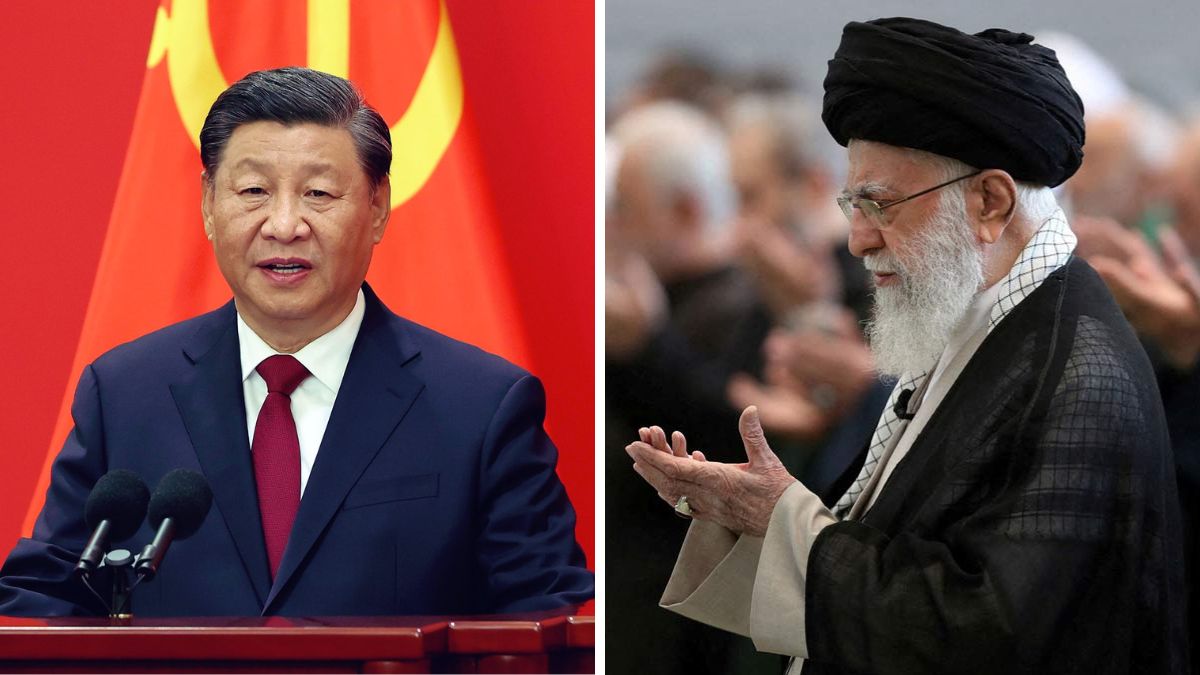
By the end of 2025, Iran experienced large-scale protests that were initially started by Grand Bazaar merchants and further fuelled by longstanding domestic tensions and crises, high inflation, and unmet reform expectations after the 12-day war. China initially watched these protests with detachment but later viewed them with suspicion when Reza Pahlavi, Israel, and the US openly supported the protesters, unsurprisingly blaming external interference for the violence on January 8-9, which resulted in the deaths of thousands. It also believes that Iran’s effective control over the protests surprised the US and its allies, leading to the current military standoff.
In Chinese discourse, the Iranian people were betrayed twice by Western conspiracy, first, when they protested, expecting outside intervention against the Iranian regime, which never arrived; and second, when Trump decided to negotiate with Iran, leaving protesters stranded. The question, therefore, is: how does China view the ongoing events in the Middle East and what does it expect in the near future?
The US and Iran face a fundamental rivalry over regional dominance. For Beijing, Washington aims to increase pressure on Tehran through isolation, sanctions, subversion, and military encirclement; if all else fails, it could lead to war. The IAEA’s inspection, carried out before the 12-day conflict last year, revealed that Iran had 440.9 kg of uranium enriched to 60 per cent, raising concerns in Israel and the US and fuelling recent tensions.
The US demands Iran end enrichment, limit missile range, and cease supporting proxy forces, which Beijing believes can be negotiated if Israel is not involved. Netanyahu demands transferring enriched materials abroad, dismantling infrastructure and proxies, and restricting missile ranges to 300 km. Even if Iran is willing to abandon nuclear weapons, it will not negotiate on missiles, as they ensure the regime’s security. For the enriched stockpile, Tehran has proposed dilution rather than removal, but in return, wants all economic sanctions lifted.
China believes this imbalance of demands is pushing both sides toward war. Trump has already deployed two carrier strike groups led by USS Gerald R. Ford and USS Abraham Lincoln, placed strategic bombers in Qatar, and stationed around 40,000-50,000 troops across 19 regional bases. Washington recently awarded Boeing a contract to replenish its stock of GBU-57 bunker buster bombs. In their ‘Joint Action Plan,’ Trump has sought support for Israeli strikes on Iran through air refuelling and securing overflight permissions, even though Middle Eastern states remain hesitant.
In response, Iran has maintained maximum military readiness to retaliate with medium and short-range missiles and drones targeting US assets in the Middle East and Israel. Previous Iranian strikes that penetrated Israel's and the US's air defences lend credibility to these threats. Tehran’s proxies in Iraq, Lebanon, and Yemen would likely also expand the conflict.
Trump, therefore, plans to target Iran’s oil revenue, nearly 80% of which flows to China, and has threatened a 25% tariff on any country that trades with Tehran. Beijing dismisses the warning as a bluff, believing Washington lacks the appetite for a further tariff war with China. In China’s view, Trump has repeatedly hinted at military action against Iran without clear proof of an imminent threat, so Beijing thinks he is driven more by domestic pressures and upcoming midterm elections than by strategy. However, this hardline stance might rally his electoral base but could also threaten regional stability, disrupt shipping and energy flows through key trade routes like the Strait of Hormuz, the Red Sea, and the Persian Gulf, and possibly cause a serious global economic shock.
Unsuspectingly, in mid-January 2026, Trump’s military advisors informed him that a large-scale military strike was unlikely to cause regime change in Iran and might instead ignite a wider conflict. Therefore, on February 6, both the US and Iran engaged in indirect negotiations in Muscat, which concluded with significant disagreements. The next round is scheduled to begin on February 17 in Geneva, led by Iranian Foreign Minister Araghchi and US representatives Steve Wittkopf and Jared Kushner, along with an Omani official.
As of mid-February 2026, Beijing believes war is not certain, but military pressure and diplomacy are happening simultaneously. The risk of a US military strike stays high as the Pentagon’s stance has shifted from deterrence to clear combat readiness. Still, the US seems prepared for a week-long military operation aimed at destroying Iran’s key military and nuclear capabilities, rather than a long ground invasion.
On February 12, Trump set a one-month deadline for reaching a deal with Iran. China believes that failed negotiations could push the US toward a full-scale offensive. Since the snapback clause in UN Security Council Resolution 2231 expired in October 2025, Washington no longer has automatic sanctions leverage and primarily relies on military threats as its main bargaining tool.
Furthermore, maintaining dual carrier strike groups is financially and operationally expensive, making ongoing US-Iran negotiations difficult to sustain. Chinese observers expect diplomacy to fade by mid-March if there’s no breakthrough. Due to significant force deployments, if Trump retreats, he will look weak. For China, this political reasoning speeds up escalation and makes regional security more fragile and unpredictable.
(The author is a fellow-National Security and China Studies with the Strategic Studies Programme at Observer Research Foundation)
