



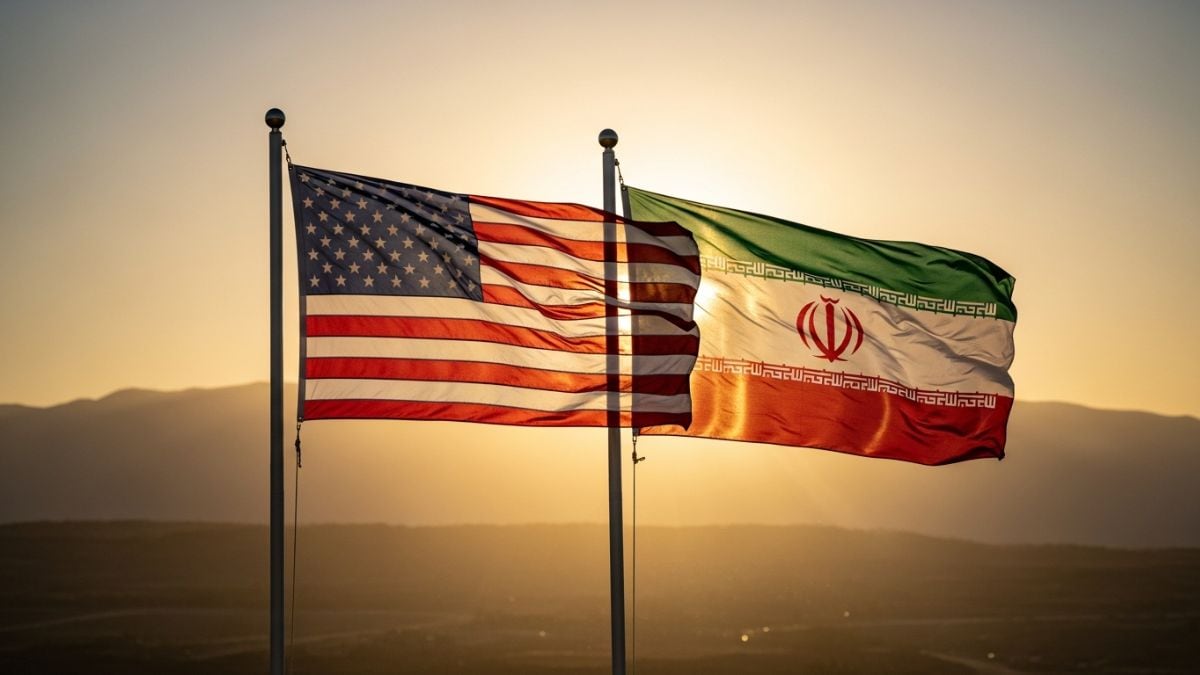
While wars and military conflicts pose a security challenge, markets become jittery even before the actual combat begins. There are significant geo-economic shocks that the region cannot afford to absorb. Despite Iran’s hostile relations with the US and Israel and regional tensions with Saudi Arabia, direct military confrontation had largely been avoided until April 2024, when Israel attacked Iranian facilities. Subsequent air strikes in October 2024 and intensified military actions with US backing in June 2025 signalled an increased risk of direct war that all parties have long avoided.
The Middle East is widely known for enduring wars and conflicts that have defied numerous peace efforts and resolutions. However, military conflict with Iran could be more widespread and disruptive than other regional conflicts. Iran-related shocks have three interconnected effects: the risk of sudden escalation, locational risk, and oil price fluctuations. Despite Iran’s limited retaliations to earlier strikes on its facilities and its weakened proxies, the overlapping strategic and security concerns of hostile countries and their allies can easily expand the confrontation beyond its initial scope. The US, Israel, and Iran have been signalling their strength and credibility through military presence, actions, and warning speeches, with a high risk of misjudgement that could easily lead to open conflict, which all sides consider costly.
As Iran straddles one of the most strategic choke points for oil and gas flows, even the threat of conflict has ripple effects on trade routes, insurance, shipping, and costs. Periods of increased Israel-Iran military clashes have disrupted Iranian oil exports, causing swings in global energy prices. The main risk isn’t just price spikes but the unpredictability for traders, investors, and consumers. Iran’s geography can instantly raise shipping and travel costs, disrupting trade and tourism if tensions flare.
The regional stock markets have clearly reflected these concerns. Last week, Saudi Arabia’s benchmark index, TASI, dropped by about 1.9%, marking the largest intraday decline in months and leading to an estimated US$60-80 billion loss in market capitalisation. Shares of a major Saudi Arabian mining company fell by approximately 9%, while those of Saudi Aramco declined by about 2.4%. Similarly, in June 2025, the shares of Saudi National Bank, the country’s largest lender, decreased by roughly 3 percent. Although this may not trigger an immediate fiscal crisis, it diminishes the progress of Vision 2030. Banking stocks are generally more sensitive to geopolitical risks, and bank shares across the Gulf experienced a sharp sell-off during the escalation of Iran-Israel hostilities in June 2025, reflecting concerns about higher risk premiums, increased capital costs, and tighter credit conditions for non-oil activities.
Even short-term conflicts cause economic stress by altering investor confidence, delaying projects essential for the economic diversification of the hydrocarbon-dependent Gulf countries. Economic shocks tend to be non-linear, with sudden increases in insurance, shipping, and energy costs, and they do not decline proportionally with de-escalation, which affects the competitiveness of regional hubs. With the fourth major escalation with Iran since April 2024, the region risks being rebranded from ‘emerging hubs’ to ‘geopolitically risky’.
In recent years, the GCC countries have managed to set aside their political disagreements to work together on regional projects like the GCC railways, power interconnections, and renewable energy initiatives, showing deeper economic engagement with the broader MENA region. Even the long-standing rivalry between Saudi Arabia and Iran has eased with the restoration of diplomatic ties. The Gulf nations are heavily invested in building economic strength through non-oil sectors, foreign investments, and regional cooperation. The IPO windows, large-scale projects, tourism revenues, logistics services, foreign investments, and stock market trends have all been highly sensitive and volatile to geopolitical risks from potential military escalation with Iran, representing an untimely geo-economic shock.
The concern isn’t whether war will happen, but that the threat of war is looming at a time when regional economies are pursuing ambitious economic diversification efforts and have made progress in regional coordination. MENA growth expectations have risen due to stronger domestic demand, higher oil production, and steady remittances and tourismflows. Disruptions to regional cooperation and systemic shocks pose a greater threat than military conflict alone.
The Arab countries strongly advocate for de-escalation and have actively urged the US to engage in talks with Iran, even regarding the nuclear issue. This contrasts sharply with their scepticism during the 2015 nuclear negotiations, showing the diplomatic approach they are willing to adopt. Regional markets are also responding positively to these efforts to reduce tensions, and indirect US-Iran talks in Oman, which began on Friday, could play a key role in maintaining market confidence. Iran has endured decades of sanctions and is facing internal unrest unlike anything seen since the Islamic Revolution. While the current talks might prevent a war for Iran, they could also help several Arab countries avoid a costly geo-economic shock that is already unfolding.
The author teaches at the Centre for West Asian Studies, Jawaharlal Nehru University, New Delhi.
