



The United States and Iran have agreed to hold their high-stakes negotiations in Oman on Friday, following a chaotic 24 hours during which the talks nearly collapsed over disputes about venue and agenda. The original plan was for the two sides to meet in Turkey, where mediators had brokered a preliminary framework for discussions. Foreign ministers from Egypt, Qatar, Saudi Arabia and Turkey were also scheduled to participate. That process got nearly derailed when Tehran pulled back from earlier understandings on both the location and format of the meeting.
Iranian officials signalled a preference for shifting the talks to Muscat, Oman, and for excluding other participating countries. Tehran also wanted to discuss nuclear issues only and did not wish to take up ballistic missiles or its support for regional non-state actors. Washington was furious, saying Iran was trying to scuttle the talks with its last-minute demands; however, the move actually reflected the sharp internal divide within Tehran.
While President Masoud Pezeshkian, a moderate, had cleared Foreign Minister Abbas Araghchi to hold the talks in Turkey, the ultraconservative factions in Tehran were livid, calling the move a humiliation. They did not want the talks to take place in a NATO country, which is also a regional rival. Under pressure, Iran abandoned the Turkey arrangement, prompting the White House to threaten to walk away entirely, warning Tehran that the talks were an “all or nothing” proposition.
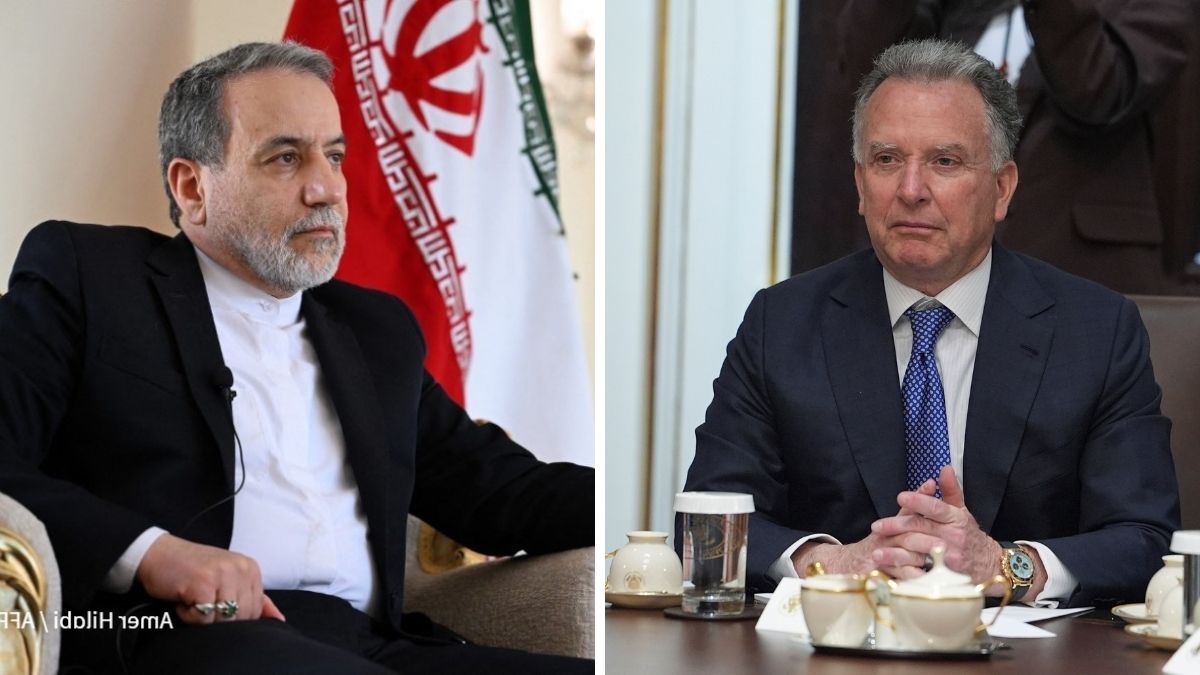
The negotiations were salvaged only after a coalition of Arab and Muslim states lobbied the White House, urging the Trump administration not to abandon diplomacy. Following this intervention, there was some compromise. The US agreed to shift the venue and exclude other participants, while Iran dropped its resistance to discussing missiles and militant groups. Araghchi finally confirmed that nuclear talks would proceed in Muscat at 10am on Friday, thanking Oman for facilitating the meeting. Araghchi and his team would hold discussions with President Trump’s special envoy Steve Witkoff and the president’s son-in-law Jared Kushner. The Omani foreign minister is also likely to be present.
The Friday meeting would be the first personal contact between officials from the two countries after the June war, when American bombers targeted Iranian nuclear facilities. However, according to the New York Times, Araghchi and Witkoff have been in direct contact by text even during this period.
Despite agreement on the venue and some compromise on the subjects to be discussed, there is a stark mismatch between American maximalist demands and Iranian red lines. The United States is entering the talks with an expansive set of requirements outlined by Secretary of State Marco Rubio. Washington insists that any meaningful dialogue must go beyond the nuclear file to include Iran’s ballistic missile programme, its backing of militant groups across the region—particularly after Iranian missiles penetrated Israeli defences during the recent 12-day war—and its human rights record.
At the same time, scepticism runs deep in Washington. Rubio has publicly questioned whether an agreement is possible with Iran’s current leadership, even as the administration signals its willingness to test diplomacy. While Iran has shown cautious openness to talks, driven in part by fears that a US military strike could destabilise the regime amid domestic unrest, it remains adamant that the scope must remain tightly constrained. Araghchi has dismissed the US agenda as maximalist, arguing that it ignores Iran’s security concerns and sovereign rights. Supreme Leader Ali Khamenei has warned repeatedly that Iran would not give in to American pressure.
Mediators from Qatar, Türkiye and Egypt have sought to bridge these gaps by advancing a detailed framework of principles. Under this proposal, Iran would commit to zero uranium enrichment for three years, after which enrichment would be capped below 1.5 per cent. Iran would also be required to transfer its existing stockpile of highly enriched uranium, including roughly 440 kg enriched to 60 per cent, to a third country.
Beyond the nuclear file, the framework calls on Iran to halt the transfer of weapons and technology to regional non-state allies and to pledge restraint in the use of ballistic missiles. Another key element of the framework is a potential non-aggression pact between Tehran and Washington.
The US retains significant leverage: it has an expanded military presence in the Arabian Sea, and the Israelis will be more than willing to undertake another round of air attacks. Trump has already issued an ominous personal warning to Khamenei, hinting at the possibility of further strikes. Tensions are already high, with the US Navy’s F-35C Lightning II stealth fighter shooting down an Iranian Shahed-139 drone in the Arabian Sea on Tuesday, and reports of Iranian forces harassing a US-flagged vessel in the Strait of Hormuz.
Although the move to Oman has allowed diplomacy to limp forward, US officials have stressed that engaging Iran does not amount to concession or legitimisation. While Washington doubts Tehran’s intentions, the ultraconservatives in Iran portray the talks as an act of capitulation. The success of the talks will depend on whether Iran’s demand for a narrow agenda can be reconciled with the broader security architecture sought by Washington.
