



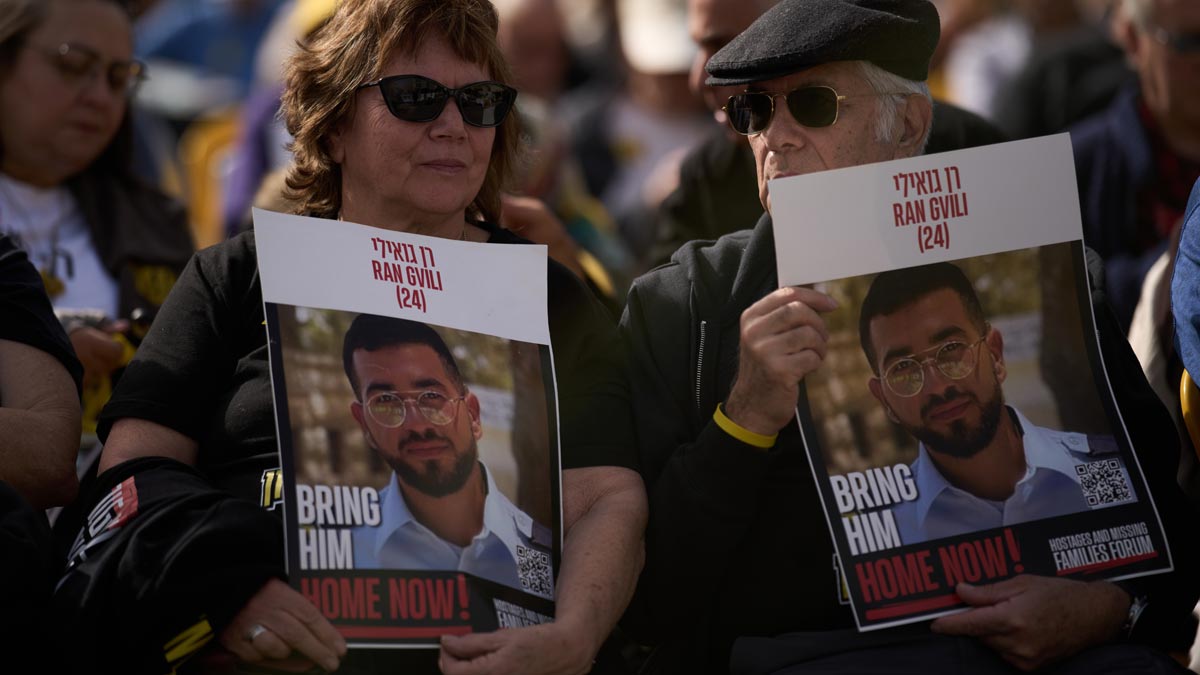
The Rafah crossing between Gaza and Egypt is likely to reopen by the end of this week, but only after Israel completes a narrowly defined military objective. Prime Minister Benjamin Netanyahu’s office said yesterday that the crossing would reopen once Israel “exhausted” a search operation for the remains of the final missing Israeli hostage in Gaza, Master Sgt Ran Gvili. US officials expect the search to take several days, making a reopening later this week possible, but the Israeli government has stressed that any resumption of activity will be strictly limited.
Under the current plan, the crossing will operate only for pedestrian passage and will be subject to an Israeli inspection mechanism. This falls well short of the fuller reopening outlined in the US-brokered ceasefire framework, which had envisaged broader movement and a more substantial easing of restrictions.
The delay to the second phase of the ceasefire hinges entirely on the recovery of Gvili’s body. Israeli forces have launched what officials describe as a large-scale operation based on intelligence indicating that his remains may be buried in a cemetery in the Shuja’iya–Daraj Tuffah area of northern Gaza. The site lies close to the so-called yellow line, marking areas under Israeli military control. Specialised teams, including rabbis and dental experts, have been deployed to assist with identification. While the military has described the intelligence as credible, officials have acknowledged that other leads may be pursued if the search does not succeed.
Gvili, a 24-year-old officer in an elite police unit, is the only hostage from the October 7 attacks whose fate remained unresolved after all others were returned. He had been on medical leave with a broken shoulder when the Hamas assault began. Despite the injury, he mobilised immediately and initially attempted to reach the Nova music festival to assist civilians under attack.
He and his team instead encountered militants at Kibbutz Alumim. During the fighting, Gvili took up a position on the kibbutz’s western flank, where he reportedly engaged attackers arriving in vehicles. Witnesses later said that although he was wounded in the arm and leg, he continued fighting alone, holding off the militants long enough for residents to escape or find shelter. His actions are credited with saving multiple lives. A sign at the entrance to the community now commemorates him as “Rani, the Shield of Alumim”.
Gvili’s body was taken into Gaza, and Israeli intelligence confirmed his death four months later. His family describe him as energetic and warm, someone who played the guitar and had a tattoo of his dog, Luna. For them, the prospect of moving forward without recovering his remains is unbearable. They have publicly urged the government not to proceed to the next phase of the ceasefire until he is brought home, warning that he could otherwise become another unresolved case like that of Ron Arad, the Israeli airman missing since 1988. His father has said the family will not stop searching, while his mother has spoken of her fear that the process could drag on for years.
Israel’s military leadership has sought to reassure the family. Chief of Staff Lt Gen Eyal Zamir has said there is “room for optimism” regarding the current operation. Politically, however, the issue has exposed deep fractures within Netanyahu’s coalition. Figures on the far right have fiercely opposed reopening Rafah under any circumstances. National Security Minister Itamar Ben Gvir has condemned the move as a “big mistake” driven by American “naivety”, arguing that Israel should be focused on dismantling Hamas rather than easing restrictions. Religious Zionism minister Orit Strock has warned that reopening the crossing could pave the way for a transfer of governance to the Palestinian Authority.
Hamas, for its part, says it has fulfilled its obligations under the ceasefire. The group claims it provided information on Gvili’s location with full transparency and accuses Israel of delaying implementation by restricting searches in areas already under Israeli control. A spokesman for the Qassam Brigades has said the group has no interest in prolonging the issue of hostages.
International pressure, particularly from Washington, continues to mount. The Trump administration has already declared the second phase of the agreement to be under way and is pushing for tangible progress.
