



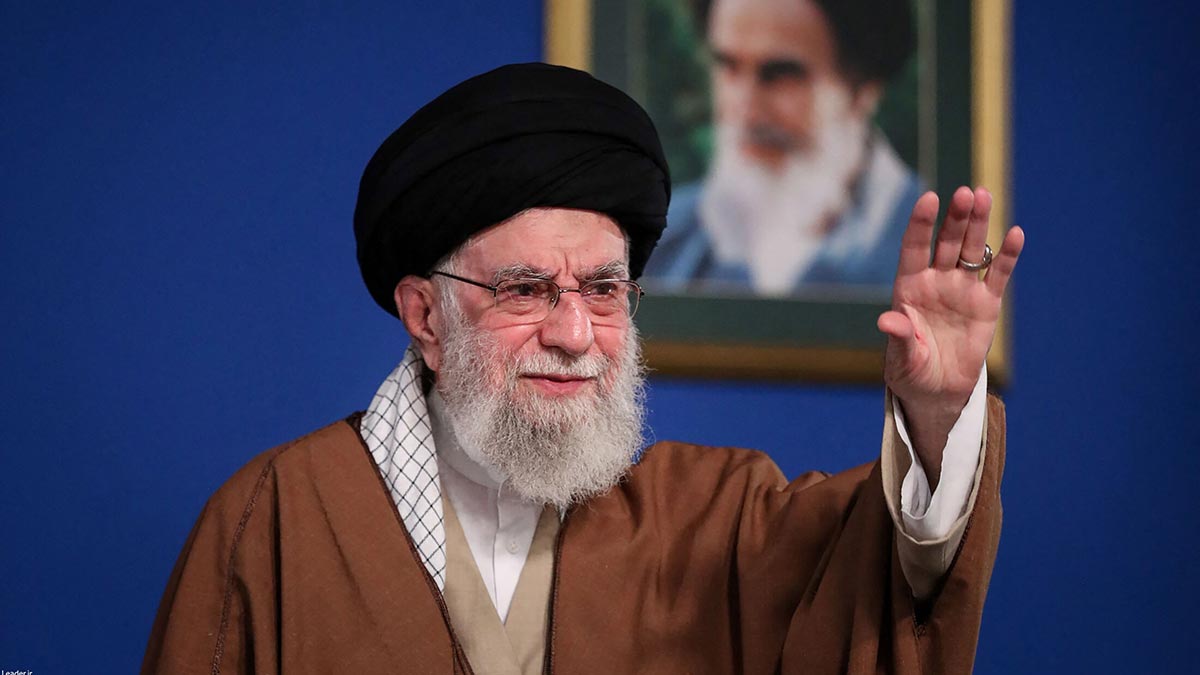
Iran’s Supreme Leader Ayatollah Ali Khamenei has vowed that the Islamic Republic will “not back down” in the face of nationwide protests, dismissing demonstrators as “vandals” and “saboteurs” acting at the behest of foreign powers. In a televised address from Tehran yesterday, Khamenei accused protesters of seeking to “please” US President Donald Trump, signalling that the state is preparing for an intensified crackdown as unrest continues to spread.
“There are people whose job is only about destruction,” Khamenei said, framing the protests not as an expression of domestic anger but as a coordinated foreign conspiracy. By blaming the US and Israel, Khamenei has effectively sanctioned a maximum-security response, declaring that the regime will not yield to what it describes as “destructive elements”.
This shifts the state away from any prospect of dialogue and towards a militarised response to the most serious internal challenge it has faced since the 2022 uprising.
Khamenei’s rhetoric has unified Iran’s security and judicial institutions, overriding earlier calls for restraint from President Masoud Pezeshkian, who had initially acknowledged the existence of legitimate public grievances. Following the Supreme Leader’s intervention, the Supreme National Security Council issued orders for “no leniency”, a directive swiftly echoed by senior figures in the judiciary.
The legal threats have escalated sharply. Tehran’s public prosecutor, Ali Salehi, warned that those labelled “armed terrorists” or accused of clashing with security forces could face the death penalty by hanging. The regime, he said, would show no compromise towards anyone deemed to be endangering national security.
As protests spread, the regime shut down the internet, reducing connectivity to near-zero. Tehran hopes to prevent protesters from organising and also to stop instances of state violence from reaching the domestic as well as international audience. Behind this digital blackout, security forces, including the Islamic Revolutionary Guard Corps and plainclothes units, have reportedly used live ammunition, shotguns and water cannons against crowds.
Human rights organisations estimate that between 42 and 62 people have been killed, including several children, while more than 2,200 have been arrested. Reports also suggest that families of victims are being coerced into silence or pressured to accept official narratives blaming deaths on accidents or on “rioters” rather than security forces.
The unrest began as an economic protest. Shopkeepers in Tehran were among the first to voice anger over the collapsing currency, rising prices and deepening hardship. Significantly, protests have erupted in conservative strongholds such as Mashhad and the holy city of Qom, indicating erosion even within the regime’s traditional support base. The slogans on the streets have shifted decisively. Demonstrators are chanting “death to the dictator” and “death to Khamenei”, while attacking symbols of the state, including statues of General Qassim Suleimani and offices of the state broadcaster.
One striking feature of the uprising has been the re-emergence of monarchist sentiment. Protesters have openly voiced support for the pre-1979 era and for Reza Pahlavi, the exiled son of the last Shah. Pahlavi’s calls for strikes and sustained demonstrations have reportedly drawn large crowds, while his appeals for members of the security forces to defect appear designed to fracture the regime’s coercive power from within.
The regime is further on the back foot because of the increasingly hostile relationship with Washington. Trump has said that the US would “hit them very hard” if the Iranian government continues to kill protesters. The Iranian leadership is not taking it lightly, especially after the US military action in Venezuela, capturing its leader, Nicolás Maduro. This has put the Iranian regime in a dilemma. A violent crackdown could trigger an American military response, while any show of restraint could embolden the protesters to step up. Khamenei has attempted to counter external pressure by attacking Trump’s moral authority, accusing him of having “blood on his hands” in reference to a brief but deadly war with Israel the previous year.
By branding protesters as agents of Trump and Israel, Khamenei has closed the door on de-escalation and committed the state to violent suppression. What follows will depend on the resilience of the protest movement under an information blackout, and on whether Washington is willing to translate its threats into action, as Iran’s leadership balances precariously between internal revolt and external conflict.
