



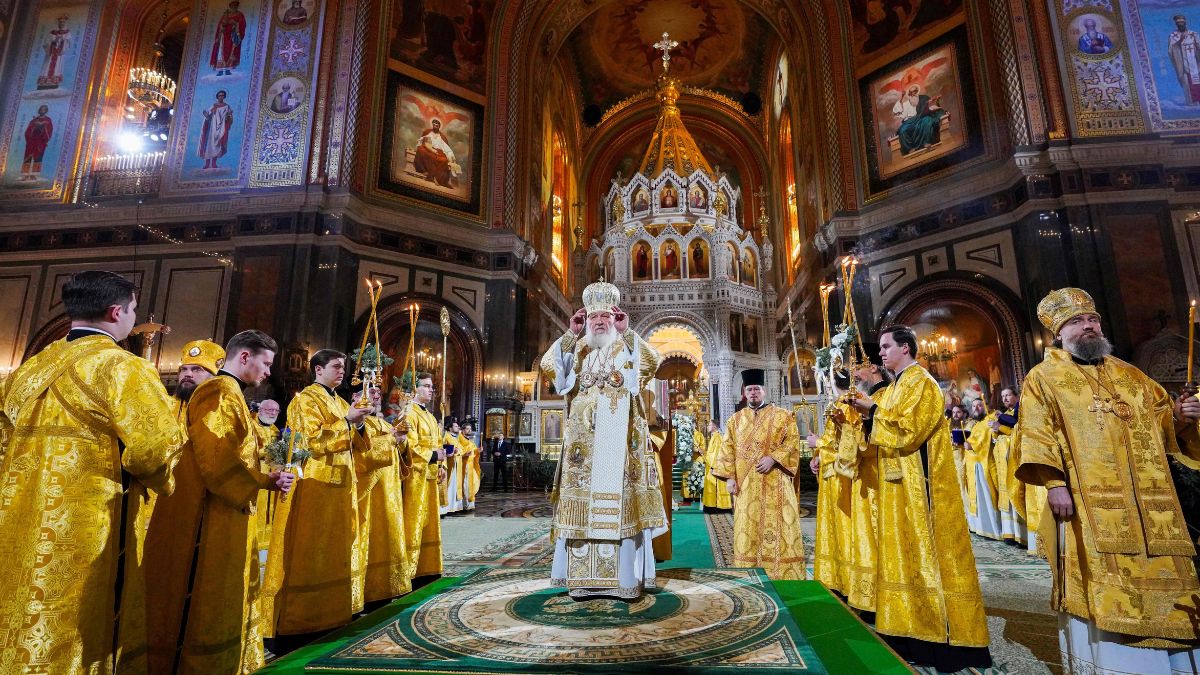
Today, January 7, the air is filled with the sound of bells, and the scent of incense accentuates the celebration of Orthodox Christmas. The "feast of the nativity," which in simple words is called the birth of Jesus. However, the popular version of Christmas is celebrated on 25 December, i.e., according to the Gregorian calendar.
By contrast, preserved by the Eastern and Oriental Orthodox churches, the Julian calendar has maintained its distinct identity. The region has a significant number of Orthodox Christians, divided into Eastern Orthodox, such as the Greek Orthodox, and Oriental Orthodox, including the Coptic and Syriac Orthodox churches. The community conveys a powerful message reflecting that it is no longer vanishing. Instead, it navigates the global diaspora while perpetually maintaining its deep, ancient roots in its ancestral homeland in the Middle East.
In the Levant, the Orthodox Christians have narratives of both trauma and perseverance, and so the scattered communities regroup. The Christmas celebrations in Syria include the chanting of hymns in Aramaic, the language of Jesus, thereby establishing a direct link to the apostolic era. Moreover, in the Maronite Cathedral, worshippers are informed on how Syrian Christians form an integral part of Syria, and they should be protected. In the wake of recent events, the Patriarch of Antioch made a prayer for the nation's healing and security. Israel and Palestine have also shown a vibrant spirit after years of silence because of the ongoing war. The main cities of attraction, Nazareth and Bethlehem, witnessed marching bands, accompanied by bagpipes, leading up to today's liturgies, once again illuminating the cities with the cautious return of the festivities. Patriarch Theophilos III of Jerusalem led the official Nativity services at the Church of the Nativity, which was attended by dignitaries and leaders, and delivered an address before the Christmas mass yesterday, conveying the message of communal hope. The community's dispersion has not diluted itsfaith but, in fact, has created polycentric orthodoxy.
The "easternisation" of the Gulf through the Malankara (Kerala Orthodox) community is one of the striking contemporary developments in GCC. The mass migration of these Indian expats has increased their population in recent years. They are mainly concentrated in Dubai and Abu Dhabi in the UAE and in Abbasiyah (Kuwait), forming a religious corridor that bridges South Asia and the Middle East. The cathedrals in the GCC hear the chanting of the Holy Qurbana in a distinctive blend of Malayalam and Syriac, merging West Syriac rites with the traditions of the Malabar Coast. January 7 marks the peak of the Nativity fast, the 25th day of fasting. Malankaras observe the nativity period, unlike the Middle Eastern tradition, by abstaining from dairy and meat, yet by eating Kerala Appam and mutton stew, thereby displaying a distinct orthodox identity.
The rituals observed, such as "Service of fire," which is symbolic and resilient, display a refusal to be extinguished. People gather around the bonfire, symbolising that the divine light has appeared to the shepherds. On the occasion of Orthodox Christmas in Egypt, President Abdel Fattah El-Sisi visited the Cathedral of the Nativity of Christ and extended his personal greetings to Pope Tawadros II. Not only the President but also Egypt's Foreign Minister and Defence Minister visited St. Mark's Cathedral in Abbassia, underscoring that churches are a fundamental pillar of the national fabric.
As orthodox Christmas festivities come to a close, the Syriac Christian communities prepare for the Nineveh Lent (Moonnu Noyambu), which begins on January 26, 2026. The presence of Orthodox Christians in the Middle East, though scattered, demonstrates that they are an essential component of society.
