



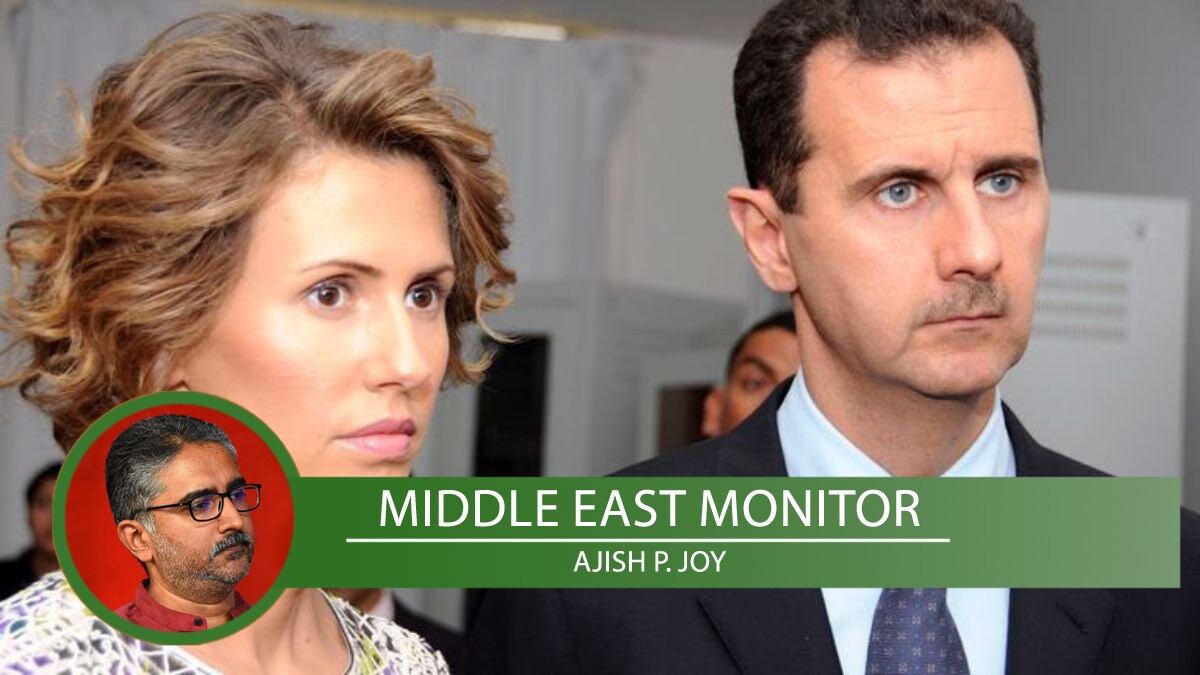
In December 2024, the decades-long rule of the Assad family in Syria came to an abrupt end as rebel forces advanced on Damascus, completing the collapse of a regime that had presided over 14 years of civil war that killed more than 600,000 people and displaced nearly 14 million.
On December 8, 2024, Assad and his immediate family fled Damascus with the assistance of the Russian military. The departure was hurried and secretive. Sources suggest that Assad left without warning senior regime figures or even members of his extended family, many of whom were left stranded as the state apparatus disintegrated. Although Assad later claimed that his exit was unplanned and that Moscow had “requested” his evacuation, other accounts portray a desperate, last-minute flight from a collapsing city.
The escape mess was illustrated by the fate of Assad’s personal staff. The former president took very few people with him. His personal assistant, whose duties included carrying Assad’s bags, was ordered to join the flight with such urgency that he had no time to pack clothes or even take his passport. On arrival in Moscow, Assad left his assistant and two other aides at a luxury hotel, departing without settling the bill, which had reportedly reached an extraordinary sum. Their frantic attempts to contact him afterwards went unanswered.
A year after his ouster, Assad lives in Russia in a state of secluded luxury, protected yet constrained. On arrival, the family stayed in lavish suites at the Four Seasons and in a penthouse in the Federation Tower. They later moved to a villa in Rublyovka, an exclusive gated enclave west of Moscow favoured by Russia’s political and financial elite.
Despite material comforts, Assad’s life is defined by restriction. He is constantly overseen by Russian security services who control his movements and contacts. Politically, he has been irrelevant. The Kremlin, once his indispensable ally, no longer views him as a useful figure of influence. Vladimir Putin reportedly considers him an uninteresting and burdensome guest. As a result, Russian authorities have barred him from engaging in political or media activity. Requests to give interviews to the state-backed network RT and to a right-wing American podcaster were both refused.
Cut off from power, the former ophthalmologist has reportedly turned back to his original profession. He is said to be taking refresher courses in ophthalmology, the career he trained for in London before unexpectedly inheriting the presidency in 2000, and is studying the Russian language. Associates describe this as a return to a long-held personal interest rather than a financial necessity. Despite his wealth, Assad remains isolated from Russian high society, living quietly and largely unseen.
The wider Assad family has experienced exile in more uneven ways. Early attention focused on the health of the former First Lady, Asma al-Assad, who had been undergoing leukaemia treatment in Moscow. Reports suggest that her condition stabilised following experimental therapy, easing concerns that had circulated during the first months of exile.
The Assad children have been more visible, adjusting to a life defined by immense wealth and frequent international travel. Before the fall of the regime, the family succeeded in transferring a significant portion of its fortune to Russia, enabling them to furnish their homes lavishly and shop at high-end boutiques. Their only collective public appearance during the past year was at the graduation of Assad’s daughter, Zein, from the Moscow State Institute of International Relations.
The transition has not been difficult. Assad’s son, Hafez, briefly posted a video on social media showing himself walking through Moscow and discussing the family’s escape. Russian authorities intervened swiftly, and he has since withdrawn entirely from online platforms. Zein attempted to maintain a presence in the Gulf, enrolling at the Sorbonne University’s Abu Dhabi campus, but encountered hostility from fellow students. After a classmate told her she was “not welcome” in a group chat, the student was reportedly questioned by Emirati authorities and subsequently left the university. Zein herself later stopped attending classes.
The family’s exile has been marked by conspicuous displays of wealth that sit uneasily alongside the devastation left behind in Syria. Zein and her cousin Sham, the daughter of Bashar’s brother Maher al-Assad, have been photographed partying in Dubai. Sham’s 22nd birthday was reportedly celebrated over two nights with a private yacht, gold-themed decorations and gifts from luxury brands such as Hermès and Chanel.
Maher himself, once the feared commander of the army’s Fourth Division, also lives in Moscow but leads a markedly different life from his brother. Unlike Bashar, who abandoned his staff, Maher has been described as generous towards former officers, sending money to help them rebuild their lives. He resides in a skyscraper in Moscow’s business district, and has been seen at fashionable venues nearby. He remains in contact with his old network and is rumoured to be closely monitoring developments in Syria.
The family has largely accepted that leaving Russia is unlikely soon. They had hoped to settle in the United Arab Emirates, a country they had frequented while in power. However, despite regular travel between Moscow and the Gulf, Emirati authorities have so far been reportedly unwilling to host the deposed president on a permanent basis.
Bashar thus remains in a state of gilded exile: wealthy, secure and protected by the Kremlin, yet politically silenced, socially isolated and quietly discarded by the forces that once sustained his rule.
