



Syrian President Ahmed al-Sharaa’s meeting at the White House with Donald Trump during the first week of November is looked at as a complete change in the tale of events. Once termed a jihadist, who had a 10-million-dollar US bounty on his head, al-Shaara’s visit to the US and the meeting with Trump has brought the promise of additional sanctions relief to war-torn Syria. The meeting has also ensured a six-month suspension of a comprehensive set of restrictions laid out in the Caesar Act.
Geopolitically, Al-Shaara’s meeting with Trump will also mark a significant shift for Syria which was aligned with Iran and Russia against the West over a period of time, under its former president Bashar al-Assad. During the meeting, al-Shaara had also pledged to join the US-led coalition to defeat the Islamic State, which has been bringing down the country for more than a decade.
A day after the meeting of al-Sharaa and Trump, commander of the Syrian Democratic Forces (SDF) Mazloum Abdi talked to US special envoy Tom Barrack. After his talks with Barrack, Abdi voiced support and stressed the importance of the common struggle against the Islamic State (IS). In a tweet on the social media platform X, Abdi thanked Trump for his leadership on Syria and for giving the Syrian people a chance for greatness. “I just had a wonderful phone call with Ambassador Tom Barrack to discuss the outcomes of the meeting with President Al-Sharaa in the White House and our commitment to accelerate the integration of the SDF into the Syrian state. Syria’s accession to the global coalition against ISIS represents a pivotal step towards enhancing collaborative efforts and bolstering the initiatives aimed at achieving the enduring defeat of ISIS and eliminating its threat to the region. We are diligently working with our partners in close coordination to advance progress towards a more prosperous and secure future for our people in a unified Syria,” he said.
The meeting between Al-Shaara and Trump had brought hope in the region, particularly among the Kurdish population who have been fighting for rights, even before the fall of Saddam Hussein.
In a connected development, Elham Amad was invited by the DEM party to participate via video during a peace conference titled ‘International Peace and Democratic Society Conference’, in Istanbul on December 6 and 7. One important issue she raised was the implementation of the March 10 agreement. The Kurdish leaders in the recent past are working continuously and leveraged their strong relations with Turkey to mediate the Turkish-Kurdish peace talks, seeking stability and political prestige. The recent conference in Istanbul was related to the Turkish president Recep Tayyip Erdogan’s statement that a comprehensive agreement could be reached between Kurds, Turks, and Arabs, which has contributed to a shift in the political discourse toward the PKK in North and East Syria.
It was the DEM party that helped mediate between Öcalan and Turkey’s civil society and the political parties. While there has been no mention about ‘peace talks’ in the recent past, the conference was looked at as an important forum to hold a political dialogue between both Turkey and Democratic Autonomous Administration of North and East Syria (DAANES) to find a political solution and implement the March 10 agreement. Incidentally there is a constructive shift in the Turkish attitude towards a process of democratic integration between the DAANES and Damascus.
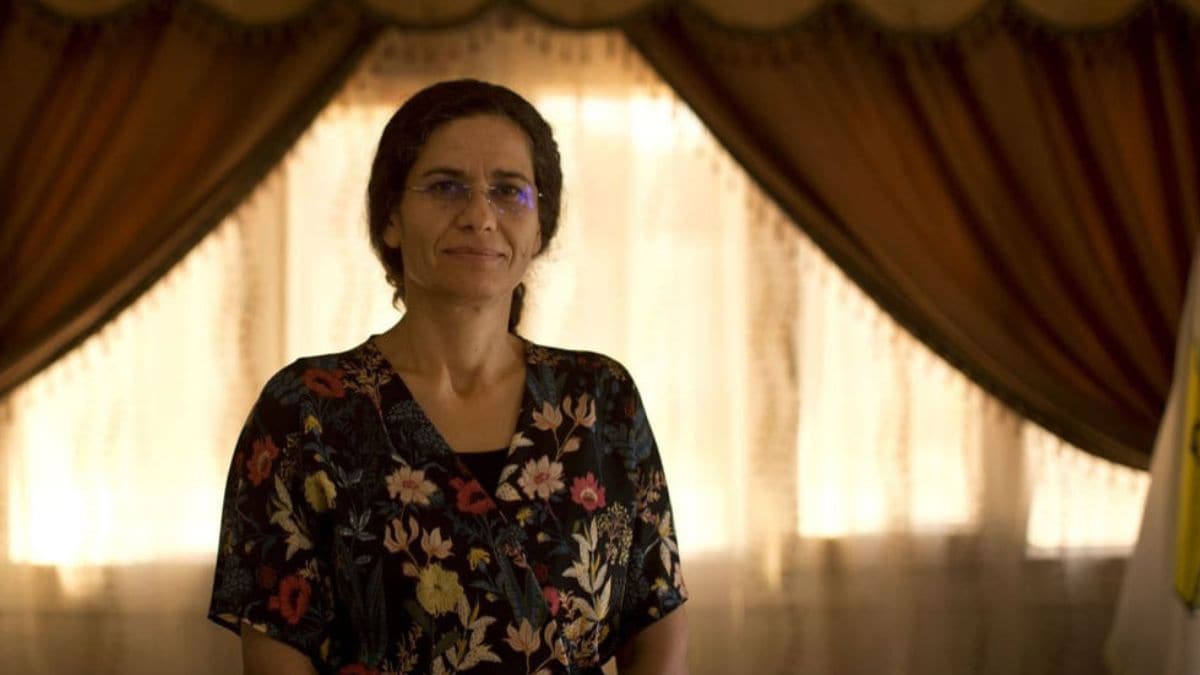
In this context, Elham Amad, the co-chair of the Department of Foreign Relations of the DAANES , spoke with THE WEEK in detail on what the Kurdish population expected out of al-Shaara’s meeting with Trump, the lifting of the US sanctions, al-Shaara’s earlier visit to Moscow and the geopolitical changes in the region.
Excerpts from the interview.
Q) What do you think was the outcome of Syrian President Ahmad Al-Shaara’s meeting with US President Donald Trump? Do you see it as a positive for the Kurdish rights?
In the meeting between Al-Sharaa and the US president the situation in Syria in general was discussed. There was no discussion specifically about the rights of specific groups of society, such as the Kurds. However, in the context of a general political solution in Syria, that is, how the Kurds will achieve their rights, we are currently going through a stage where the rights of all the different nations can no longer be denied, violated or not recognised as before. This will not be the case. Once again, caution is needed on this issue: Support for the rights of all nations is important. The Kurds in particular are a major force that has fought against ISIS with the US and the International Coalition and has made great sacrifices. The Kurds live in their own land. They have a history. The Kurds in Syria are the most essential partners both for building a new Syria that will be the best ally of the USA, and for the democratisation of Syria. Within the framework of this understanding, the rights of all different groups of society, including the Kurds, must be guaranteed.
Q) DAANES representatives have been supportive of strengthening ties with the US, especially with regards to the lifting of sanctions. In recent days, there have been multiple statements by the DAANES focussing on the need for a decentralised system in Syria. Do you see Al-Shaara’s meeting with Trump in these lines?
We do not know exactly what was said in detail in the meeting. But from the statements made by American officials, especially those responsible for the Syrian file, it is clear that there is a consensus. In particular, for Syria to move away from its previous framework. For Syria to move away from the framework of a single party and the strong centralisation of the state and become somewhat more decentralised, there is a consensus. We support these views. And we say that for the construction of a new Syria, our views must definitely be included. Especially after so many years of heavy fighting, after so much internal conflict. In order for a united Syria to remain, the rights of all the peoples of Syria must be included in this regard and the support of all of them is needed. It is important for them to all see themselves as part of this. And it is important for all of them to see that their rights, identities and personalities are recognised and that their dignity is protected. If this does not happen, chaos will break out in Syria once again. This is not in the interests of any party.
Q) Where do the DAANES’s talks with the Syrian administration stand? How are the talks progressing?
In the meetings we have been having with Damascus so far, practical steps have now been taken for the first time. We have agreed on the integration of the Syrian Democratic Forces (SDF) into the army. Documents, names and things related to the army have been discussed, namely those of the SDF. But there is still a lot of delay in these talks. Damascus is taking slow steps, for example in the way they respond. They cannot make decisions. They have some difficulties in this regard. Whether they are doing this on their own or they really do not have the power, we do not know yet. But it seems that these steps are being taken slowly.
Q) It is said that Ahmad Al-Sharaa’s meeting with US President Donald Trump at the White House marked a historic shift in Syria-US relations after years of conflict. Do you think it has signalled a recalibration in Washington’s approach towards Damascus and Syria as a whole?
For the first time in many years, the Syrian issue is now firmly in the hands of the United States. The United States is in the position to make its own decisions regarding Syria. Although it is also in touch with other countries such as Israel, Turkey and others, the United States can now hold negotiations on the Syrian issue. The United States has some forward-looking views in its strategic relations with Syria. Therefore, the United States' approach to Syria is not tactical, but strategic. The meetings that have taken place now show that this is the first time that the Syrian president has paid such a visit to the United States. And he has decided to join the International Coalition against ISIS. Also, new approaches are emerging in the economic field. Therefore, it is clear that Syria will face very serious changes in the future.
Q) And before visiting Washington, Syrian President was in Moscow. It seems the government under Al-Shaara is planning to build a friendly relationship in the region and also with the West. What do you think are the challenges before the interim government under Al-Shaara in Damascus in terms of foreign relations?
Syria has been at war for many years and there was also an embargo on the country. The countries that directly supported the regime and were in Syria have very specific files related to Syria. For example, there are files on Syria's financial debts in both Iran and Russia. There are also still Russian military bases in Syria. These issues prevent Al-Sharaa from talking as comfortably and equally as he wants with all the different parties. The names of al-Sharaa and Al-Nusra are both on the terrorist list [of the UN]. There are some major states in the UN Security Council and decisions are made there. To overcome this obstacle, Al-Sharaa and Al-Nusra also need the support of Russia and China. This is not easy. Al-Sharaa himself wants to engage in negotiations with all parties, but there are also contradictions between these powers. There are contradictions between Russia and the United States, between China and the United States. Al-Sharaa wants to negotiate with everyone to get rid of the obstacles he has been facing. But this is not an easy task. In the future, new obstacles might even arise for Al-Sharaa.
Regarding the issue of Syria's foreign relations, I would also like to say this: India is particularly important in terms of trade relations. For this reason, we consider India's presence in Syria and Syria's dialogue with India to be very important. In this context, in terms of technology and many other aspects, for example in terms of culture, we believe that it is very necessary to foster a dialogue and take steps.
Q) The elections in Syria did not include the Kurdish regions. What do you think is the next step for the Kurdish from the North and East Syria also to be part of the electoral system in Syria? Do you think the meeting between Trump and al-Shaara had a point to discuss on this?
I don't know if the issue of elections was discussed during the meeting between them. But the elections that were held were not elections. Once again, this was simply a determination of personalities, that is, appointments were made, not elections. In our opinion, North and East Syria should not only have representatives in parliament. We should also have representatives in the government and in the justice institutions. In other words, there should be representatives from North and East Syria in all state institutions. It is not enough to only discuss this issue with a narrow focus on parliament. Also, the temporary constitution they have established is not enough to express democracy. We have opinions and criticisms about this temporary constitution. Therefore, we have also told the interim government that changes must be made. If these changes are not made, or if we do not have representatives in other places of government, that is, if we only have representatives in parliament, this would mean that we approve the steps that they only want to take by themselves. This would not be right. That is why we are now approaching these issues based on the need for corrections of these steps.
