



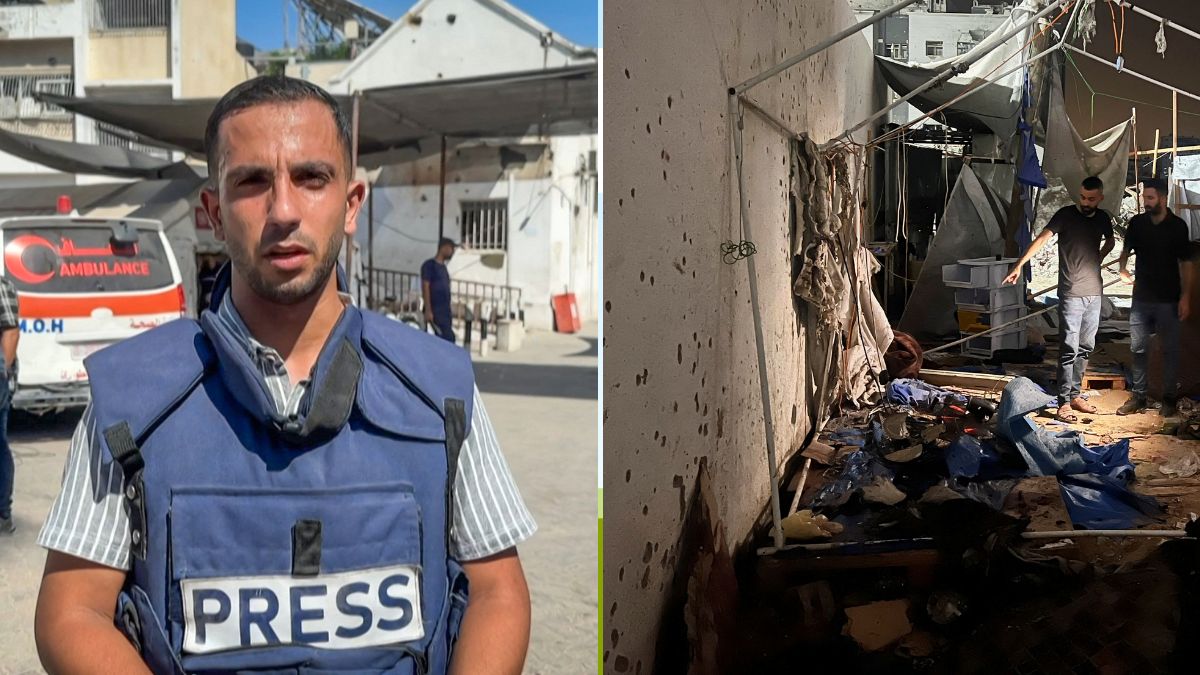
Five Al Jazeera journalists were killed in an Israeli air strike in Gaza yesterday, the network said in a statement. The Israel Defense Forces (IDF) claimed that one of them, Anas al-Sharif, was a Hamas cell leader posing as a journalist.
Al Jazeera named the others as reporter Mohammed Qreiqeh and camera operators Ibrahim Zaher, Mohammed Noufal and Moamen Aliwa. The network said they died in “a targeted Israeli strike on a tent housing journalists in Gaza City” and referred to the killings as murder.
The IDF alleged that al-Sharif was “the head of a terrorist cell in the Hamas terrorist organisation” responsible for planning rocket attacks on Israeli civilians and troops. It said that documents seized in Gaza—including personnel rosters, training records, phone directories and salary details—proved his links with Hamas.
According to the military, the material showed that al-Sharif headed a rocket-launching squad and was a member of Hamas’ elite Nukhba Force in the East Jabalia Battalion.
It said steps had been taken before the strike to avoid civilian casualties, including aerial surveillance, precise munitions and additional intelligence gathering. The IDF did not disclose the exact location of the strike, but asserted the documents proved “the integration of the Hamas terrorist within the Qatari Al Jazeera network”.
Al-Shifa Hospital director Dr Mohammad Abu Salmiya said al-Sharif was in a tent with other journalists near the entrance to the hospital when he was killed. The strike also killed at least two other people, bringing the total to seven dead.
“If this madness does not end, Gaza will be reduced to ruins, its people’s voices silenced, their faces erased—and history will remember you as silent witnesses to a genocide you chose not to stop,” al-Sharif wrote in a post on social media shortly before his death.
Last month, the IDF accused al-Sharif of being a Hamas member, an allegation he denied, saying he was a journalist with no political affiliations. The Committee to Protect Journalists (CPJ) said in July it was “gravely worried” for al-Sharif’s safety, noting that he believed Israeli military allegations were intended as a prelude to his assassination. The CPJ said 186 journalists have been killed in Israeli strikes since the war began nearly two years ago.
The UN Special Rapporteur on freedom of expression, Irene Khan, described Israel’s charges against al-Sharif as “online attacks and unfounded accusations” and expressed concern over “repeated threats and accusations” against him.
Al Jazeera described al-Sharif as a well-known Arabic-language correspondent who reported extensively from northern Gaza and denied Israeli claims of incitement. The CPJ accused Israel of having a history of labelling journalists as militants without providing credible evidence and said al-Sharif had recently reported on severe shortages of food aid in Gaza.
“Journalists are civilians and must never be targeted,” said CPJ regional director Sara Qudah. “Those responsible for these killings must be held accountable.”
In January, after a brief ceasefire, al-Sharif drew attention when he removed his body armour live on air while surrounded by Gaza residents celebrating the halt in hostilities.
Minutes before his death yesterday, he posted on X about “intense, concentrated Israeli bombardment using ‘fire belts’” in Gaza City. He was 28, and is survived by his wife and two young children. His father was killed in an Israeli strike on the family home in Jabalia in December 2023. Colleagues said he had refused to leave northern Gaza and had prepared a final message in case of his death.
“I urge you not to be silenced by chains, nor to be hindered by borders, and to be bridges towards the liberation of the land and its people, until the sun of dignity and freedom shines upon our occupied homeland,” he wrote.
“Allah may bear witness against those who stayed silent, those who accepted our killing, those who choked our breath, and whose hearts were unmoved by the scattered remains of our children and women, doing nothing to stop the massacre.”
