



The closure of the Strait of Hormuz seems to have forced the Centre's government to plug the vulnerability of depending on foreign-flagged ships to carry its own energy supplies.
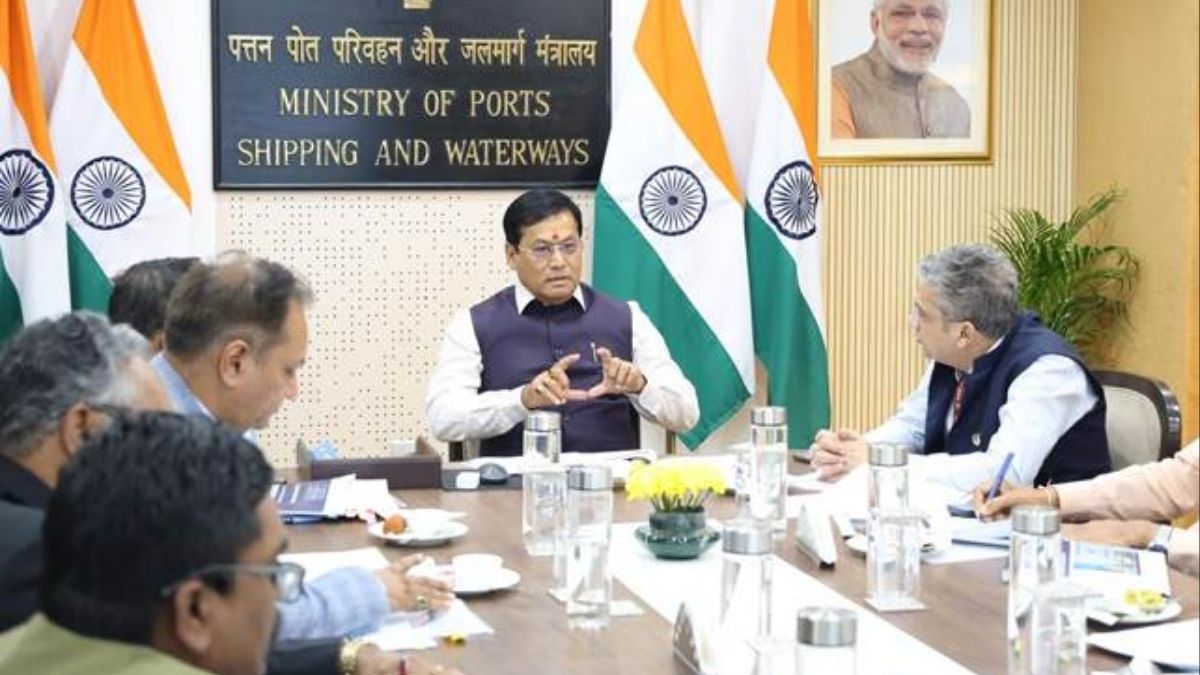
This week, Union Minister of Ports, Shipping and Waterways Sarbananda Sonowal convened a high-level inter-ministerial review meeting in New Delhi. What was originally called to assess the Hormuz situation quickly became a planning session for a far more ambitious goal: Atmanirbhar Shipping.
The meeting, attended by senior officials from the Ministry of Petroleum and Natural Gas, oil PSUs, the Ministry of Chemicals and Fertilisers, the Directorate General of Shipping, the National Shipping Board and the Directorate General of Foreign Trade (DGFT), produced a concrete near-term target.
Sonowal announced that India would add 62 vessels in FY 2026–27, backed by ₹51,383 crore in investment, creating an additional 2.85 million Gross Tonnage (GT) capacity.
The fleet expansion covers container vessels, LPG and crude carriers, green tugs, dredging vessels and tankers, the categories that have been most exposed by the Hormuz blockade.
The meeting also reviewed the status of a Joint Venture between the Shipping Corporation of India (SCI) and Oil PSUs to collectively acquire 59 vessels. The tie-up is designed to pool the purchasing power of state-owned energy giants into building a dedicated Indian fleet. Moreover, India spends an estimated $75 billion annually on freight charges to foreign shipping lines.
Sonowal also confirmed that SCI is now equipped to build specialised vessels for transporting ammonia, a critical commodity in the emerging hydrogen economy that has been particularly disrupted by the Hormuz shutdown, with multiple ammonia carriers stuck west of the Strait since the conflict began.
Sonowal then issued to all concerned departments a directive to prepare a concise, actionable white paper identifying gaps, setting clear targets, and laying out a time-bound roadmap across key pillars of fleet, shipbuilding, port infrastructure and the broader maritime ecosystem.
This document, Sonowal said, must be developed in close coordination with the Ministries of Petroleum and Natural Gas, Chemicals and Fertilisers, and Commerce and Industry, and will form the basis of the next review on a larger inter-ministerial platform.
Indian vessels have been operating under threat in recent weeks. Two India-flagged ships, Samnar Herad and Jag Arnav, reported a firing incident at the Strait and turned back, while SCI's crude tanker Desh Garima managed a successful transit on April 18 with 31 Indian seafarers aboard.
