



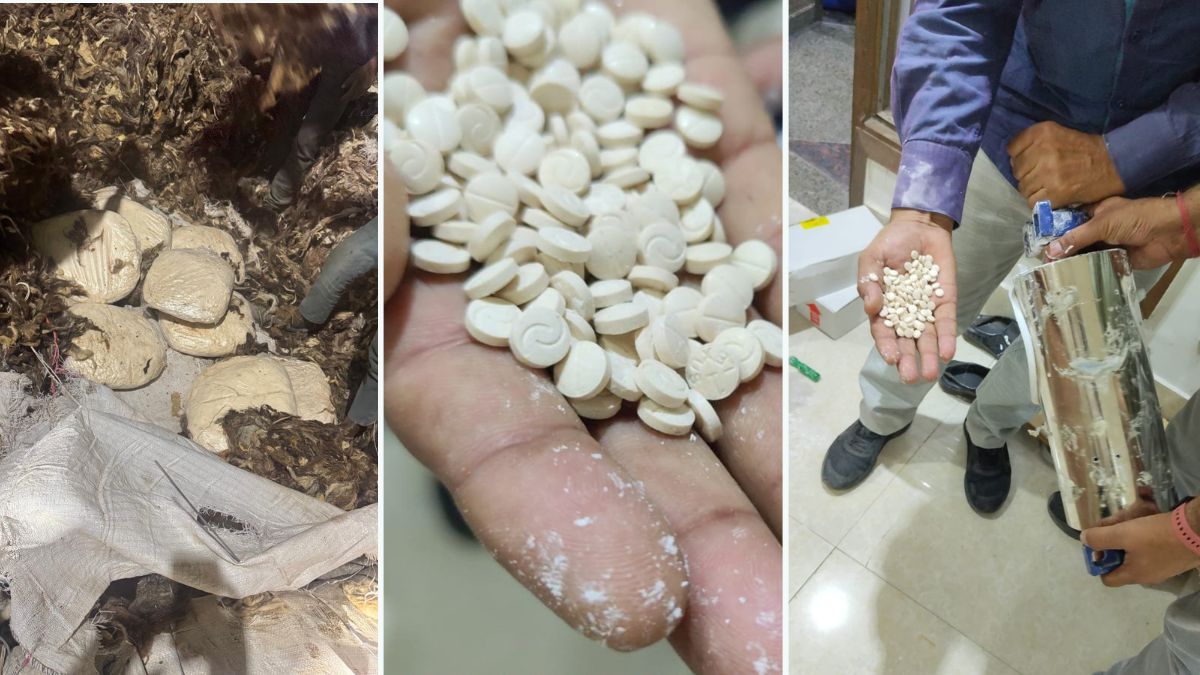
The Narcotics Control Bureau has seized amounts of Captagon, worth Rs 182 crore, under ‘Operation Ragepill.’
In a post on X, Union Home Minister Amit Shah said that the drug consignment was reportedly destined for the Middle East, and that one person has been arrested in relation to the case
“I repeat, we will clamp down on every gram of drugs entering India or leaving the country using our territory as the transit route. Kudos to the brave and vigilant warriors of the NCB,” he said.
What is Captagon?
Captagon is an addictive amphetamine-type stimulant drug that was first manufactured in 1961 by German company Degussa Pharma Gruppe as an alternative medicine to treat narcolepsy, behavioural disorders, and ADHD. It was supposed to be a milder version of other amphetamines and methamphetamine used at the time.
It contains Fenetylline, a synthetic drug similar to amphetamine.
In recent years, it has been known in the media as the “the Amphetamine fueling Syria's war" or "Jihadists' drug".
By 1986, most countries had discontinued its use based on its classification as Schedule II in the United Nations Convention on Psychotropic Substances 1971.
However, production continued illegally after illegal stocks were smuggled out of Eastern Europe.
Experts say that most of the global production of the drug is now in Syria. Its is one of the most widely abused drugs in West Asia.
The drug began to be known as the “jihadi drug” due to trafficking and abuse in extreme conflict zones in the region. It was reportedly used by groups like ISIS due to its ability to make the user stay away for a long time, suppress fear, and increase aggression and risk-taking
How dangerous is it?
Captagon was banned in countries primarily due to its side effects. The drug can induce hallucinations, visual distortions and psychosis, according to the National Library of Medicine in the US.
In rare cases, it can cause heart attacks, seizures, and organ dysfunctions, particularly in the liver.
Captagon can cause irreversible changes in brain circuitry and can take away the person's ability to think rationally. Long-term use can lead to psychological symptoms such as paranoia, panic attacks, and delusional thinking.
The drug is addictive and creates dependence, but has no direct correlation to the mortality rates of its users.
In the middle east drug has been used heavily in war-torn areas to cope with food insecurity.
The illegal manufacturing of the drug also combines several other highly addictive stimulants with the main ingredients amphetamine and theophylline.
