



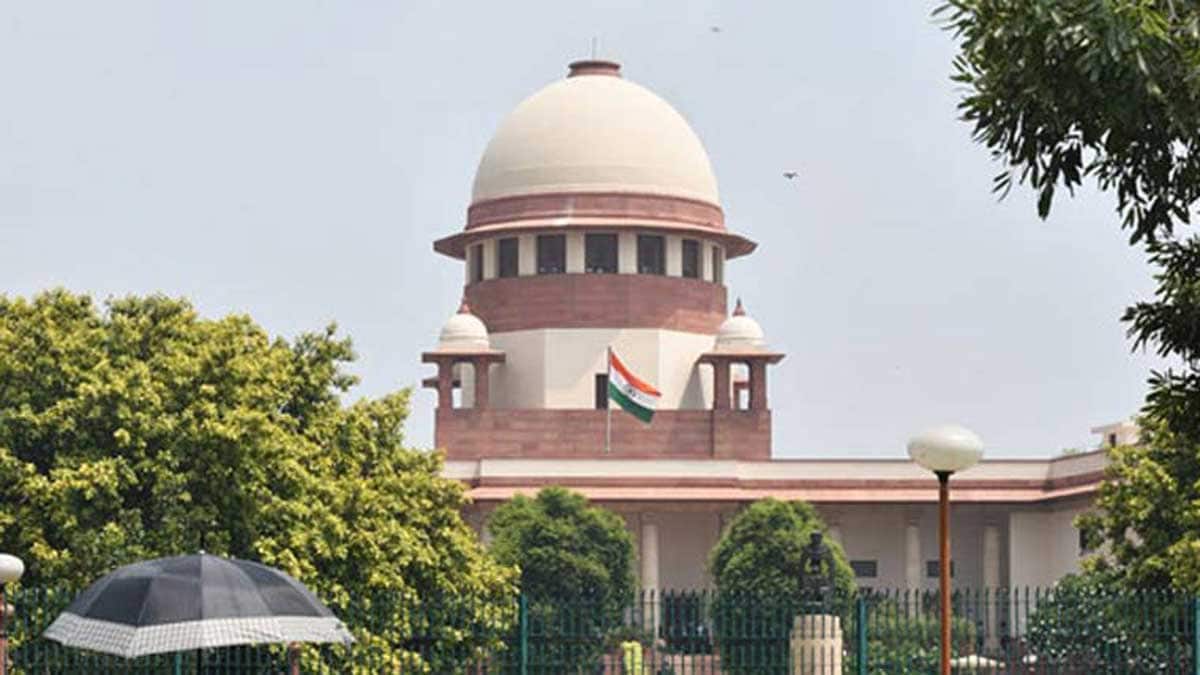
The Supreme Court on Thursday sharply criticised successive governments for failing to enact a law ensuring an independent mechanism for appointing Election Commissioners, warning that the vacuum risks enabling what it termed a “tyranny of the elected”.
Hearing a matter concerning the independence of the Election Commission of India (ECI), a Bench led by Justice Datta expressed concern that, despite constitutional expectations, Parliament has not framed a law governing appointments to the poll body.
The Court observed that governments across political lines have shown a consistent reluctance to institutionalise an independent system once in power. “Whoever comes to power is doing the same thing; it is unfortunate for the country,” Justice Datta remarked, underscoring the systemic nature of the issue.
The Bench noted that political parties often advocate for reforms while in opposition but abandon those demands after assuming office.
Highlighting this pattern, the Court said governments have historically “taken advantage” of the absence of a statutory framework, leaving room for potential misuse in appointments.
This, the Court suggested, undermines the principle of neutrality that is central to the functioning of the Election Commission, a constitutional authority tasked with ensuring free and fair elections.
'Tyranny of the elected'
In a striking observation, Justice Datta drew a parallel between concerns often raised about unelected institutions and the conduct of elected governments. “I am reminded of a parliamentarian saying tyranny of the unelected. This should be equated with the tyranny of the elected,” he said.
Justice Sharma, also on the Bench, added another layer to the critique, describing the situation as one of “tyranny of the majority”.
Failure to act despite constitutional mandate
Article 324(2) of the Constitution envisages that the appointment of the Chief Election Commissioner and Election Commissioners shall be subject to a law made by Parliament. However, decades after the Constitution came into force, no comprehensive legislation has been enacted to regulate the process.
The Court noted that this legislative vacuum persists despite repeated judicial and institutional calls for reform. Petitioners in the case argued that the absence of a law leaves appointments vulnerable to executive influence, thereby weakening the independence of the poll body.
Senior advocate Prashant Bhushan, appearing in the matter, echoed this concern, pointing out that political actors often raise the issue of independence while out of power but fail to follow through once elected. The Court agreed with this assessment, terming the situation “very unfortunate”.
Concerns over democratic functioning
The Bench also invoked broader concerns about the health of Indian democracy. Justice Datta referred to remarks attributed to Dr. B.R. Ambedkar in the early years of the Republic, noting apprehensions about the functioning of democratic institutions.
The Court’s observations come against the backdrop of its earlier interventions to safeguard the independence of the Election Commission, including guidelines to insulate appointments from executive control until Parliament enacts a law.
By reiterating the need for legislative action, the Court has once again placed the onus on Parliament to fulfil its constitutional responsibility and establish a transparent, independent process for appointing Election Commissioners.
