



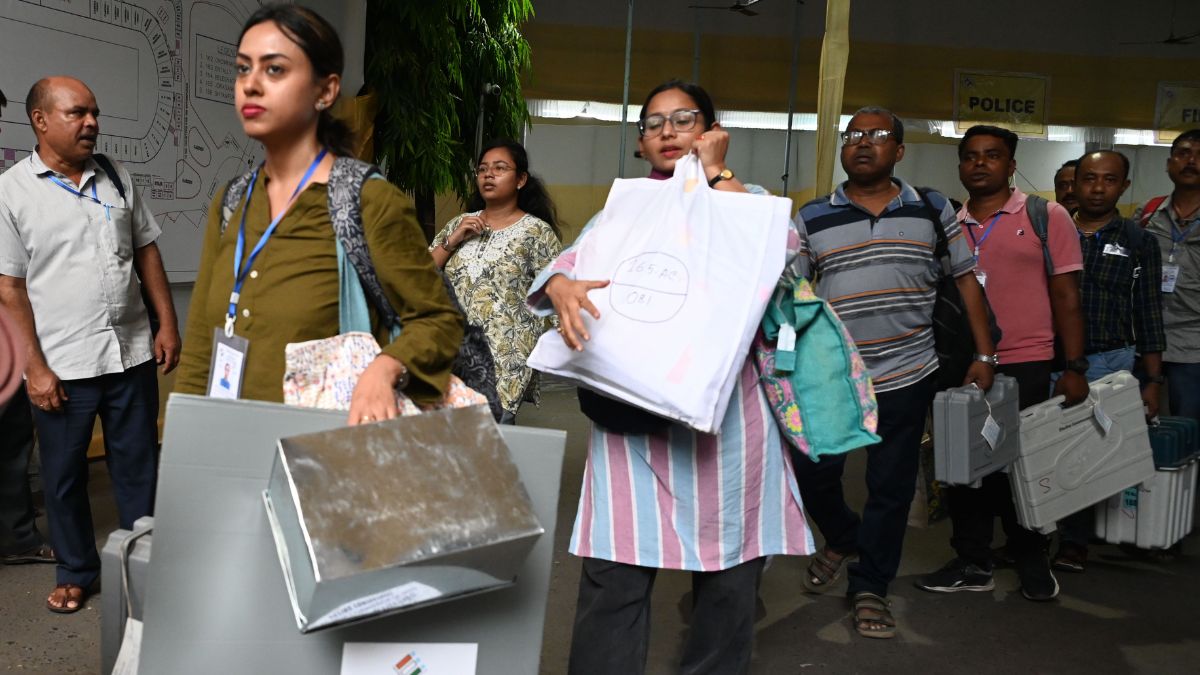
A total of 3.22 crore people, including 1.64 crore men, 1.57 crore women, and 792 third-gender electors, are casting their votes across 142 constituencies in the second and final phase of West Bengal elections on April 29. Among them, 4,12,668 first-time voters in the 18–19 age group are exercising their voting rights. Provisions have been made at polling booths for 57,783 persons with disabilities (PWDs), and 3,243 electors above the age of 100 are also casting their votes in this phase.
All 41,001 polling booths will have web-casting facilities, with 25,083 in rural areas and 14,218 in urban areas. There are 258 model polling booths, and 8,845 booths will be manned exclusively by women polling officers. The smallest constituency by area is Jorasanko in North Kolkata, while the largest is Kalyani in Nadia district. In terms of electorate size, the smallest constituency is Bhatpara in North 24 Parganas district with 1,17,195 voters, and the largest is Chunchura in Hooghly district with 2,75,715 voters.
A total of 2,343 companies of the Central Armed Police Force (CAPF) have been deployed across all constituencies voting in the second phase. Kolkata alone has 274 CAPF companies for its 11 assembly seats, the highest deployment among all constituencies. Additionally, 160 motorcycles will be on patrol, and 6,000 Quick Response Teams (QRTs) will be deployed. The Election Commission of India (ECI) has adopted a multi-layered security strategy to ensure peaceful voting and maintain law and order.
Before the second phase, weapons and ammunition were seized, while cash, liquor, narcotics, and freebies worth Rs 53,288.51 lakh were confiscated by security forces across polling constituencies. The ECI also conducted extensive drives to remove unauthorized political advertisements, including defacement of 20,35,633 public and 2,96,163 private properties. A total of 23,49,276 defacement cases were recorded, violating the Model Code of Conduct (MCC).
The ECI hopes for a huge turnout in the second phase similar to the 92.7 per cent turnout recorded in the first phase on April 23 for 152 constituencies. The Special Intensive Revision (SIR) and deletion of around 90 lakh ineligible voters contributed to the high turnout in the first phase, while many voters are casting their votes out of concern that their names might be deleted in the future.
Constituencies and parties in focus
The constituency to watch is Bhabanipur, where incumbent MLA and Chief Minister Mamata Banerjee faces her former close aide turned arch-rival Suvendu Adhikari, leader of the opposition in the BJP. This is the second seat Adhikari is contesting after his home turf of Nandigram went to polls in the first phase. Battleground Nandigram was the hot seat in the 2021 assembly elections, where Mamata challenged Adhikari and lost by 1,956 votes, prompting her to contest the bypolls from Bhabanipur to retain her seat as CM.
All 11 urban assembly seats are currently held by the TMC, with the BJP aiming to wrest control in the ruling party’s strongholds. North Bengal remains a BJP stronghold. Other parties contesting the second phase include Congress, CPI(M), Indian Secular Front (ISF), Aam Janata Unnayun Party (AJUP), and All India Majlis-e-Ittehadul Muslimeen (AIMIM). Currently, only ISF has one seat in the state, Bhangar in South 24 Parganas district, while other minority parties like AJUP and AIMIM are looking to win minority votes and secure seats. Both the Left and Congress failed to win any seats in 2021 but hope to change their fortunes in this election. For the first time in three decades, the Congress is contesting alone in all 294 assembly constituencies in the state.
Aggressive campaigning by all parties, particularly the TMC and BJP, means key leaders will play a decisive role in determining the outcome at the ballot box and who will rule West Bengal post counting day on May 4.
