



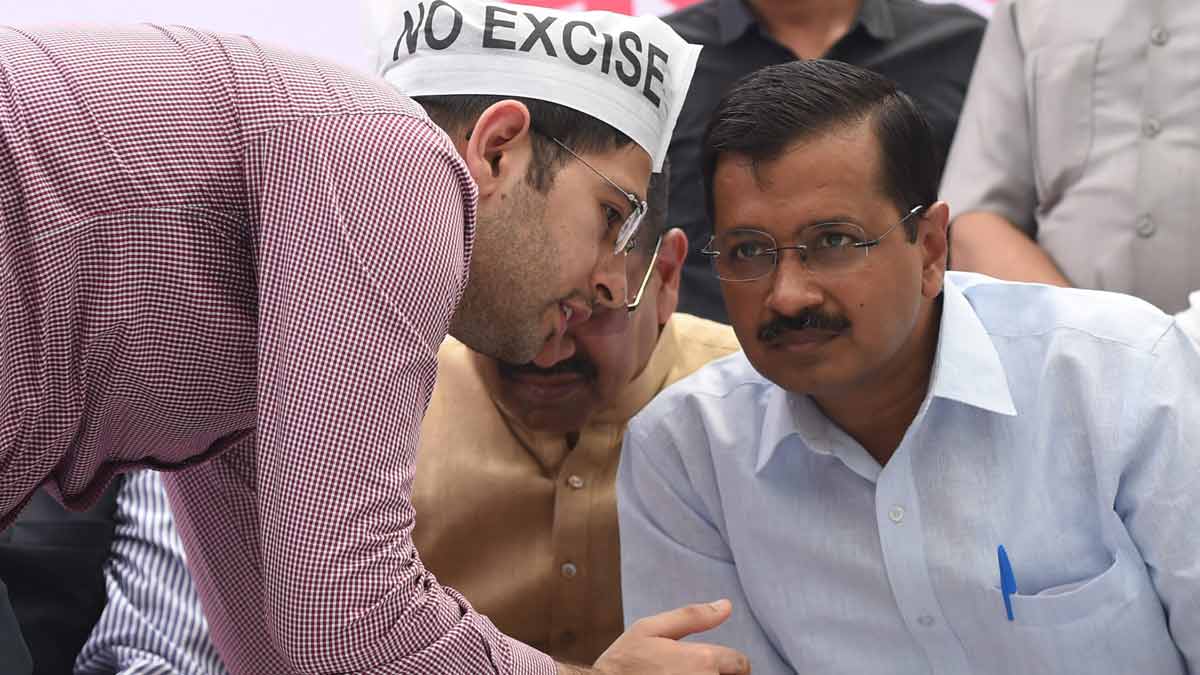
Aam Aadmi Party (AAP) is looking at a tough road ahead following the exit of seven Members of Parliament (MPs) – Raghav Chadha, Ashok Mittal, Sandeep Pathak, Harbhajan Singh, Swati Maliwal, Rajinder Gupta and Vikram Sawhney – on Friday. They quit the party yesterday and are expected to join the BJP formally soon.
Their departure not only reduces the AAP’s numerical presence in Parliament but also impacts its preparations for the upcoming poll battles. It has been a challenging period for the AAP over the past two years. The party faced considerable pressure with the arrests of key leaders, including former Delhi chief minister Arvind Kejriwal and Manish Sisodia, in connection with an alleged liquor policy scam.
These events have created a leadership void and tested the party's ability to operate effectively under strain. During this difficult phase, the AAP had showcased its resilience, with leaders like Chadha stepping up, playing a vital role in keeping both the government and the party's organisational structure functioning.
In fact, several of the seven MPs who left on Friday were key members tasked with shaping the AAP's public engagement, from policy discussions, organisational strategy, financial management and public communication. Their departure is more than just a typical political shift; it marks an organisational disruption.
Their move, meeting the two-thirds majority required under the anti-defection law, shows how deep the crisis is within the party. The timing is particularly critical for the AAP, as it is actively preparing for next year's elections in Gujarat, Goa, and Punjab, where the party aims to strengthen and expand its presence beyond Delhi, where it has formed the government three times and maintains a strong voter base. Currently, the AAP holds power in Punjab and maintains a presence in Delhi. It also has a limited footprint in Gujarat and Jammu and Kashmir.
AAP leaders are projecting an air of confidence, asserting that the party's connection with its grassroots supporters and its governance agenda remain solid despite these departures. However, the reduction in its strength in the Rajya Sabha, from 13 to the current six members, could limit the party's ability to effectively voice its agenda during legislative debates.
The current exits bring to mind past instances of prominent members leaving the party, including former IPS officer Kiran Bedi and poet Kumar Vishwas.
In 2015, former AAP spokesperson Shazia Ilmi resigned and later joined the BJP. This was followed by senior leader Kapil Mishra in 2017, after a public disagreement over accusations of corruption within the party. In 2018, founding member Ashish Khetan withdrew from active politics, citing personal reasons. Each of these departures occurred when the AAP was striving to stabilise or expand its reach.
Senior advocate Prashant Bhushan noted a difference between these earlier exits and the recent departure of the seven leaders. He suggested that the motivations behind the two sets of departures were different.
In a statement on X, Mr Bhushan commented that the initial group of leaders left when the party seemed to deviate from its founding ideals. He offered a contrasting view of the recent exits.
With the elections in Gujarat, Goa, and Punjab approaching, the immediate challenge for the AAP is to stabilise its organisation, rebuild its leadership team, and reassure its workers that the political movement it began over a decade ago remains vibrant.
For the party led by Arvind Kejriwal, having navigated the arrests of its top leaders and now facing the departure of influential parliamentarians, the current situation will likely determine whether it can pursue its expansion goals or must focus on strengthening its existing strongholds.
