



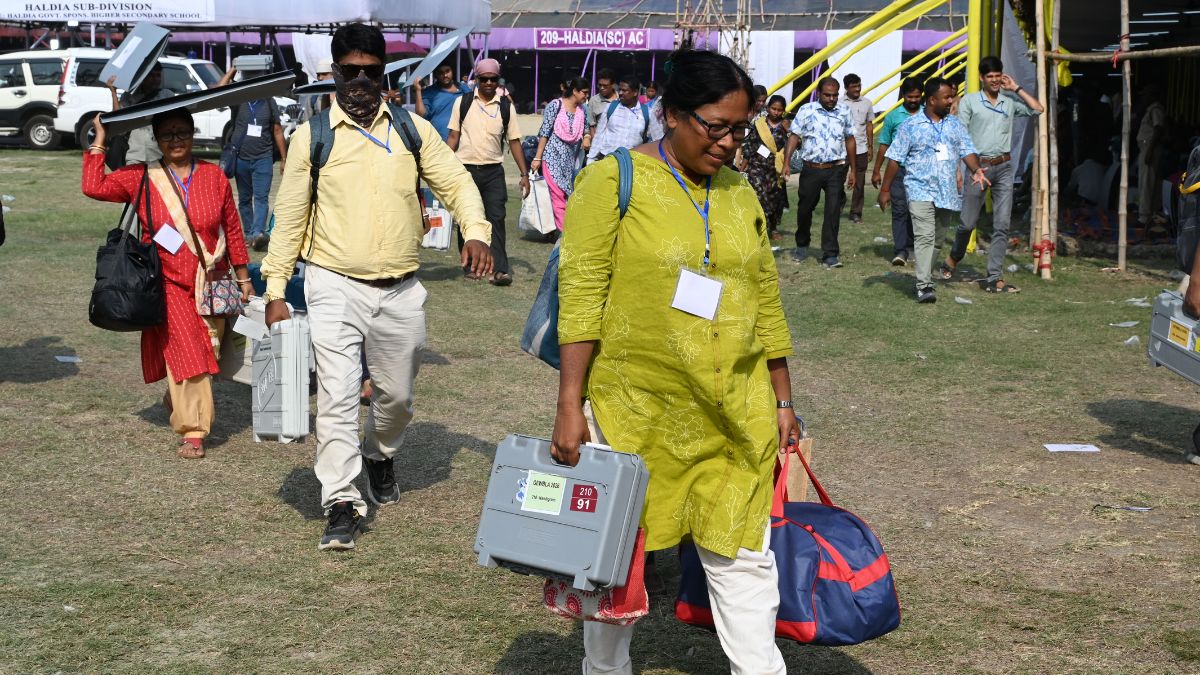
Security has been heightened for the two-phase West Bengal polls, beginning with the first phase on April 23. A total of 2,407 companies of the Central Armed Police Force (CAPF) have been deployed across the state for 152 constituencies going to polls, covering 44,378 polling booths in the first phase. The maximum deployment of CAPF is 271 companies in Purba Medinipur district, 273 companies in Paschim Medinipur district, and 240 companies in Murshidabad district. Daspur in Murshidabad district is the largest constituency by electorate, with 2,96,045 or roughly 2.9 lakh voters. The total electorate for the first phase is 3,607,171 or 3.6 crore voters polling on April 23, including 1,849,496 male voters, 1,757,210 female voters, and 465 voters of the third gender. New voters in the 18–19 age group amount to 4,05,718, with 1,71,896 female voters and 2,33,819 male voters. There are a total of 63,60,206 senior citizen voters.
A total of 5,644 polling stations are managed by women government officials. Webcasting will be available in all polling booths, with an average of 813 electors per booth casting their votes for the 1,478 candidates contesting in the first phase.
The Election Commission (EC) is keeping a tight watch on the movement of liquor, cash, narcotics, metals, and freebies that could influence voters, with seizures valued at Rs 45,124.05 lakh as of April 19. Weapons and licensed arms have also been seized by security personnel across the state. The sale of liquor has been banned in the state for 96 hours ahead of the first phase by the West Bengal Excise Department, compared to the EC norm of a 48-hour ban, after the department observed an unusual spurt in alcohol sales during the Model Code of Conduct (MCC) period following the announcement of election dates.
Key candidates and constituencies
Key constituencies to watch include Nandigram, where BJP’s Leader of Opposition Suvendu Adhikari is the incumbent MLA, having defeated Chief Minister Mamata Banerjee in 2021, as well as Malda, Murshidabad, and Uttar Dinajpur, which have large minority populations. Minority voters in this belt are being targeted by the ruling Trinamool Congress (TMC), Humayun Kabir’s Aam Janata Unnayan Party (AJUP), Assadudin Owaisi’s All India Majlis-e-Ittehadul Muslimeen (AIMIM), and Congress, with Adhir Ranjan Chowdhury contesting from Murshidabad and Mausam Noor from Maltipur in Malda district. Currently, of the 43 seats in these three districts, 35 were won by TMC in the 2021 Assembly polls, accounting for 10 per cent of TMC’s total winning seats, which the ruling party hopes to retain. BJP’s stronghold of North Bengal remains difficult for other parties to penetrate, and the party is making all efforts to dislodge TMC after its three consecutive terms in power.
The Special Intensive Revision (SIR) will affect several constituencies, especially Muslim minority and Hindu minority Matua-dominated constituencies. From 7.6 crore electorate at the start of the SIR, the state’s electorate has dropped to 6.8 crore after the process, including voter deletions before and after the Under Adjudication (UA) category list was released. Out of 60 lakh voters in the UA category, 27 lakh were deleted.
Unlike 2021’s eight-phase election, this year West Bengal is voting in two phases. The EC says it has taken specific initiatives to ensure free and fair elections, which is expected to result in a high voter turnout.
