



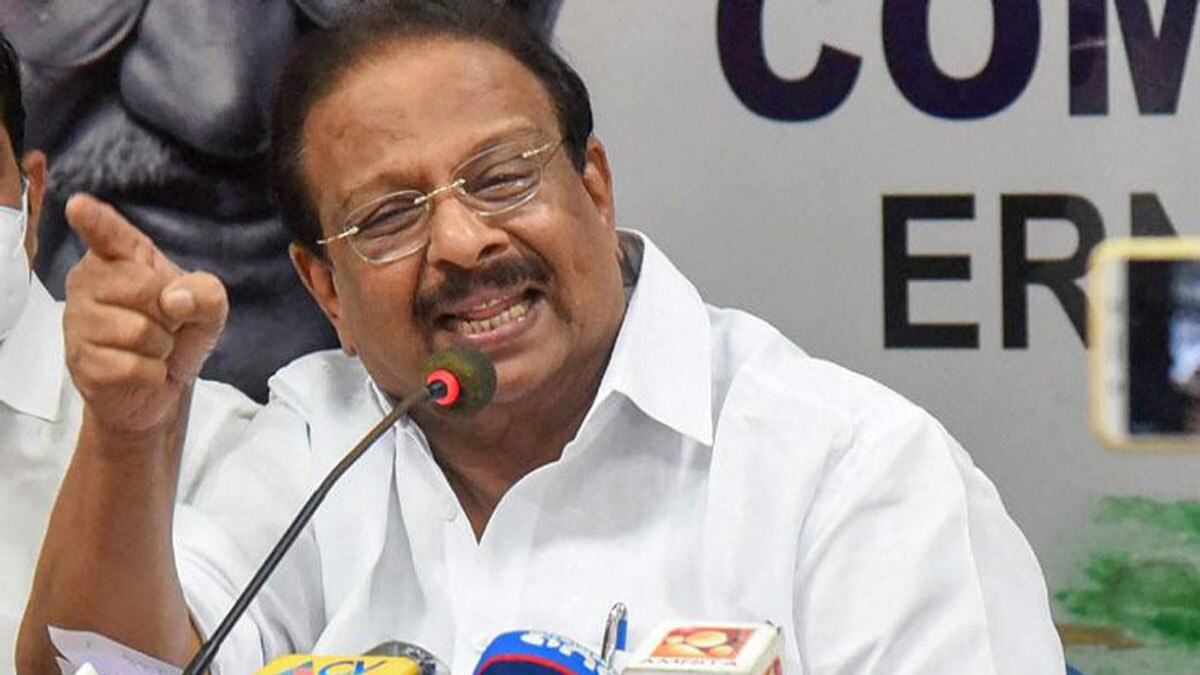
Direct confrontation and threats of resignation have often been key weapons in veteran leader K. Sudhakaran’s political armour throughout his career. He has frequently positioned himself as the only Congress leader capable of matching the CPI(M)’s “muscle power” in Malabar. He has also taken on rivals within the Congress, using resignation threats on several occasions.
One notable instance dates back to 2011, when Sudhakaran’s loyalists blocked then Kannur DCC president P. Ramakrishnan. Sudhakaran was an MP at the time. After Ramakrishnan accused him of irregularities in collecting funds for the family of a party martyr, Sudhakaran played his trump card:
“If the KPCC decides to allow Ramakrishnan to continue as DCC president, that means his demand for my resignation is right, and I am wrong. In that case, I am prepared to step down as MP,” he had said.
During his tenure as KPCC president, too, there were multiple occasions when Sudhakaran used the resignation card as leverage. Most notably, after he was arrested by the Crime Branch in a cheating case in which conman Monson Mavunkal was the prime accused, Sudhakaran offered to resign. However, the Congress rallied behind him.
Now, once again, Sudhakaran—currently the Kannur MP—has deployed the same tactic, using the threat of resignation to pressure the Congress high command over the Kannur Assembly seat in the crucial elections.
The Congress high command made the decision that Sudhakaran—or any other MP—would not be given assembly seats. Notably, he was not the only MP to stake a claim. However, it was only Sudhakaran’s camp that took the issue into the public domain, amplifying his displeasure and emotional outbursts. The Kannur veteran camped in Delhi for three days, staying away from the cameras, even as his team periodically floated talk of multiple “explosive press meets.” Meanwhile, the “KS brigade” made performative protests in Kannur to add to this.
This, in turn, diverted public and media attention from internal fissures within the CPI(M), while also generating negative publicity for the Congress and reinforcing an impression of disunity within the party ahead of a crucial election with limited campaign time. Notably, the visual media also fed narratives that Sudhakaran would leave the party, fight as an independent, and even join the NDA. Narratives have also emerged suggesting that the high command yielded to Sudhakaran’s pressure tactics, though the Congress leadership has not confirmed any such development. Meanwhile, the party deployed leaders from multiple levels to pacify Sudhakaran. The party even deployed retired leader A.K. Antony to pacify the Kannur leader when rumours went on air that Sudhakaran would leave the party.
However, after much drama, Sudhakaran finally left his room and Delhi, making a statement that he would remain in the party and that his cadres would work for the party. For many in the Congress, the sentiment is unmistakable—delivered in weary, sarcastic murmurs: he and his cadres have already done more than enough!
