



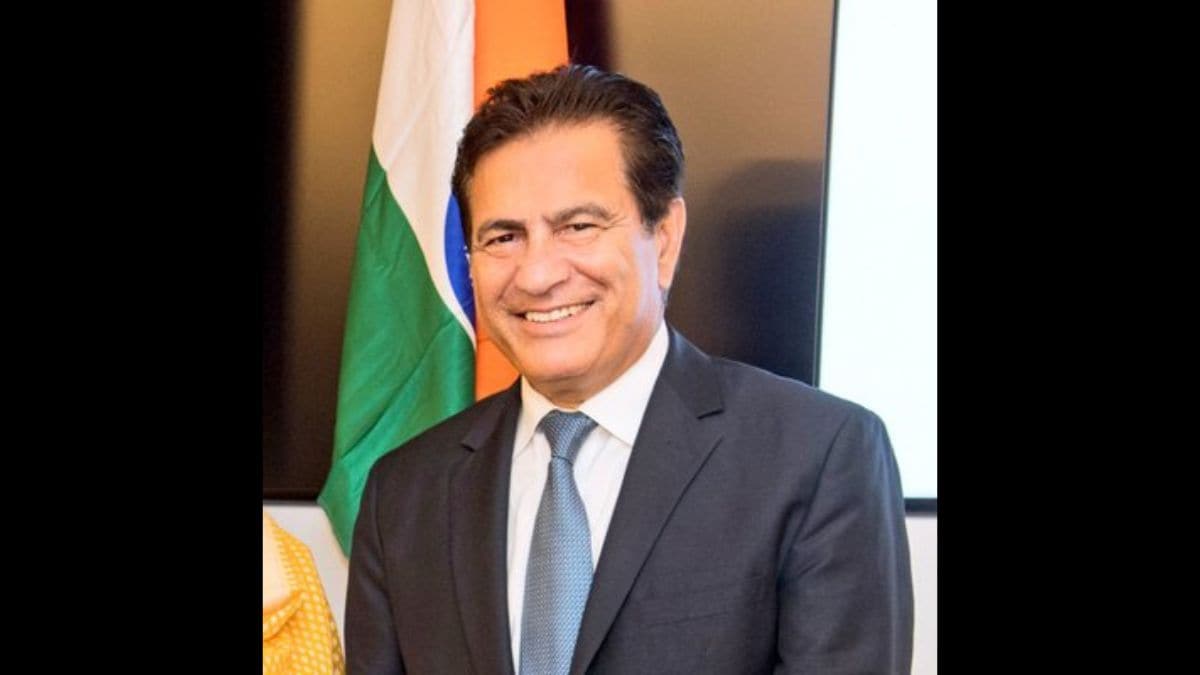
In an insightful discussion with THE WEEK, Mukesh Aghi, President and CEO of the US-India Strategic Partnership Forum, sheds light on the complex challenges India faces amid escalating geopolitical tensions in the Gulf. Highlighting India’s delicate balancing act, Aghi emphasises the country’s vulnerability due to its energy dependence, the safety of millions of Indian workers in the region, and the broader economic implications of regional instability. He underscores the Indian government’s careful diplomacy in navigating relations with Iran, Arab nations, and the United States, while cautioning that inflation, fuel shortages, and disrupted remittances could weigh on India’s GDP. Aghi also explores the strategic dilemma of naval engagement in the Strait of Hormuz, noting the high risks and likely avoidance of direct involvement, reflecting India’s cautious yet significant role as a regional power. Below are the excerpts:
This war muddies the waters in a major way because India, any way you look at it, is caught in a bind. How much of an impact do you think India will suffer? Is it going to be a prolonged period of angst for India?
Well, you know, you have to understand that this is not just about geopolitics. It goes beyond that. (Tomorrow) The US can withdraw and say, ‘OK, I've accomplished my objectives, destroyed the missiles, destroyed all the air coverage.’
But it's the regional countries which will feel the impact.
We saw the Iranians bombing the financial centres, airports in Dubai and other areas. Yes, India got two oil tankers come out unscathed and I think more will come out. But the impact on India is going to be quite a bit because our dependence on energy, especially LNG from Qatar has had an impact.
India may find other sources, but it'll be much more expensive. And so overall, I would say that India is walking a very fine balance — not upsetting the Persians, not upsetting the Trump administration, managing its relationship with the Arab countries.
We have 9 million Indians who are working in the region itself. So India is in a tough position at the moment, but I think I have to compliment the government, especially the foreign minister who has basically walked a very tight line and managed this so far with less impact on India.
President Trump has already mentioned that the US cannot patrol the Strait of Hormuz and other countries should step in. Maybe he's hinting at the GCC countries (but) suppose he asks India to step in, that would put India in a very, very difficult position. It's an imaginary situation, but suppose something like that is proposed, how do you think India can manage?
Well, India is already basically escorting ships in the Arabian Sea and Indian Ocean. So I think that process continues. If you look from a regional power perspective, there's no better Navy in the water in that region than India.
Will India agree to basically escort ships from the Strait of Hormuz? I think it'll be very difficult because you have within the Iranians splinter groups. And if the Indian Navy comes in, some will take shots.
You can take a simple RPG and start knocking off ships, or at least start attacking ships. So I don't think India will basically venture into that position of escorting ships within the Strait of Hormuz.
The US has refused to do that. Because it's very difficult, very complex. Trump has asked UK, he's asked China, and they have basically kind of ignored it. They have not firmly said no, but they've ignored it.
And I think India will do the same thing.
Inflation, fuel shortage. So all these issues will have a serious impact on India's bottom line. Are we seriously looking at a scenario where India's GDP really drops by quite a few basis points? How do you read this?
Well, I think the bombing by the Israelis and Americans will stop because they're running out of ammunition and also probably running out of targets.
The question really is how long that stress factor remains in the region. And my thinking is while everybody will try to get back to normalcy, I don't think it's going to be the same as it was.
When you have the Iranians going after the financial assets, airport assets, the (Gulf) countries have long memories and they will not trust from that perspective.
The other thing you have to understand is the psychological impact. The real estate market, especially in the UAE, which was on fire, will slow down. That will have an impact on capital investment coming into the country itself. That means if buildings slow down, that will impact the Indian labourers and they will not be as much needed. So besides them coming back, the remittance of money will kind of slow down. That will have an impact on India. The question is, will it be 50 basis point or 100 basis point? We don't know. It's too early to say.
