



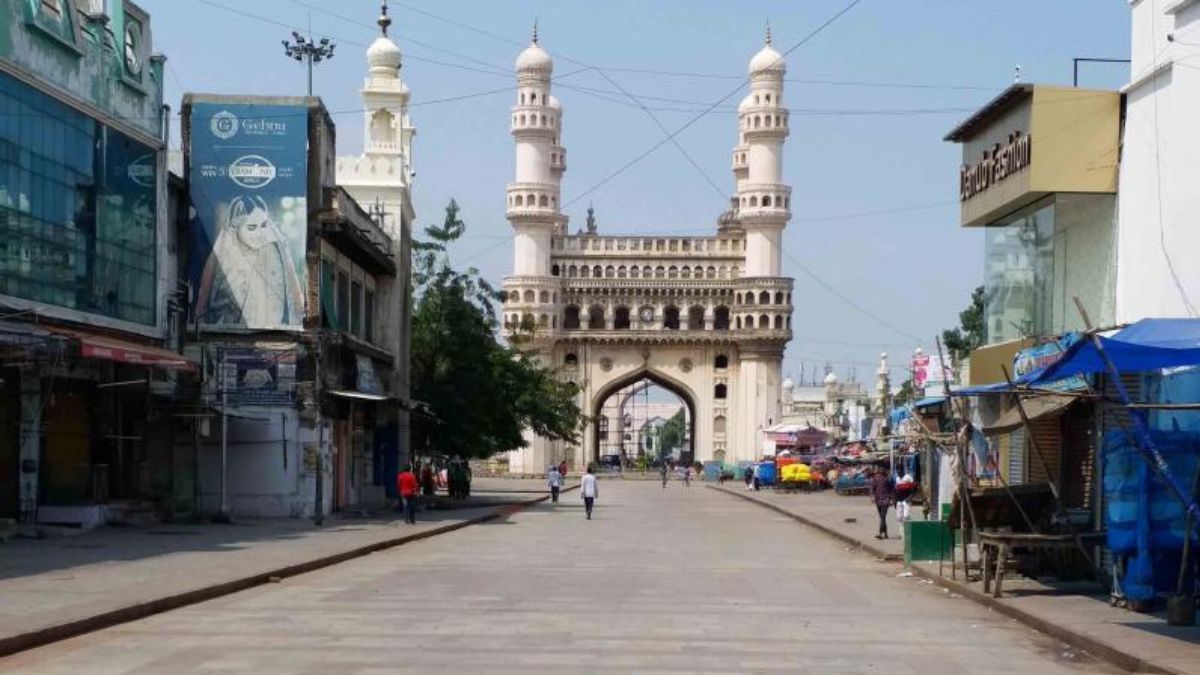
Hyderabad became India’s largest city when 27 adjacent municipalities were merged into it on November 21, 2025. That status changed on February 11 as the Telangana government trifurcated the city into three municipal corporations – the Greater Hyderabad Municipal Corporation (GHMC), Cyberabad Municipal Corporation (CMC) and Malkajgiri Municipal Corporation (MMC).
The old brand GHMC was retained by naming the municipal body that largely covers the Old City and other northern parts of Hyderabad. While CMC covers western and southwestern Hyderabad, including the IT–financial corridor and surrounding high-growth residential suburbs, MMC covers northern and northeastern Hyderabad, consisting mainly of large residential suburbs, industrial estates and outer growth corridors.
The government appointed Jayesh Ranjan, special chief secretary of MA&UD, as the special officer for the three municipal bodies to oversee the transition from the unified GHMC to the new municipal corporations. While existing GHMC commissioner R.V. Karnan was retained as the new GHMC commissioner, G. Srijana was appointed as CMC commissioner and T. Vinay Krishna Reddy as MMC commissioner.
The major question is why the Telangana government wanted to make Hyderabad the largest city and then trifurcate it.
The creation of Greater Hyderabad with an area of 2,135 sq. km was Chief Minister K. Revanth Reddy’s idea. He wanted to form the Core Urban Region Economy (CURE) with areas inside the Outer Ring Road (ORR) so that they would have uniform laws and policies for development. Earlier, these areas were governed by different municipal bodies, which prevented uniform development because their laws varied. While the GHMC area was governed under the GHMC Act, 1955, the rest of the urban bodies functioned under the Telangana Municipalities Act, 2019 and other laws. Merging the 27 local bodies into the GHMC helped achieve administrative uniformity, said D. Sridhar Babu, state IT minister, after the merger.
However, even before the merger, media reports suggested that the ‘largest city’ status could be short-lived and that Hyderabad could eventually be divided into three municipal bodies. The Revanth Reddy government later took that decision and formed the three new urban corporations.
A few media outlets reported that the trifurcation was the result of pressure from Congress MLAs from Ranga Reddy district (which falls completely under the Greater Hyderabad area) and the AIMIM, the party based in the Old City of Hyderabad and now expanding to different states of India. However, early speculations on trifurcation do not conclusively confirm this pressure theory.
The state government has said that the trifurcation is part of decentralised administration of the Greater Hyderabad area. Talking to the media, Jayesh Ranjan emphasised that residents across the three urban bodies would receive uniform services. With the merger and the eventual demerger, the Revanth Reddy government has achieved the formation of the CURE area.
