



Setting the stage for the 2027 census, the 16th in the series and the eighth after independence, the Union cabinet approved a detailed operational plan and budget of ₹11,718.24 crore for the census of India 2027. This census will also hold a caste census, a politically and culturally sensitive exercise.
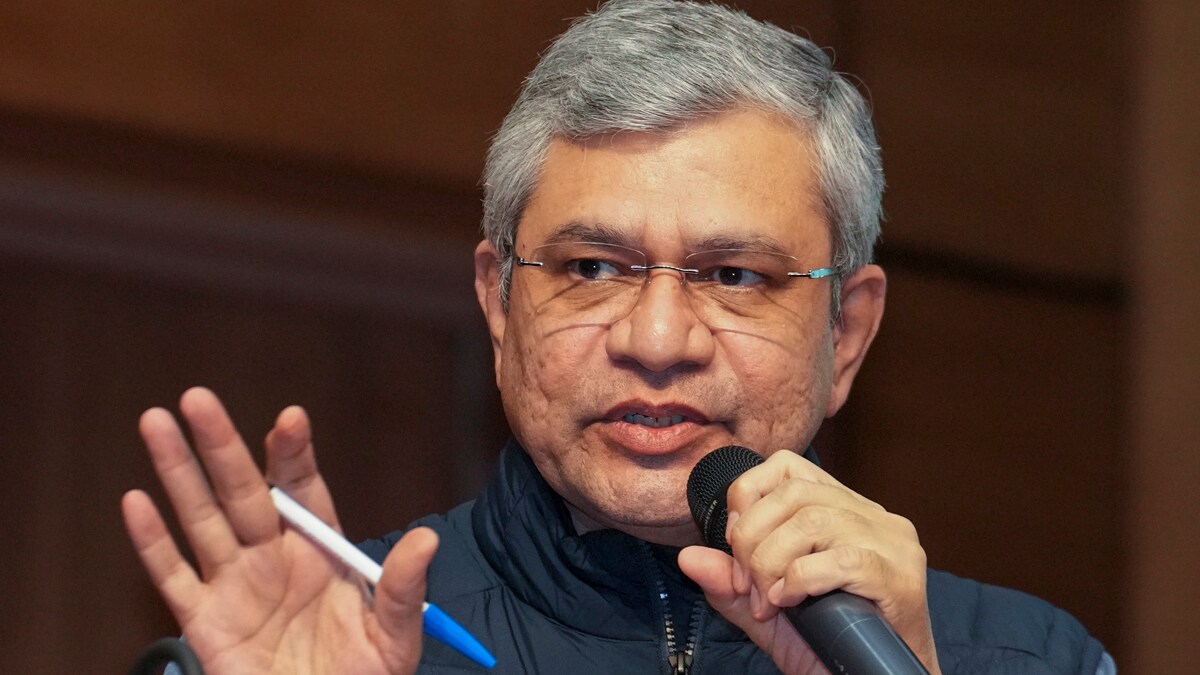
"It will be the world’s largest administrative and statistical exercise," Information and Broadcasting Minister Ashwini Vaishnaw said. The national reference date for population data is at midnight—00:00 hours of March 1, 2027. “What is the population at a particular time. Hence, this specific time will be the reference date,” the minister explained at the press briefing after cabinet. For snow-bound areas, the reference date is 00.00 hours of October 1, 2026.
Held after a delay of over five years—the census should have been conducted in 2021 but was delayed because of Covid—the two-phase national count will also be the first digitally conducted census. A key factor will be that the census will also capture caste data, last done in 1931.
Two-phase schedule
The census will be conducted in two distinct phases. The first phase—house listing and housing census (HLO)—is scheduled from April to September 2026, with states selecting a 30-day window for fieldwork. This will enumerate the number of houses and facilities, like electricity and water connections, and even vehicles. This becomes the reference for population enumeration and will be done in cooperation with state governments, the minister added.
The second phase—population enumeration (PE)—is planned for February 2027, with a revisional round from March 1 to 5, 2027. For snow-bound and non-synchronous areas (including Ladakh, parts of Jammu & Kashmir, Himachal Pradesh & Uttarakhand), enumeration will be completed in September 2026, with a reference date of October 1, 2026.
"This is what interests most and will be the basis of policies. This round will capture data on demographic, sociocultural, and economic parameters – details like age, gender, educational status, religion, mother tongue, languages, disability, social status, caste, occupation, migration and fertility.
Caste census
This part is also important as it will involve conducting the caste census, which has been the political demand. The Cabinet Committee on Political Affairs decided to include caste enumeration in the 2027 census on April 30, 2025. The government says caste data will be captured electronically during the population enumeration phase, allowing large-scale, standardised collection of a politically and socially sensitive parameter that has been the subject of long-running demand and debate. Officials stressed that digital capture will aid data accuracy and expedite downstream processing.
The minister said one has to wait for the Gazette notification to get into the finer details of how caste will be captured pertaining to surname, caste, gotra and their classification in religions.
Digital exercise
A central plank of the 2027 plan is a digitally native workflow. Data collection will be carried out through mobile applications made available in Hindi, English and regional languages for both Android and iOS, replacing paper enumeration as the primary tool. A Census Monitoring & Management System (CMMS) portal will provide real-time management and progress tracking. The rollout also includes a Houselisting Block (HLB) Creator, a web-map application to help charge officers geotag landmarks and demarcate HLB boundaries accurately. Authorities say these systems together will reduce errors, speed validation, and strengthen monitoring.
Self-enumeration
Vaishnaw said that for the first time, residents will be offered an option to self-enumerate, enabling households to submit information directly through secure digital channels. The government has emphasised security features and authentication protocols to protect data integrity during the nationwide digital operation. Another innovation is census-as-a-Service (CaaS)—a delivery mechanism to provide cleaned, machine-readable datasets and dashboards to ministries, state governments and other stakeholders, facilitating quick policy use and analytics.
Staffing & employment impact
The census will mobilise roughly 30 lakh (3 million) field functionaries, including enumerators, supervisors, master trainers, charge officers, and principal/district census officers. Many enumerators will be drawn from government teachers appointed by state governments, performing their work alongside regular duties and receiving honorariums for the extra assignment.
The plan includes hiring about 18,600 technical personnel for approximately 550 days at local levels to support digital operations, which the Cabinet briefing estimates will generate around 1.02 crore man-days of employment.
Officials say the shift to a digital platform and the CaaS model will enable faster dissemination of results and improved access to micro-level data down to village and ward units. The plan underscores the census’s role in delimitation, reservation exercises and evidence-based policy design.
Before the census is launched, a focused national publicity campaign to raise awareness and drive inclusive participation will be conducted.
