



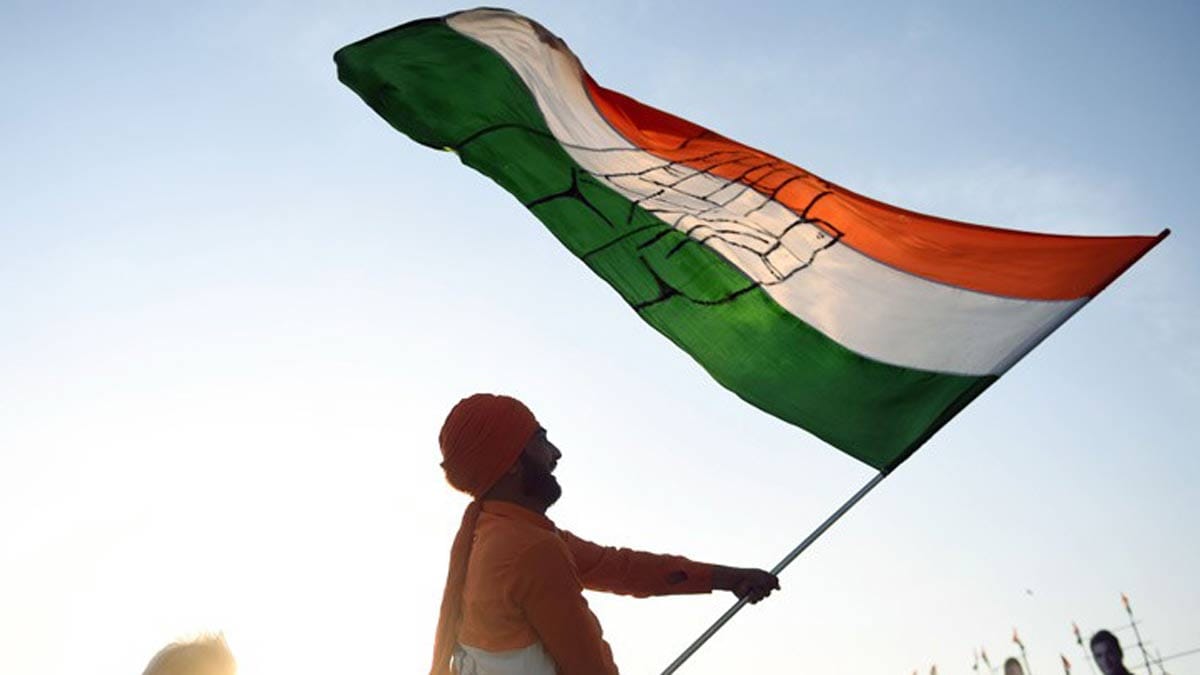
In recent years, the Congress has faltered in taking decisive calls, especially on its proposed rotational chief minister formula under which two leaders share power in turns. For example, the model failed to materialise in Rajasthan and Chhattisgarh. Now, even as the government crosses the halfway mark in Karnataka, there is little indication that D.K. Shivakumar will be allowed to take over as chief minister and replace the current CM Siddaramaiah anytime soon.
"Rumblings about a change of chief minister in Karnataka frequently resurface, and Congress leaders whisper that the Congress' central leadership should honour its rotational chief minister formulae where deputy chief minister Shivakumar is supposed to replace the current CM Siddaramaiah after half a term of 2.5 years," a political analyst said,adding, "but as it often comes out it public, it exposes the factionalism within the state Congress. And each episode dents the party’s image and reduces the public trust in the government.”
In Rajasthan, Ashok Gehlot, often described as a magician in political manoeuvring, was learnt to have consistently kept Sachin Pilot on the margins during his tenure as the CM, not allowing him to strengthen his position despite holding the post of deputy chief minister. Party insiders say that during his chief ministership, Gehlot closely supervised political developments, blocking any move that could dilute his authority. This is what seems to have ultimately driven Pilot to turn against Gehlot.
In Chhattisgarh as well, the rotational arrangement never materialised. T.S. Singhdeo was expected to succeed Bhupesh Baghel midway through the term, but Baghel remained in office far beyond the halfway point.
However, the only time the Congress could easily apply the rotational formula was with its alliance partner PDP in Jammu and Kashmir when the both allied to form the government in 2002 and after three years, the then chief minister and PDP chieftain Mufti Muhammad Sayeed made way for Congress's Ghulam Nabi Azad to become the CM.
Party insiders say the Congress‘s diminishing political fortunes have led to power imbalances and subsequent slugfests within, reducing the trust in the decisions of the central leadership as well. Moreover, the party is now in power in three states, and of these, Telangana and Karnataka significantly contribute to its national political standing, as Himachal Pradesh offers limited influence.
In such a reduced landscape, any internal disturbance becomes a far greater risk, potentially weakening the party even more. Insiders add that if the central leadership were able to yield stronger influence in states and were able to command authority over its tall state leaders, it might have acted decisively. But the weakened position leaves space for dissent, making the threat of rebellion real and avoidable.
In addition, changing a chief minister or even a powerful regional leader has been difficult for the party, as seen in Haryana, where Bhupendra Singh Hooda, despite losing three consecutive times, has been able to navigate to re-acquire the leader of the Opposition position. A CM, once in office, spends extra time building a loyal and strong political base across the organisation and administration, and fields trusted people in key positions aimed to create a durable power structure to weather opposition onslaught both internally as well externally, which is difficult to dislodge.
Now, even if the central leadership wants a change, party sources said, the incumbent’s entrenched influence can delay or resist the change. As a result, removing a sitting government‘s head, a chief minister, often risks administrative disruption, factional backlash and political instability, making the process complex than simply announcing a new leader.
An AICC in-charge said, "It would be difficult for the high command to change any existing chief minister when he has a greater number of MLAs with him. “
Moreover, the change will make the government vulnerable to a lot of weaknesses and resentment, as most of the people already holding positions do not want any changes, he said. Maybe one year before the tenure is over, the likelihood of replacing the chief minister to fight anti-incumbency stands a chance. Before that, the change under normal circumstances seems unlikely, said party sources.
