



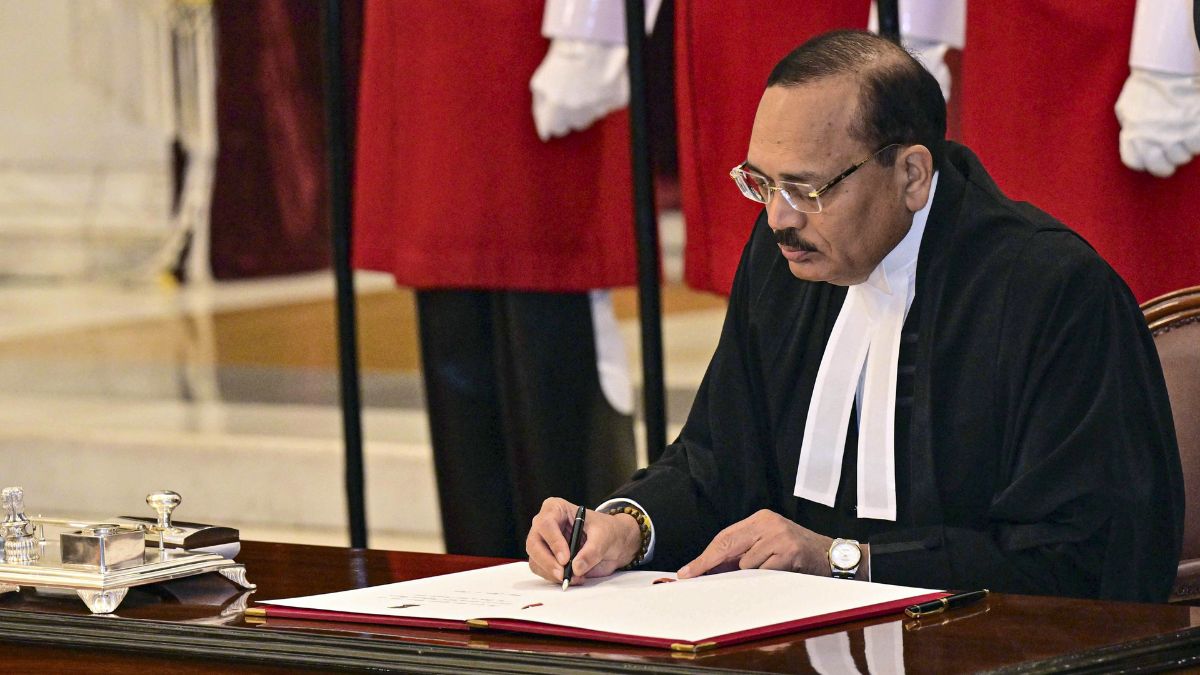
When Justice Surya Kant took oath this morning as the 53rd Chief Justice of India, the moment marked more than a ceremonial transition. It signalled the beginning of a tightly-packed 15-month tenure for a judge known for blunt clarity, bureaucratic efficiency and a deep sensitivity for equity in access to justice.
A former Chief Justice of the Himachal Pradesh High Court and a distinguished judge of the Punjab & Haryana High Court before joining the Supreme Court in 2019, Justice Surya Kant inherits a judiciary under strain. Yet he brings with him a reputation for organisational discipline, strong administrative instincts, and an eye for systemic reform.
In recent informal interaction, he outlined his priorities without ambiguity: arrears first, particularly in cases frozen due to technical or constitutional issues, more Constitution Benches, identifying matters pending unnecessarily in High Courts because a connected legal question sits undecided in the Supreme Court and making the court more responsive to genuine public grievances.
The five challenges
As he settles into office, here are the five biggest challenges before CJI Surya Kant and the roadmap he is expected to pursue.
1. The mountain of arrears and ageing cases
The elephant in the courtroom is backlog. Over 90,000 cases are pending before the Supreme Court alone, but the deeper crisis lies in the age of these matters. Hundreds have remained in limbo for more than a decade. Justice Surya Kant has already identified two specific leakage points, cases pending because a connected issue is sub judice in the top court and cases held in abeyance due to interim orders, sometimes for years. His roadmap is to launch a pan-India arrears audit to identify, cluster and fast-track stagnating matters, set a dedicated calendar for the oldest cases week, once every quarter and review all ongoing interim stays against the High Courts and tribunals and promote out-of-court settlement and mediation in long-pending civil disputes. His success will be judged not by disposal numbers but by relief delivered in old cases.
2. Increasing constitution benches but without slowing regular hearings
One of the sharpest criticisms of recent years has been the infrequency of Constitution Benches and the prolonged pendency of key constitutional disputes, from federal power-sharing questions to electoral reforms. Justice Surya Kant has clearly said, “More Constitution Benches are my priority.”
His challenge to run 2–3 constitution benches simultaneously without paralysing regular benches, without pushing everyday litigants to the back of the line.
3. Balancing accessibility and docket discipline
A deeper trend has worried successive CJIs: the growing flood of litigants approaching the Supreme Court as a first rather than last recourse, especially in criminal matters and service disputes. The court is not designed to be a district appellate authority. Justice Surya Kant’s roadmap is likely to include stricter filtering at the admissions stage, greater use of speaking orders explaining why leave is declined, judicial communication with High Courts urging discipline on anticipatory/regular bail filings and strengthening of Supreme Court Registry scrutiny.
4. Restoring faith in judicial timelines, especially in trials
Justice Surya Kant has repeatedly underlined that delays in the trial system, and not just appellate courts, erode justice. The roadmap ahead would be a quarterly review with High Courts on vacancy status, rejuvenating the National Judicial Data Grid as a live accountability tool, pushing states to prioritise infrastructure under the Centrally Sponsored Scheme and accelerating digitisation for filings, translations and records retrieval.
5. Managing expectations and perception in a politically charged era
The CJI occupies a constitutional office increasingly under the glare of polarised public opinion.
Judicial restraint, institutional balance and transparent reasoning will be vital. Justice Surya Kant’s tenure will require balancing high-stakes political cases, Centre–Judiciary administrative tensions, pressure from civil society for swift rulings and the need to preserve institutional dignity.
The road ahead
Justice Surya Kant assumes leadership at a moment when courts are both overwhelmed and indispensable. His tenure is limited in months but rich in potential impact. If he can unlock the stuck portions of the docket, accelerate Constitution Bench work, and strengthen systemic accountability, his imprint will outlast his term.
In the next 15 months, efficiency will define credibility, and clarity will define legacy. The Constitution Bench courtroom and the arrears list will be his true proving ground.
