



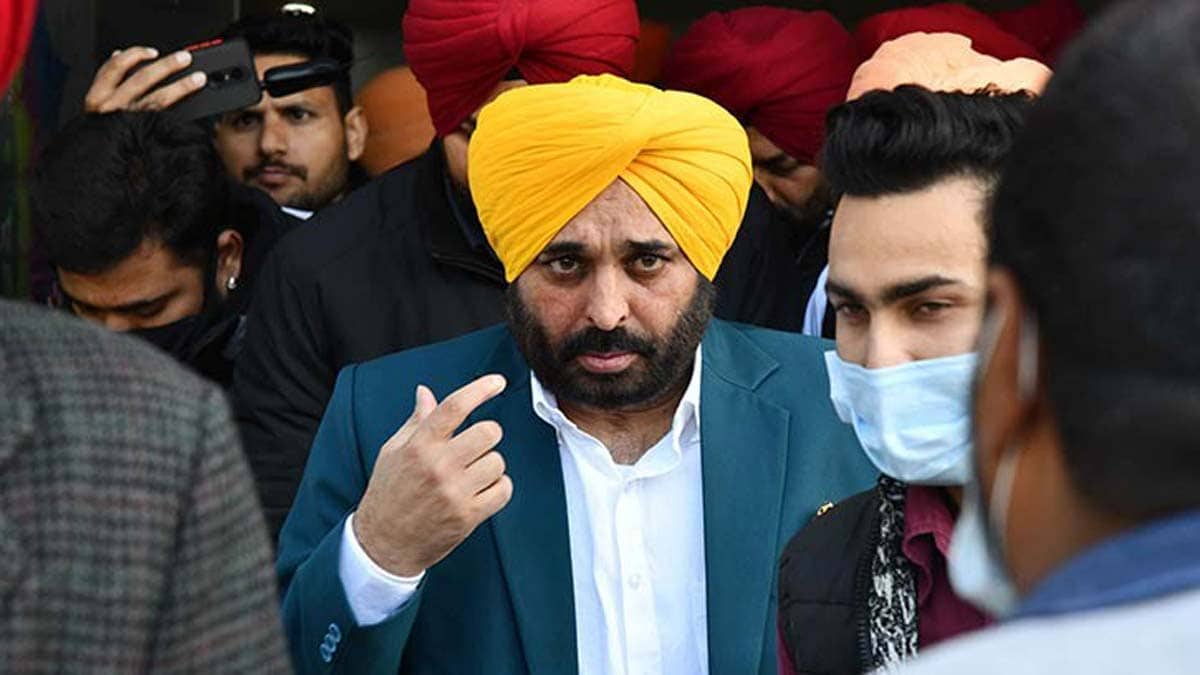
The Centre’s proposal to bring the Union territory of Chandigarh under the ambit of Article 240 of the Constitution had sparked off a massive political row in Punjab, with Chief Minister Bhagwant Mann accusing the Narendra Modi government of "conspiring to snatch" the state’s capital.
The Congress and the Shiromani Akali Dal (SAD) have also come out strongly against the move.
According to a Parliament bulletin, the Constitution (131st Amendment) Bill 2025 will be introduced in the upcoming Winter session of Parliament, beginning December 1, 2025.
What is Article 240?
Article 240 of the Constitution grants power to the president to make regulations for the peace, progress and effective governance of the Union territories of Andaman and Nicobar Islands; Lakshadweep; Dadra & Nagar Haveli; and Daman & Diu and Puducherry.
Bringing Chandigarh under the purview of this Article will empower the president to make regulations for the UT and legislate directly. The move could also pave the way for the appointment of an independent administrator in Chandigarh.
Article 240 applies to Union territories without legislatures. It says that when a body is created under Article 239A to function as a legislature for a Union territory (as is the case in Puducherry), the president shall not make any regulation with effect from the day of the first meeting of the legislature.
History of Chandigarh administration
Chandigarh, the shared capital of Punjab and Haryana, was administered independently by the chief secretary since November 1, 1966, when the two states were formed as part of the Punjab Reorganization Act.
However, since June 1, 1984, Chandigarh has been administered by the Punjab governor and the chief secretary's position was converted to Adviser to UT Administrator.
In 2016, the Centre made a proposal to restore the old practice, but the move was withdrawn after stiff opposition from the state parties, including SAD which was part of the NDA.
Why they oppose
Punjab has consistently staked its claim on Chandigarh. Chief Minister Bhagwant Mann asserted that the city will always remain an integral part of the state.
“Nobody can deny that being the parent state, Punjab has the sole right to its capital, Chandigarh,” the AAP leader said.
The Congress also echoed this view with party’s state president Amarinder Singh Raja Warring calling the move "totally uncalled for".
"Chandigarh belongs to Punjab and any attempt to snatch it away will have serious repercussions,” he said.
Shiromani Akali Dal (SAD) president Sukhbir Singh Badal termed the move as a "betrayal" of the commitments given by the Centre to restore Chandigarh to Punjab.
He alleged that the Constitution (131st Amendment) Bill sought to take the union territory permanently out of Punjab's administrative and political control.
