


Setback to Modi govt? Here are the key provisions SC stayed in Waqf Amendment Act

The provision that a person should be a practitioner of Islam for at least five years to create a Waqf has been stayed

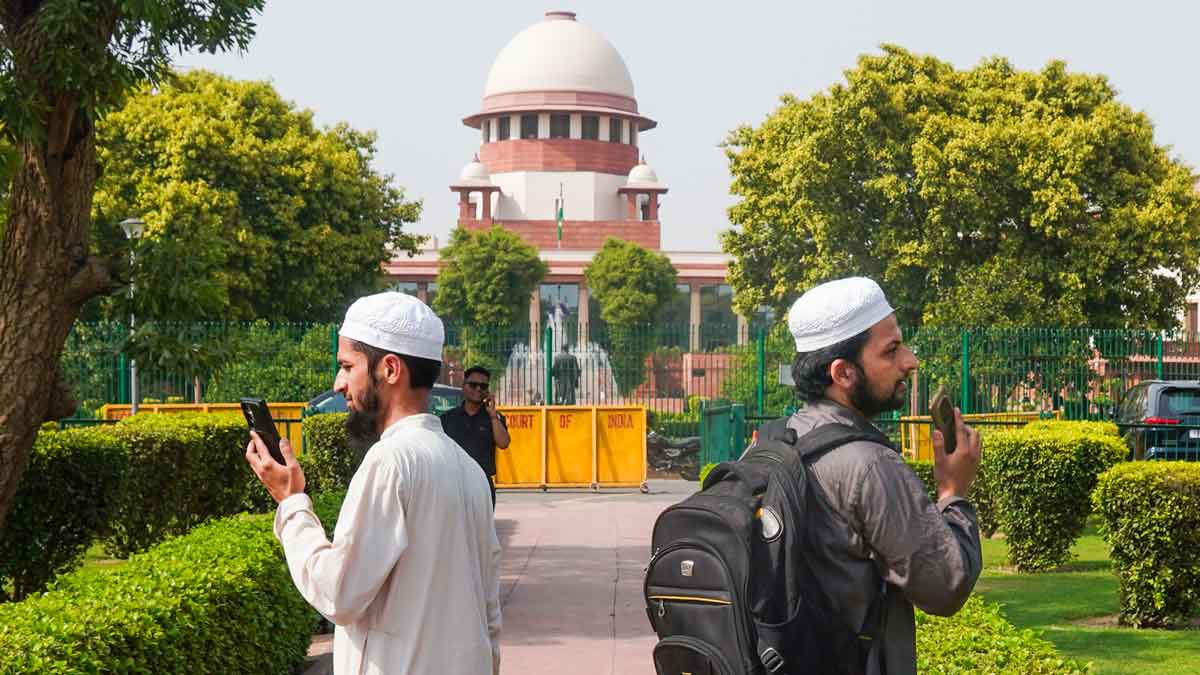
waqf-amendment-act-sc-hearing-pti Muslim petitioners at the Supreme Court lawn during hearing on pleas challenging the Waqf Act amendments | PTI

In a major setback to the Narendra Modi government, the Supreme Court on Monday stayed certain key provisions in the Waqf (Amendment) Act, 2025.

A bench of Chief Justice B.R. Gavai and Justice A.G. Masih stayed the provision enabling an officer designated by the government to determine the dispute whether the Waqf property has encroached on government property.

The court observed that an executive officer cannot be permitted to adjudicate the rights of private citizens, as this would violate the separation of powers.

The provision that a person should be a practitioner of Islam for at least five years to create a Waqf has also been stayed. The stay will be in force till the state governments frame rules on determining whether a person is a practitioner of Islam.

The provision allowing the nomination of non-Muslim members to the Waqf boards also came under the court's scrutiny. The bench refused to stay the provision but observed that, as far as possible, the ex-officio member of the board should be a Muslim.

It also dismissed the demand to stay the provision mandating registration, noting it is not a new requirement.

The top court had reserved its order on May 22 after hearing both sides on three consecutive days.

During the hearing, the petitioners raised several issues, including the one related to the power to denotify properties declared as 'waqf by courts, waqf-by-user or waqf by deed' as prescribed in the new law.

The petitioners also raised the issue of the composition of state waqf boards and the Central Waqf Council, where they contend only Muslims should operate, except ex-officio members.

The provision that says a waqf property will not be treated as a waqf when the collector conducts an inquiry to ascertain if the property is government land was also challenged in the court.

The Centre strongly defended the Act, saying waqf by its very nature was a "secular concept" and can't be stayed given the "presumption of constitutionality" in its favour.

Moreover, though waqf was an Islamic concept, it was not an essential part of Islam, it argued.

Join our WhatsApp Channel to get the latest news, exclusives and videos on WhatsApp
