



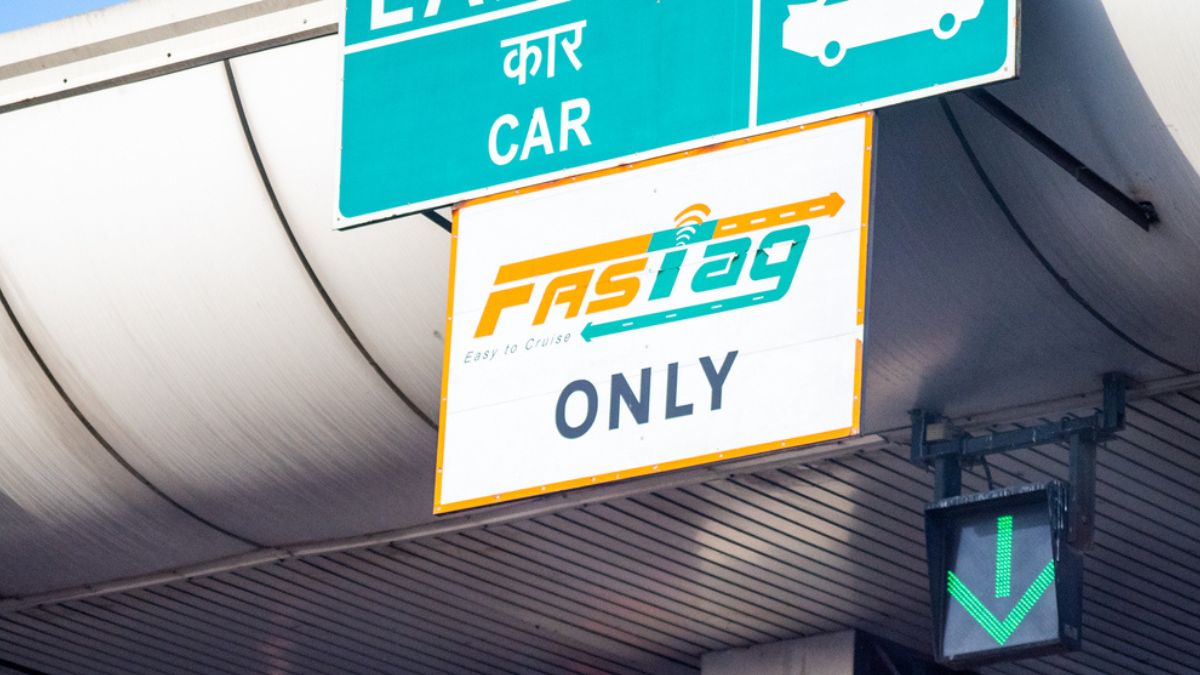
Despite daily toll collections exceeding Rs 193 crore through the Fastag-enabled system, the parliament’s Public Accounts Committee (PAC), chaired by Congress MP KC Venugopal, has flagged serious concerns over the transparency and fairness of the country’s tolling regime. The PAC proposed the establishment of a tariff authority, modelled after the Airports Economic Regulatory Authority (AERA), to regulate toll fixation, collection, and periodic revisions.
In its latest report on the Ministry of Road Transport and Highways, the PAC observed that toll is being collected on several National Highway stretches that are incomplete or are partly closed due to maintenance. Calling for strict monitoring by the Ministry of Road Transport and Highways (MoRTH) and the National Highways Authority of India (NHAI), the panel suggested imposition of strong penalties on contractors or concessionaires, where toll was collected in this manner.
The Committee also raised alarm over the practice of perpetual tolling, which was made possible through an amendment to the Fee Rules in 2008 and further formalised in 2023. This allows continued collection of tolls even after the recovery of project costs and the end of the concession period. Though tolls collected are credited to the Consolidated Fund of India, the PAC noted that there is no institutional mechanism to assess whether such toll charges are justified in relation to actual operation, maintenance costs, or future service requirements.
The Committee was told that a study was being conducted by the NITI Aayog to revise the user fee framework, including base rates and concession structures.
The panel argued that toll rates be substantially reduced once capital and routine maintenance costs have been recovered, and that any continuation of tolls must be justified and approved by an independent oversight authority.
'Lack of mechanism for toll refunds'
The PAC found it unacceptable that tolls continue to be charged on roads that are incomplete or deficient in safety and traffic flow, calling this a violation of the user-pay principle enshrined in Section 7 of the National Highways Act, 1956, and fair commercial conduct mandated under Section 10 of the NHAI Act, 1988.
The Committee recommended the creation of a transparent, automated toll refund or waiver system, integrated with the existing electronic toll collection infrastructure such as FASTag. This mechanism should be technology-driven and function without user intervention, similar to the automated income tax refund system.
Despite the high level of FASTag adoption—with over 5.54 crore active tags—the Committee observed several operational shortcomings, including malfunctioning scanners, lack of uniform RFID infrastructure. The PAC recommended the development of a real-time performance dashboard for toll plazas that would display live traffic flow, queue lengths, lane-wise usage, and waiting times.
Recognising the need for flexibility during large public events, religious gatherings or disasters, the Committee further proposed legal amendments to empower local authorities, such as District Magistrates to suspend toll collection temporarily in the public interest.
The report also expressed concern over instances of unauthorised toll collection by private individuals who illegally diverted traffic and collected tolls without any authority. While legal action was initiated in one such case, the PAC highlighted systemic enforcement failures and recommended the use of GPS-based mapping, geofencing, CCTV and drone surveillance, and regular joint inspections to prevent such incidents.
