



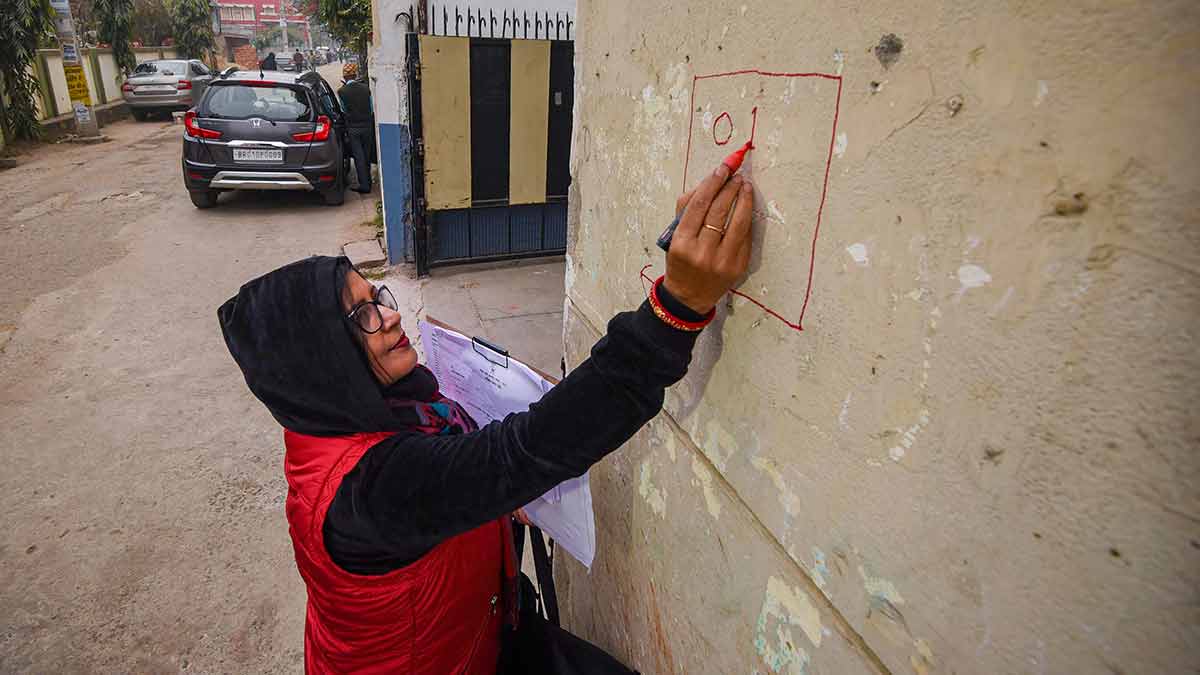
India’s next national Census, scheduled for 2026–27, is expected to be unlike the previous ones. It has the potential to reshape the country’s social and political landscape in the coming years.
For one, it will be the first in nearly a century to include detailed caste data and the first ever to be done digitally. The data gathered will not only help the policy makers tailor their products and welfare schemes, but even draw the political map of India. The census figures will be used to conduct delimitation exercise thus drawing the constituencies map, which will then be used for reservation of 33 percent seats for women.
The Women’s Reservation Act, passed in 2023, promises 33% of seats for women in Parliament and state legislatures. However, this law is tied to the Census and the following delimitation. Until both are completed, the quota cannot take effect.
But in South India, it is being viewed with much more anxiety. The southern state argue that under the delimitation exercise the north Indian states may gain much more seats than the south because of higher population. This translates into disproportionate impact of North India in forming the central government.
Under the Constitution, the number of seats in the Lok Sabha and state assemblies must be revised based on population after each Census. But a political agreement in 1976 froze this process until the first Census after 2021. Now, that freeze is getting over.
Southern states like Tamil Nadu and Kerala have low birth rates, while northern states like Uttar Pradesh and Bihar have seen faster population growth. If Lok Sabha seats are reallocated purely by population, the south’s share of power in Parliament could decline sharply.
Another flashpoint is the caste enumeration. While Scheduled Castes (SCs) and Scheduled Tribes (STs) have always been counted, this will be the first national count of all castes since the colonial era.
The inclusion of caste details adds a sensitive and politically charged dimension to the exercise. The data thus collected is likely to have a strong impact on social justice policies, and electoral representation. The data could also feed into ongoing debates around reservation caps and the demand for proportional representation raised by multiple political parties.
In states like Karnataka and Bihar, recent caste surveys have already reignited calls for proportional representation and revised reservation quotas. The Congress has openly backed the idea, calling for rights “in proportion to population”.
But the Union government has hinted that the caste data may be released as a plain list, without grouping castes or using it for quota decisions. This could limit its impact. The idea to have caste census at the national level has also to do with similar methodology being used across all states, rather than adhoc measures which could have been used for conduct state level surveys. There were apprehensions that upper castes’ share had gone down.
As the caste data will be available in 2027, it means that the next Lok Sabha will witness its full impact.
Parallelly, as the government is pushing ‘one nation, one poll’ project. Once approved by the parliament and the entire exercise of delimitation is complete – though it is not linked to it – then it may be taken up, which means for simultaneous polls to happen, they could only be possible by 2034.
According to the government, the Census will begin with house listing on April 1, 2026, followed by population enumeration from February 9 to 28, 2027. The reference date for most of India is March 1, 2027, though in hilly and snow-bound areas, the count will close earlier in October 2026.
A formal notification expressing the government’s intent to conduct the Census, in line with Section 3 of the Census Act, 1948, is expected to be published in the official Gazette on June 16, 2025, ahead of the Bihar polls. This means the BJP-led NDA will use it for campaign centring its messaging around caste census.
