



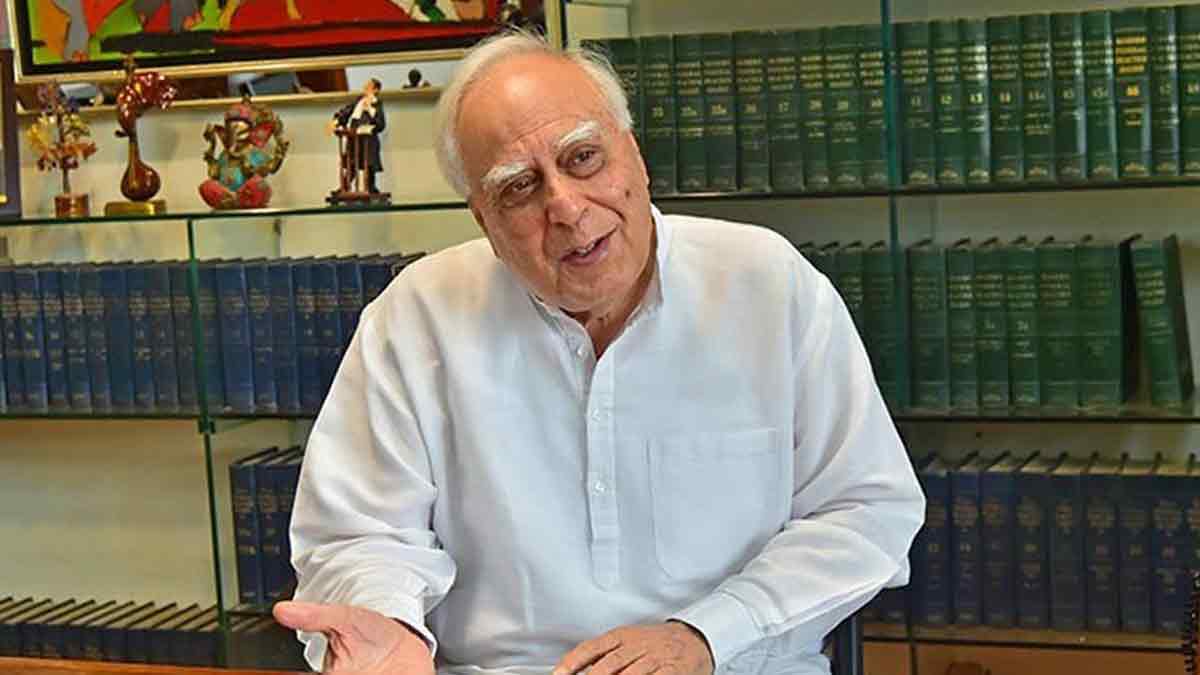
The Supreme Court on Tuesday began hearing the petitions challenging the constitutional validity of the Waqf (Amendment) Act, 2025 with senior advocate Kapil Sibal appearing for petitioners opposing the Act, calling it a creeping acquisition of Waqf properties.
The Act, amending the Waqf Act of 1995, aims to regulate Waqf properties—religious endowments under Islamic law dedicated to charitable or religious purposes.
A bench headed by Chief Justice of India B.R. Gavai focused on five lead petitions, with others treated as intervention applications, as it considered granting interim relief to pause the Act’s implementation.
The petitions, including those backed by Congress MP Mohammad Jawed and AIMIM leader Asaduddin Owaisi, argue that the amendments discriminate against Muslims and interfere with their religious affairs.
Senior advocate Kapil Sibal called the Act a creeping acquisition of Waqf properties, alleging that it undermines Muslim rights to manage their endowments.
He argued that the amendments violate Articles 14, 15, 25, and 26 of the Constitution, which guarantee equality, non-discrimination, and freedom to manage religious affairs.
Sibal emphasized that the Act’s provisions, such as allowing non-Muslims on Waqf Boards and the Central Waqf Council, dilute the community’s autonomy over their religious institutions.
He further criticized the removal of the Waqf by user concept, which recognized historical properties as Waqf based on long-term religious use, claiming it risks disenfranchising Muslims from their rightful assets.
Sibal also highlighted the Act’s potential to disrupt federalism, as it encroaches on state powers over Waqf management. He urged the court to grant an interim stay, arguing that the amendments threaten the economic and cultural fabric of the Muslim community while questioning the Centre’s claim of curbing misuse, calling it a pretext for control.
Six BJP-ruled states—Haryana, Maharashtra, Madhya Pradesh, Rajasthan, Chhattisgarh, and Assam—supported the Act, emphasizing its necessity to prevent encroachments.
Centre had assured the court it would pause denotification of Waqf properties and non-Muslim appointments until the hearing concludes.
The outcome will significantly impact the management of Waqf properties and India’s religious and federal dynamics.
The arguments remained inconclusive and will continue on Wednesday when the Centre will place its arguments.
