



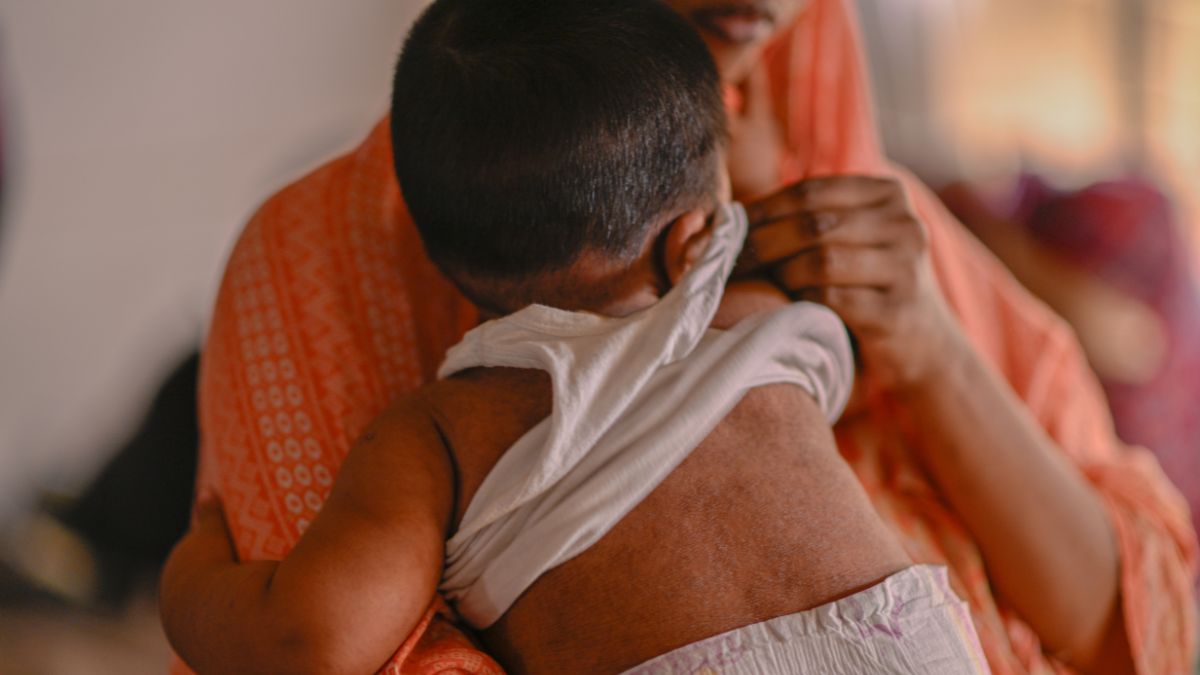
A fast-moving measles outbreak in Bangladesh has triggered alarm across the region, with over 100 reported deaths, 98 of them children, marking what could be one of the country’s deadliest waves of the disease in recent years.
In response, authorities in Bangladesh launched an emergency vaccination campaign on Sunday, aiming to contain the spread and protect vulnerable populations. Despite longstanding immunisation efforts, the outbreak has exposed critical gaps in vaccine coverage and public health outreach.
Highlighting the urgency, the Unicef representative in Bangladesh, Rana Flowers said in a statement on Sunday that “vaccines are foundational to child survival,” warning that the outbreak is putting “thousands of children, especially the youngest and most vulnerable, at serious risk.”
The situation has prompted swift political attention as well, with Prime Minister of Bangladesh Tarique Rahman directing senior officials to assess the scale of the crisis across the country.
But as Bangladesh battles this surge, a pressing question arises for its neighbour: Is India also at risk? What do the trends and experts suggest?
What is measles? Symptoms to watch out for as cases rise
Measles is a highly contagious viral disease caused by the measles virus, belonging to the Morbillivirus genus. It primarily affects children but can infect individuals of any age, especially those who are unvaccinated or under-vaccinated.
The infection typically begins with what may seem like common flu-like symptoms - high fever, persistent cough, runny nose, and red, watery eyes. However, one of the earliest distinctive signs is the appearance of Koplik’s spots, tiny white lesions inside the mouth that often precede the rash.
Within a few days, a red or purplish rash develops, starting on the face and gradually spreading downwards to the neck, trunk, arms, and legs. While many associate measles with this rash, doctors caution that the disease goes far beyond skin symptoms.
Measles can lead to serious and potentially life-threatening complications. These include pneumonia, which is one of the leading causes of measles-related deaths in children, as well as severe diarrhoea that can result in dehydration. In some cases, the virus can cause encephalitis, or brain inflammation, which may lead to permanent neurological damage. A rare but fatal complication known as subacute sclerosing panencephalitis (SSPE) can develop years after infection, gradually affecting the brain.
What makes measles particularly dangerous is its extreme transmissibility. The virus spreads through respiratory droplets when an infected person coughs, sneezes, talks, or even breathes. These droplets can remain suspended in the air or settle on surfaces for up to two hours, making indirect transmission possible.
An infected person can spread the virus from four days before the rash appears to four days after, allowing it to circulate widely before being detected.
There is no specific antiviral cure for measles. Treatment mainly focuses on relieving symptoms, preventing complications, and managing secondary infections. In children, Vitamin A supplementation is often recommended under medical supervision to reduce severity. The most effective protection remains vaccination. Two doses of a measles-containing vaccine (MCV) provide long-term immunity and are critical to preventing outbreaks.
Measles resurgence despite vaccines
A major reason behind the global resurgence of measles is insufficient vaccine coverage, despite the availability of a safe and effective vaccine for decades. According to estimates by the World Health Organisation and UNICEF, in 2024, about 84 per cent of children worldwide received their first dose of the measles vaccine, while only 76 per cent received the second dose.
While this marks a slight improvement compared to previous years, it still falls significantly short of the 95 per cent coverage required to prevent outbreaks and achieve herd immunity. For a virus as contagious as measles, even small gaps in immunisation can lead to rapid and widespread transmission.
The scale of under-protection remains alarming. In 2024 alone, more than 3 crore children globally did not receive full protection against measles. Nearly three-quarters of these children live in the African and Eastern Mediterranean regions - areas often affected by conflict, fragile health systems, and limited access to routine immunisation services.
The Immunisation Agenda 2030 (IA2030) Mid-Term Review also warns that “due to its high transmissibility, measles is often the first disease to resurge when vaccination coverage drops, making it a sensitive indicator of underlying gaps in routine immunisation and broader health system performance – it is known as the ‘canary in the coalmine’.”
This means that rising measles cases are not just about one disease - they reflect broader cracks in healthcare delivery, surveillance, and access to vaccines.
Should India also be worried?
Against this global backdrop, India’s position raises important concerns. Provisional data reported to the World Health Organisation from August 2025 to January 2026 places India first among countries with measles outbreaks, with 12,135 reported cases.
Health authorities have long cautioned that measles does not remain confined within borders. The Centres for Disease Control and Prevention notes that “Measles can easily cross borders and cause outbreaks in any community where people are unvaccinated or under-vaccinated (missing one or both doses of the measles vaccine).”
However, the challenge in India goes beyond just coverage, it also lies in the timing of vaccination. A 2025 study using data from the National Family Health Survey (NFHS-5, 2019–2021), which analysed a sample of 48,928 children aged 12 to 23 months, sheds light on this issue. While overall immunisation rates may appear relatively strong on paper, the study found that more than 55 per cent of immunised children received their measles vaccine later than the recommended age.
The researchers identified multiple socio-demographic and behavioural factors influencing delayed vaccination. These included maternal age and education, religious affiliation, access to media, and healthcare-seeking practices such as institutional delivery and antenatal care utilisation.
Such delays may seem minor but can have serious implications. Since measles spreads rapidly, even short windows of vulnerability can allow the virus to circulate within communities.
“Untimely immunisation is a crucial issue in India. Addressing the timeliness of measles immunisation requires a comprehensive strategy that includes healthcare delivery, family planning, immunisation perception, and general education,” the study concluded.
While these findings highlight the gaps, experts say India’s overall preparedness offers some reassurance.
Prof. Dr Sanjeev Bagai, Padma Shri awardee and Senior Consultant Paediatrician & Nephrologist, offered a relatively reassuring view. He pointed out that India’s long-running immunisation efforts under the Universal Immunisation Programme, supported by bodies like the Indian Academy of Paediatrics, have resulted in strong vaccine penetration.
“India, as a community, is fairly well placed. Measles and MMR vaccination coverage is in the range of 80 to 90 per cent,” he said, adding that this has helped build a degree of herd immunity.
However, he did acknowledge that risks remain due to regional and global movement. Dr Bagai noted that “factors such as air travel and migration can contribute to the spread of infections across borders, especially from regions with weaker healthcare systems.”
Despite this, he stressed that there is no immediate cause for panic, provided vigilance is maintained. “I don’t think there is any immediate cause to worry, but surveillance and timely action are crucial,” he said.
He also underscored the importance of early detection and isolation. “Measles is largely a clinical diagnosis. The infected child should be isolated for at least 7 to 10 days to prevent further spread,” he advised.
Importantly, Dr Bagai strongly addressed vaccine hesitancy, calling for urgent action against misinformation. “The measles vaccine is safe and does not contain any harmful additives. Vaccine hesitancy and misinformation must stop,” he said, reiterating that immunisation remains the most effective tool to prevent outbreaks.
This story is done in collaboration with First Check, which is the health journalism vertical of DataLEADS
