



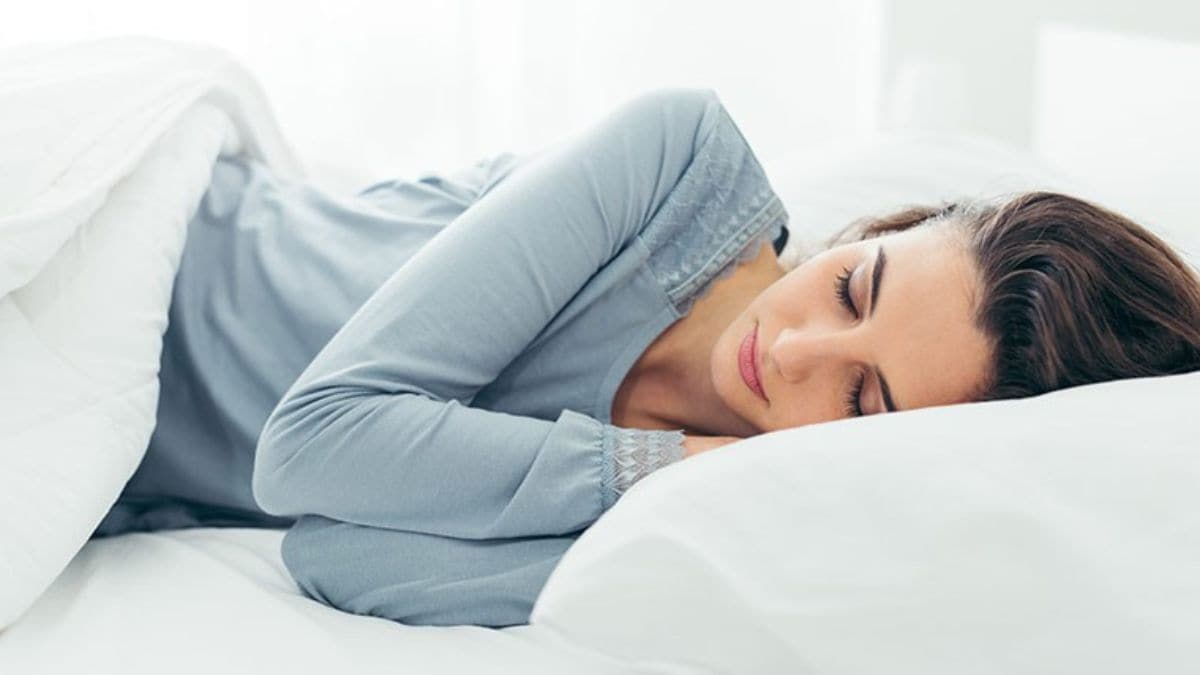
For people with galucoma, sleep position may play an important role in eye health.
New research published in the British Journal of Ophthalmology suggests that sleeping without a pillow may help reduce pressure inside the eye. High eye pressure can damage the optic nerve and is a major risk factor for glaucoma, the world’s leading cause of permanent blindness.
Glaucoma develops when fluid inside the eye doesn’t drain properly, causing pressure to build up over time and damage the optic nerve. Using multiple or stacked pillows can change the position of the neck in a way that compresses the jugular vein, slowing the drainage of eye fluid and potentially increasing eye pressure during sleep.
“Internal eye pressure, formally known as intraocular pressure, or IOP for short, fluctuates in response to changes in body posture, and the transition from an upright to a supine position during sleep represents the primary contributor to its increase at night,” the researchers explained.
To examine how pillow use affects IOP, the researchers studied 144 adults with different types of glaucoma. Over a 24-hour period, participants had their eye pressure measured every two hours while sitting, lying down with two regular-sized pillows (raising the head by 20 to 35 degrees), and lying down without any pillows.
For about two-thirds of participants, raising the head with pillows increased eye pressure by an average of 1.6 mm Hg and reduced blood flow to the eye. This may limit the amount of oxygen and nutrients reaching eye tissues. Younger adults and those with primary open-angle glaucoma appeared to be most affected.
Additional tests in healthy volunteers showed that pillow use restricted blood flow through the jugular vein, helping explain why eye pressure may rise when the head is elevated during sleep.
While the findings are preliminary, they suggest that sleeping without a pillow—or at least reducing head elevation—may help people with glaucoma better protect their vision.
