



CLAIM:
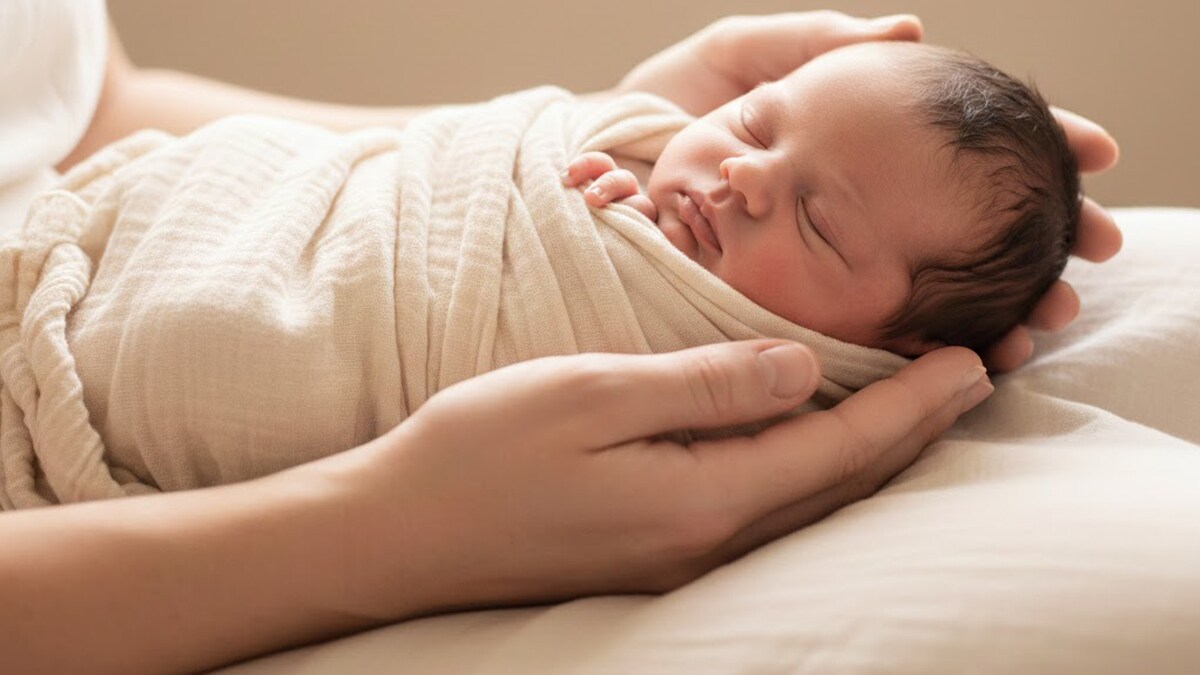
Forceful or aggressive baby massages, including hard strokes, nose pressing, and rubbing the chest to “clean” white milk discharge, are harmful and do not make babies stronger.
FACT:
True. Experts suggest that infant massage is safe and beneficial only when done gently with light pressure, safe oils, and proper technique, supporting circulation, digestion, sleep, and parent–child bonding. Studies and experts caution that forceful strokes, pressing the chest or nose, or handling sensitive areas can harm babies, especially newborns and preterm infants, and should be avoided.
In a viral Instagram reel posted by Dr Madhavi Bharadwaj, a paediatrician with over 1.6 million followers, the doctor addresses common mistakes and harmful myths around baby massage practices. Popularly known on social media as ‘bacchon_ki_doctor’, Dr Bharadwaj often uses candid conversations to highlight everyday parenting errors that may unknowingly harm infants.
In the reel, she is seen speaking playfully to a baby who has come to her clinic along with the mother. Addressing the infant, she asks, “Tell me, what happened? Did someone come to give you a massage? Was she massaging you too hard?” She then jokingly adds, “Did you poop on her? Did you?” before shifting the focus to the real issue.
Turning to the mother and the audience, Dr Bharadwaj explains that aggressive massage does more harm than good. “All these are myths. Massaging fast or hard does not make babies strong. It only gives pain to the baby,” she says.
She further highlights other unsafe practices done during massages. Referring to nose pressing, she asks the mother, “Did she pull the baby’s nose? People say, ‘The nose looks flat, lift it a little.’ This is not correct.” She also addresses the practice of pressing or rubbing a baby’s chest to “clean” white milk discharge. “Did anyone massage the chest or try to clean the white milk that comes out? If this happens again, immediately call the doctor,” she warns.
Cautioning against forceful massage strokes, Dr Bharadwaj clearly states, “If there is any kind of stroke-like pressure during massage, it is not allowed. This should never be done.”
The reel has gained massive traction on social media, crossing 2.2 million views, 78,000 likes, and 9,604 shares, triggering widespread discussion about safe infant care and harmful massaging practices.
What science says about infant massage safety?
A 2020 cross-sectional study conducted across Maharashtra and Madhya Pradesh highlights how widespread infant massage practices are in India — and why standardised guidance is urgently needed. The study surveyed 1,497 caregivers of children under 18 months at immunisation centres and through home visits between March and August 2018.
Researchers found that infant massage was practised by 93.8% of caregivers overall, with prevalence as high as 97.9% in Maharashtra and 85.3% in Madhya Pradesh. Most families began massage within the first week of birth, typically performing it once daily, often before bathing or after feeding. Oils were used in nearly all cases (97%).
Importantly, the study documented not only gentle massage techniques but also potentially risky practices. According to the findings, 30% of caregivers reported applying pressing techniques, while 60% reported manually stretching joints during massage. Despite this, 95% of caregivers believed massage caused no harm and perceived benefits such as improved bone strength, sleep and growth.
The researchers concluded that while infant massage remains a deeply rooted cultural practice, clearer public health guidance is necessary. “Clear guidance on the use of massage, choice of oil, and techniques for application is required to optimise benefits and minimise risks of this popular traditional practice,” the authors stated.
The study further warned that newborn skin is significantly more vulnerable than adult skin. “Newborn infants have a relatively thin epidermis compared to adults, making it more permeable to loss of water and heat, and entry of pathogens and toxins,” the researchers noted, adding that inappropriate pressure or oil choice may have amplified effects on infant health.
While moderate pressure massage has been shown to support growth and development, the authors cautioned against forceful techniques. “Vigorous massage can be harmful to the skin barrier, especially in preterm and malnourished infants with a thin, vulnerable skin barrier,” the study observed, recommending that massage techniques be standardised and caregivers be properly trained.
Adding to safety concerns, another systematic review published in 2020 examined adverse events associated with paediatric massage therapy. Researchers analysed 60 studies involving children aged 0 to 18 years and found that reporting of complications was often inadequate. While many studies reported no adverse events, 16 studies documented at least one adverse event following massage therapy.
The review identified 20 mild events, 26 moderate events requiring medical intervention, and 18 severe adverse events, including cases that led to hospitalisation. Alarmingly, the authors reported an association between abdominal massage and intestinal volvulus in premature infants. “This review reports an association between abdominal massage with volvulus without malrotation in preterm infants,” the authors stated, adding that although a direct causal link remains unclear, the findings “warrant caution in the use of abdominal massage in preterm infants.”
However, some research also suggests that when performed appropriately, infant massage may offer measurable health benefits. A 2022 systematic review analysing 16 clinical trials involving 1,416 infants found that massage showed positive effects across several outcomes.
According to the review, “In five of seven studies investigating pain relief, infant massage was found to alleviate pain.” It further reported beneficial effects on neonatal jaundice, stating that “in all six studies investigating bilirubin levels, positive effects were observed.” Additionally, all four studies examining growth outcomes found increased weight gain among infants who received massage therapy.
However, the authors emphasised caution in interpretation. “Although statistically significant differences were not found between all experimental and control groups, no adverse effects of infant massage were observed,” the review noted, adding that more high-quality research is needed before firm clinical recommendations can be made.
Expert advice: What is the best way to massage the baby?
Dr Amit Gupta, Senior Neonatologist and Paediatrician at Motherhood Hospitals, Noida, said many traditional baby-handling and massage practices passed down through generations have no scientific basis and can put infants at risk. He explained that forceful handling of a baby’s body parts, often done with the belief that it will improve physical appearance or growth, can actually cause harm.
“Every day, parents tell me how elders lift babies by the neck, saying it will make them taller, press the chest to remove swelling or ‘milk’, or touch the soft spot on the head, believing it needs to be fixed. All of this is misinformation,” Dr Gupta said.
Warning against aggressive massage techniques, he added, “Massaging too hard, using forceful strokes, applying heavy pressure, squeezing the nose, or rubbing the chest are not safe practices. There is no scientific evidence that these methods improve a baby’s growth or body shape.”
Dr Gupta further explained that infant anatomy is extremely delicate. “The cartilage of a baby’s nose and chest is very soft. Pressing it aggressively can cause injury. If the breast or nipple area is repeatedly pressed, it can lead to infection,” he said.
Sharing clinical observations, he notes that such practices have real consequences. “Every two to three months, we see at least one child admitted with mastitis because someone pressed or tried to squeeze the baby’s breast tissue. This often requires antibiotic treatment and hospital care. It should never be done.”
He also cautioned parents against touching sensitive areas during massage. “Fragile parts like the soft spot on the head (fontanel), the genital area, the eyes, or the neck should not be massaged at all. These areas must be strictly avoided,” he said.
Addressing the myth of ‘white milk’ discharge from a baby’s chest, commonly referred to as ‘witch’s milk’, Dr Gupta clarified that it is a natural hormonal effect. “This happens because of maternal hormones present in the baby’s body after birth. As these hormones gradually reduce, the discharge resolves on its own. It does not need to be cleaned or squeezed. Interfering with it only increases the risk of infection.”
He stressed that traditional practices do not alter a child’s physical appearance. “These customs do not change the anatomy of the baby. They do not make a child taller, thinner, fatter, or more beautiful. They do not improve growth,” he added.
While discouraging harmful techniques, Dr Gupta emphasised that gentle massage itself can be beneficial when done correctly. “Massage is valuable. It helps improve circulation, supports digestion, relaxes the baby, improves sleep, and strengthens bonding between the parent and the child. But it should always be gentle and attentive.”
According to him, timing and environment also matter. “The best time for a massage is when the baby is calm and alert, ideally about an hour after feeding, when the baby is awake and relaxed,” he said.
He advised parents to use safe oils and soft movements. “Use lukewarm, gentle oils like coconut oil. Apply light circular motions while talking softly to the baby. Avoid pressure on soft areas, avoid pulling limbs or lifting the neck.”
Dr Gupta added, “The room should be quiet and calm, and the massage session should last about 15 to 20 minutes. That is more than enough. Massage should comfort the baby, not hurt them.”
This story is done in collaboration with First Check, which is the health journalism vertical of DataLEADS.
