



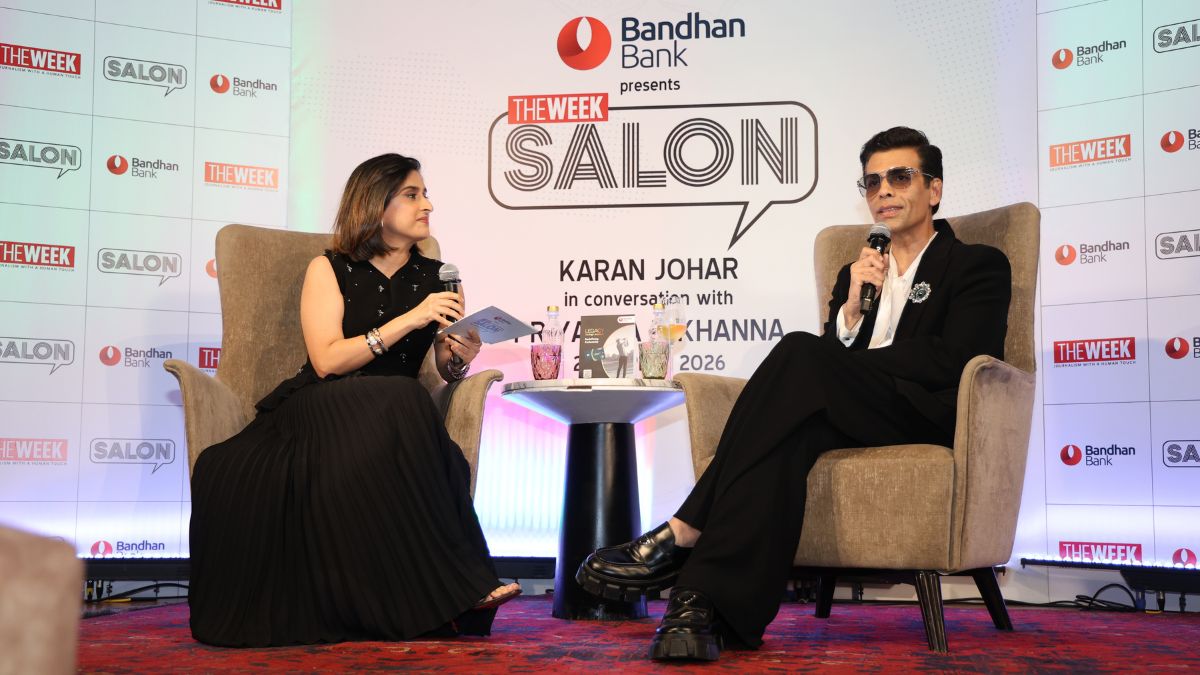
At THE WEEK Salon, sponsored by Bandhan Bank on Wednesday, Karan Johar—who recently produced the indie success Homebound—discussed misconceptions about Gen Z and the importance of supporting small, upcoming filmmakers.
As a filmmaker long known for producing box office hits that appeal to the masses, Karan Johar has switched up the genre, dabbling in films like the psychological thriller Accused and the Oscar-nominated Homebound.
He acknowledged the financial concerns that drive decisions on such films, noting that investors must be satisfied with returns and that glory is not guaranteed.
"We were not assured that we'd be selected at Cannes or TIFF or then be India's official selection to the Academy Awards. None of that was predestined or premeditated. It's something that happened.”
Explaining the difficulty in supporting such small filmmakers, he mentions:
"It's a struggle, I have to say that I've seen so many filmmakers with great scripts and ideas. But it's not easy. It's not easy because all the studios have an eye on the box office needle. And, you know, very few of us would fund a film like Homebound.”
As the conversation shifted to new-age Gen Z filmmakers, he discussed his experience with the digital-native generation and how they’re misunderstood.
"The big myth about this generation is that they're detached, they're demotional, they're the Tinder swiping generation, they have no attention span. They're like—actually deeply emotional and vulnerable,” he explained.
Parental decisions made by millennials are also having a large effect on this generation, he argues.
“When I encounter them, meet with them, speak with them, I feel I'm dealing with very volatile people who are all talking about their need for therapy, and in a good way. Many millennials didn't go to therapy. That's the problem.”
He also pointed out how well Gen Z’s priority towards mental health, and their tendency to be in touch with their emotions, is reflected in the stories they wish to tell.
“We all operate in the grey, but none of us is really like in any extreme—we all have those patches of grey in our lives. And I think this generation understands that. So a lot of the storytelling talks about the intense, deep grey colour of our lives, where we are questioning our relationship with our parents, with our siblings, with our spouses, with our partners, we're not accepting everything our parents are saying.”
