



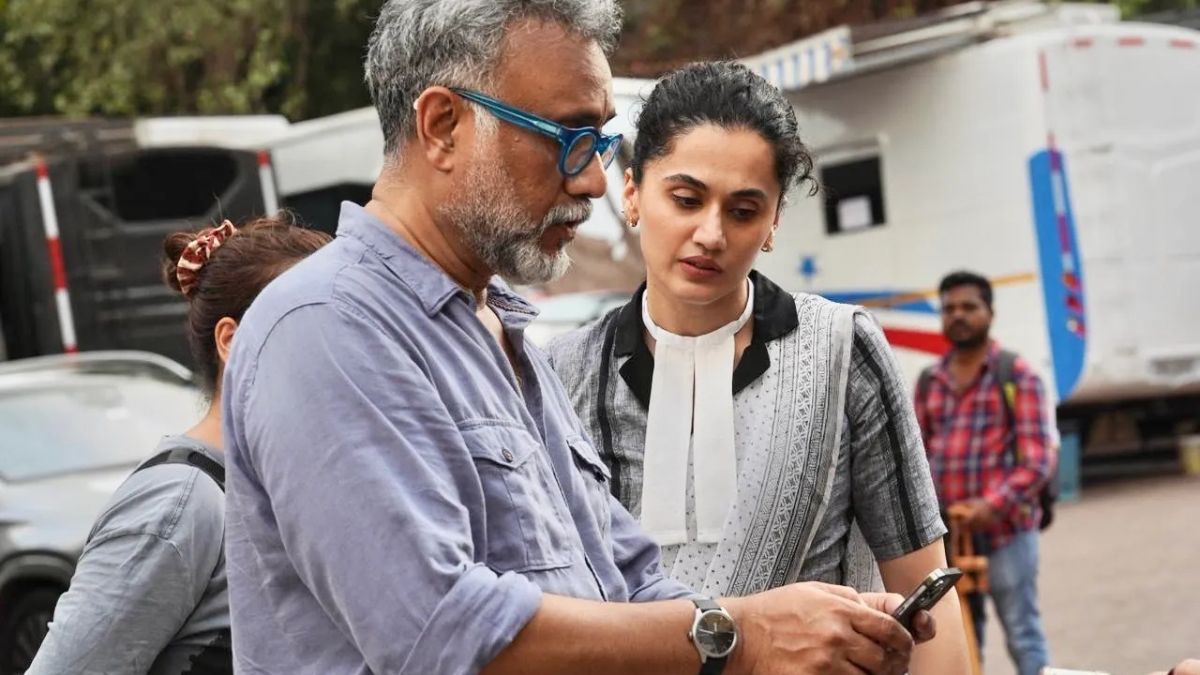
Ahead of the release of her latest feature "Assi", Taapsee Pannu, who has made her presence felt in both mainstream and indie films, believes that women-centric and offbeat cinema is on the brink of extinction, attributing it to the lack of support from audiences, who seem to prefer conventional "massy" commercial films.
Pannu, who has starred in hard-hitting dramas like "Thappad", "Mulk", and "Pink", feels that it's getting increasingly difficult to bring non-mainstream stories to the big screen.
In an interview with PTI, the actress, who is reuniting with director Anubhav Sinha after "Thappad" and "Mulk", expressed her concern over the diminishing space for films that don't adhere to traditional formulas. "We are almost an extinct species," she remarked.
Elaborating further, she added, "The reality is people think that these kinds of films will keep coming on OTT and we will keep watching it. But no, OTT's don't want these kinds of films either. They have clear mandates, that only the films that are working in theatres are the films that they want to pick.They want to take that theatre audience to their platform. They are like, 'We already have this kind of audience, we want those massy pot boilers audiences of our country to subscribe to the platform'. That's why I say we are on the verge of becoming extinct unless people realise that we need to watch it. Sometimes it's good to watch reality as well," Pannu added.
Comparing mainstream cinema to "Mughlai" cuisine, Taapsee stressed the importance of "dal chawal" too — diverse narratives that tell rooted and realistic stories. Pannu also warned against the growing trend of waiting for movies to come out on OTT, and that this tendency is detrimental to meaningful cinema.
