



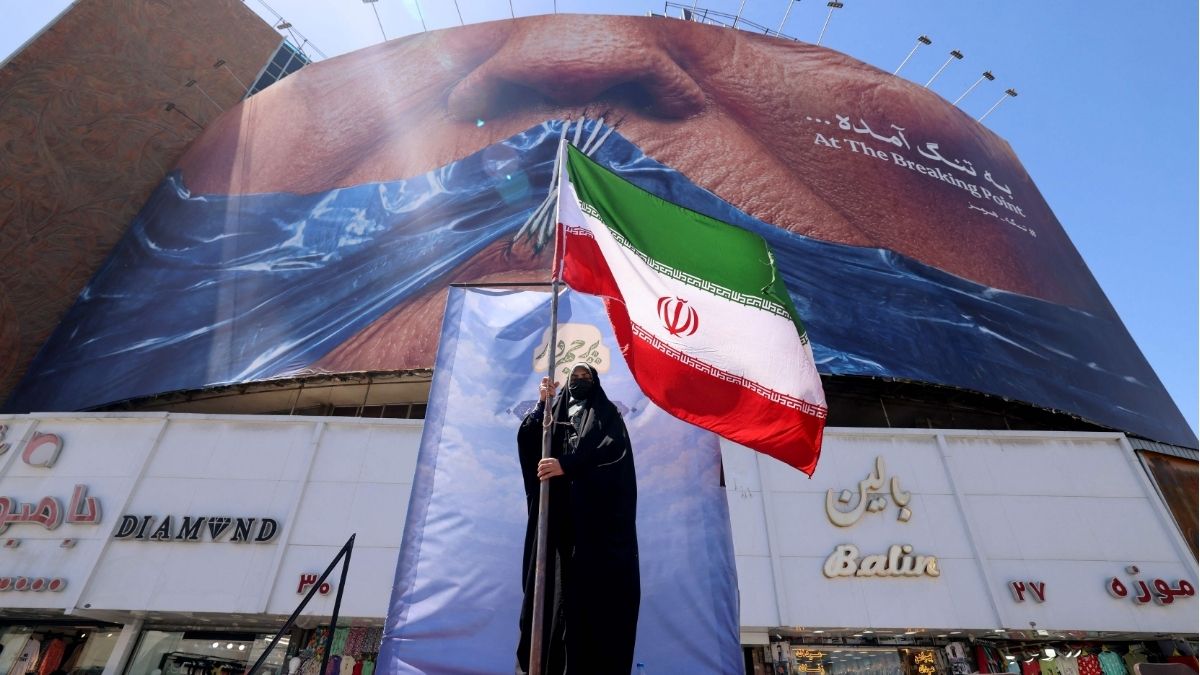
For more than two decades, Israel, backed at critical moments by the United States, has pursued a singular objective: Stop Iran from ever acquiring a nuclear weapon. The methods have been relentless—assassinations, cyberattacks, sanctions, sabotage, proxy warfare and now direct military strikes.
And yet, after all of it, Iran stands closer to nuclear weapons capability than at any point in its history.
A strategy that has failed
The Iran outcome is not a success story of deterrence. It is a case study on strategic failure.
The assumption underpinning this long campaign was simple: Sustained pressure would either force Iran to abandon its nuclear ambitions or permanently cripple its ability to achieve them. Neither has happened. Instead, Iran’s programme has become more advanced, more hardened and arguably more politically entrenched.
If the goal was to prevent nuclear proliferation, the strategy has produced the opposite effect.
The JCPOA was working — until it was abandoned
The most inconvenient fact in this entire debate is that diplomacy once worked.
The 2015 Iran Nuclear Deal, officially known as the Joint Comprehensive Plan of Action (JCPOA), imposed real, verifiable limits on Iran’s nuclear program. It rolled back enrichment levels, reduced stockpiles and subjected Tehran to one of the most intrusive inspection regimes ever negotiated. Iran was not eliminated as a nuclear threshold state—but it was contained.
That containment was deliberately dismantled in 2018 when the United States withdrew from the agreement. The decision was framed as strength. In reality, it removed the only functioning constraint on Iran’s nuclear activities.
What followed was entirely predictable. Iran resumed enrichment, expanded its capabilities and reduced cooperation with inspectors. Today, it possesses hundreds of kilograms of uranium enriched to 60 per cent purity—perilously close to weapons-grade.
The lesson is blunt: Abandoning diplomacy did not weaken Iran’s programme. It accelerated it.
Military force cannot solve this issue
The 2025 US-Israeli strikes on Iran’s nuclear facilities were presented as decisive. They were not.
Despite the use of advanced bunker-busting munitions and precision strikes on key sites like Fordow and Natanz, the results were, at best, temporary. Infrastructure was damaged, not erased. Stockpiles were likely preserved or relocated. Knowledge remained intact.
This outcome should not be surprising. Nuclear programmes are not just physical assets; they are systems of expertise, organisation and political will. Bombs can destroy facilities, but they cannot destroy the underlying capability.
More importantly, military action has a predictable political effect: It strengthens the very factions it aims to weaken. In Iran, external attacks validate the argument of hardliners who insist that only nuclear deterrence can ensure survival.
This is the central paradox: every strike intended to stop Iran from going nuclear increases the incentives for it to do exactly the opposite.
History leaves little room for optimism. Iraq pursued nuclear weapons more aggressively after the Osirak strike. North Korea accelerated its program under pressure and ultimately succeeded. The consistent pattern is not prevention—it is escalation.
The double standard at the core
Any serious discussion of this crisis must confront an uncomfortable truth: The non-proliferation argument is undermined by its own inconsistencies.
Israel maintains an undeclared nuclear arsenal while remaining outside the Nuclear Non-Proliferation Treaty. Iran, a signatory to the NPT, is told it cannot even maintain advanced enrichment capabilities. This asymmetry is not a side issue—it is central to how Tehran frames its position domestically and internationally.
One does not need to endorse Iran’s policies to recognise the strategic reality: a system perceived as fundamentally unequal will not produce lasting compliance.
As long as nuclear capability is treated as legitimate for some and forbidden for others, proliferation pressures will persist. The current approach does not resolve this contradiction; it deepens it.
Escalation is a choice, not a necessity
The argument that there are no alternatives to pressure and force is simply false. What exists instead is a reluctance to pursue politically difficult solutions.
Continuing the current path—sanctions, covert action and periodic strikes—will not stop Iran. It will, at best, delay a decision while increasing the likelihood that when that decision comes, it will be definitive and irreversible. A nuclear-armed Iran would almost certainly trigger a wider regional arms race.
The idea of regime change is even more detached from reality. Recent interventions have shown that dismantling states is far easier than rebuilding them. Applying that model to a country as large and complex as Iran would not produce stability—it would produce prolonged chaos with global consequences.
The only viable path forward is diplomacy. Not because it is ideal, but because every alternative is worse.
A renewed agreement would require compromise on all sides. Iran would need to accept stringent inspections and long-term limits. The United States would need to provide credible sanctions relief. Israel and its allies would need to accept that zero enrichment is no longer a realistic objective.
These are difficult concessions. They are also unavoidable ones.
A region on the brink
What is at stake is not just the future of Iran’s nuclear programme, but the stability of an entire region—and potentially the global order.
The Middle East is already strained by overlapping conflicts and fragile states. Introducing multiple nuclear-armed actors into this environment would dramatically increase the risk of miscalculation. Deterrence in theory is stable; in practice, it depends on rational actors, clear communication and reliable command structures—conditions that are not guaranteed in volatile regional crises.
The world has come close to nuclear catastrophe before. There is no reason to assume it will always step back in time.
The current trajectory is not containing risk. It is normalizing it.
The illusion of control
At its core, the strategy pursued over the past two decades rests on an illusion: that military superiority and sustained pressure can indefinitely control another nation’s strategic choices.
They cannot.
Security built on coercion alone is inherently unstable. It may suppress threats temporarily, but it does not eliminate them. Over time, it breeds the very outcomes it seeks to avoid.
If the objective is a Middle East without nuclear weapons, then the current approach is not just ineffective—it is counter-productive. It incentivises proliferation, entrenches hostility and erodes the credibility of international norms.
A different approach would begin with a simple recognition: lasting security cannot be imposed unilaterally. It must be negotiated, however imperfectly, among adversaries who do not trust one another but fear the consequences of failure.
Until that shift occurs, the region will remain trapped in a cycle where every attempt to enhance security makes it more fragile.
That is not deterrence.
It is escalation without end.
