



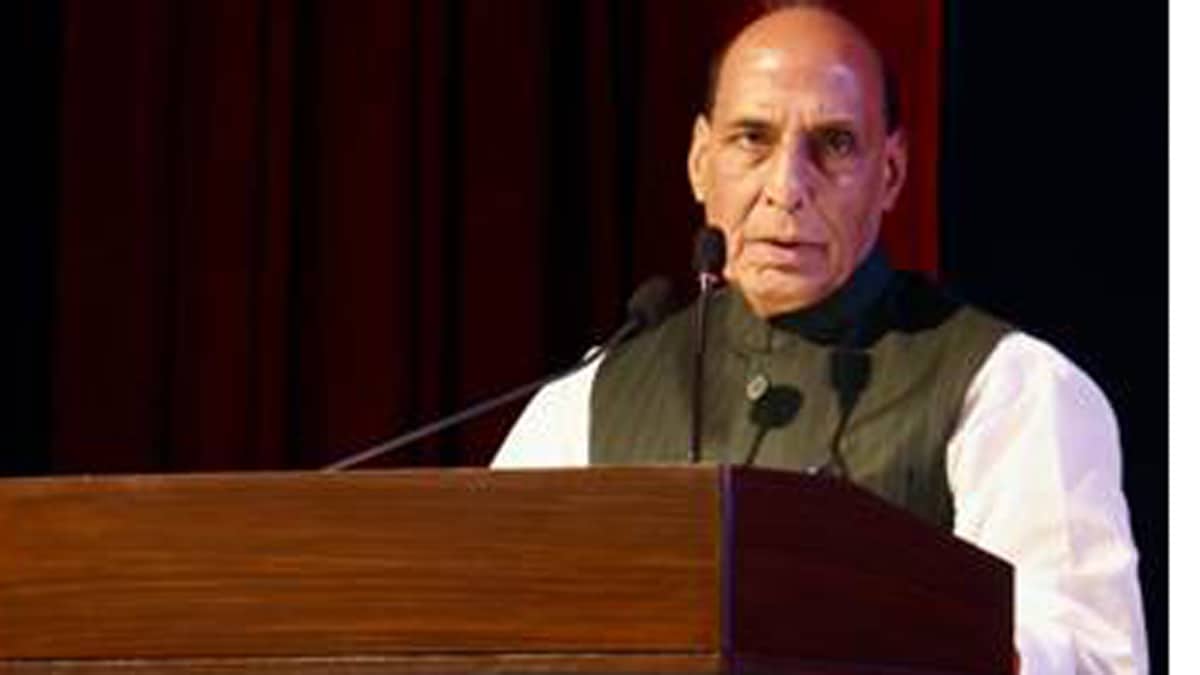
Defence Minister Rajnath Singh highlighted the explosive rate of technological change being witnessed in modern-day warfare, in addition to the emergence of the constant “never-imagined-before” element of surprise and emphasised the need to adopt a proactive approach and build capabilities that enable the country, should the need arise, to launch an unexpected strike against its adversary.
“History bears witness that in warfare, the decisive edge invariably belongs to the side that possesses the element of surprise. While our defence forces are already working in that direction, we must make further progress with greater proactivity,” he noted.
Singh observed that as a result of the new Transfer of Technology policy that has been implemented, under which a 20 per cent fee, levied earlier, has been completely waived off for development-cum-production partners, development partners, and production agencies, the DRDO has been able to transfer over 2,200 technologies to various industries.
Speaking at the the inaugural session of the three-day North Tech Symposium, organised by the Indian Army’s Northern & Central Commands and Society of Indian Defence Manufacturers, in Prayagraj of Uttar Pradesh, Singh said DRDO has initiated a policy granting Indian industries free access to its patents. According to the defence minister, this will bolster both their technological capabilities and global competitiveness.
“DRDO's testing facilities have also been opened up for the industries on a payment basis. Every year, hundreds of industries utilise these facilities for R&D support,” he said.
The defence minister urged the industry to excel in areas such as directed energy weapons, hypersonic weapons, underwater domain awareness, space situational awareness, quantum technologies, artificial intelligence and machine learning, and extended the full support of the government in this.
Highlighting the need to stay adaptable in an increasingly complex and fast-changing global environment, Singh said the nation that can quickly embrace and integrate emerging technologies will hold a decisive advantage in future warfare. He added that research remains indispensable in the modern era, noting that the shape and nature of tomorrow’s battles are being defined in laboratories today.
He described Operation Sindoor as a prime example of technological warfare and the nation’s readiness. “Op Sindoor demonstrated the valour and capabilities of our defence forces to the world. Cutting-edge indigenous equipment, including advanced missile systems such as Akashteer, Akash missile system and BrahMos, was used during the operation. It served as irrefutable proof that we not only understand the evolving nature of warfare but are deploying technological advancements with unwavering confidence,” the defence minister noted.
