



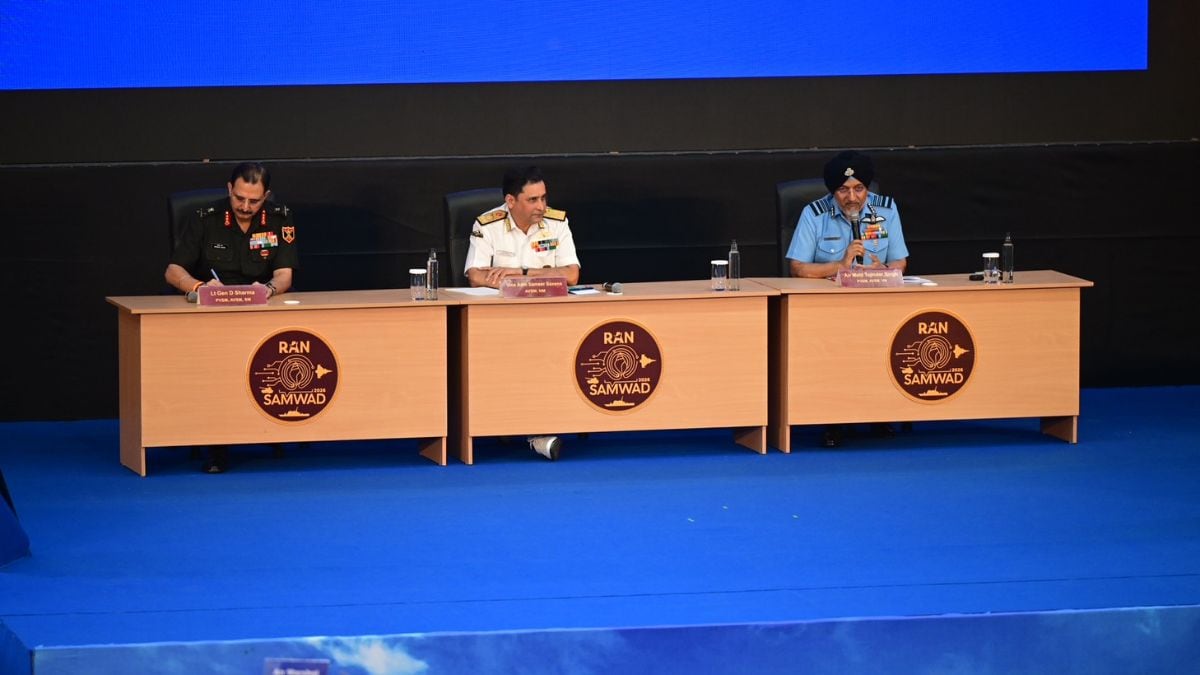
With the recent culmination of Operation Tiranga or the process of closed door deliberation between the Chief of Defence Services (CDS) and the three chiefs of the Army, Navy and the Air Force, it is now left to the political leadership to take forward the historic transformation of India’s military.
Headed by the CDS, Operation Tiranga entailed the hectic discussions among the top military brass to propose and execute the plan to transform India’s 17 geographically-based command structure to three to four theater commands.
But going forward, there is still no clear cut status of the Strategic Forces Command (SFC). This begs the question as to who will exercise control over the nuclear weapons and the sensitive responsibility of their handling, storage and upkeep after India’s military is transformed into theater commands.
While there is no opposition to the concept of theaterisation, certain discord prevails over the process of implementation and execution.
Reports say the theaterisation plan proposed to the political leadership has suggested three theater commands—a Pakistan-focused Western Theatre (headed by an Air Force officer), a China-focused Northern Theatre (headed by an Army officer) and a Maritime Theatre (headed by a Navy officer).
After being set up in 2003, five years after testing a nuclear device in Rajasthan’s Pokhran in 1998, the SFC has evolved into a large organisation. The SFC is not a separate ‘service’ but a joint strategic command.
Currently, the SFC is placed under the Prime Minister-headed National Command Authority and commanded by a commander-in-chief level officer who is equivalent to vice chiefs of services in protocol.
Although making the SFC into a theater command is a definite option in order to maintain parity within the new framework and to enhance India’s strategic relevance, what other nuclear nations follow make for an interesting study and may point at a direction that the government may choose to follow.
When China underwent its transformational reforms in 2015 which included creating theatres, the nuclear forces were upgraded to the level of a service like the PLA Army, Navy and the Air Force and renamed as PLARF (People’s Liberation Army Rocket Force) thereby enhancing the nuclear deterrence.
In the US, STRATCOM or Strategic Command is responsible for the nuclear forces that is headed by a four-star General.
Similarly, in Pakistan, post Operation Sindoor, a national strategic commander under a four-star Army General has been created which would take control of Pakistan’s emerging nuclear triad.
So it is entirely possible that India’s SFC can be upgraded to a service level organisation.
India’s nuclear arsenal, and how much of the stockpile has been mated with delivery systems that include a wide range of air-based, water-based and land-based delivery platforms is a closely guarded secret.
The strategic delivery platforms includes the Agni and the Prithvi series of missiles of varying ranges. Although nuclear-capable, the Brahmos is seen as a conventional missile. The strategic submarines include INS Arihant, INS Arighat and INS Aridhaman while most fighter aircraft from the air fleet can deliver the nuclear payloads.
