



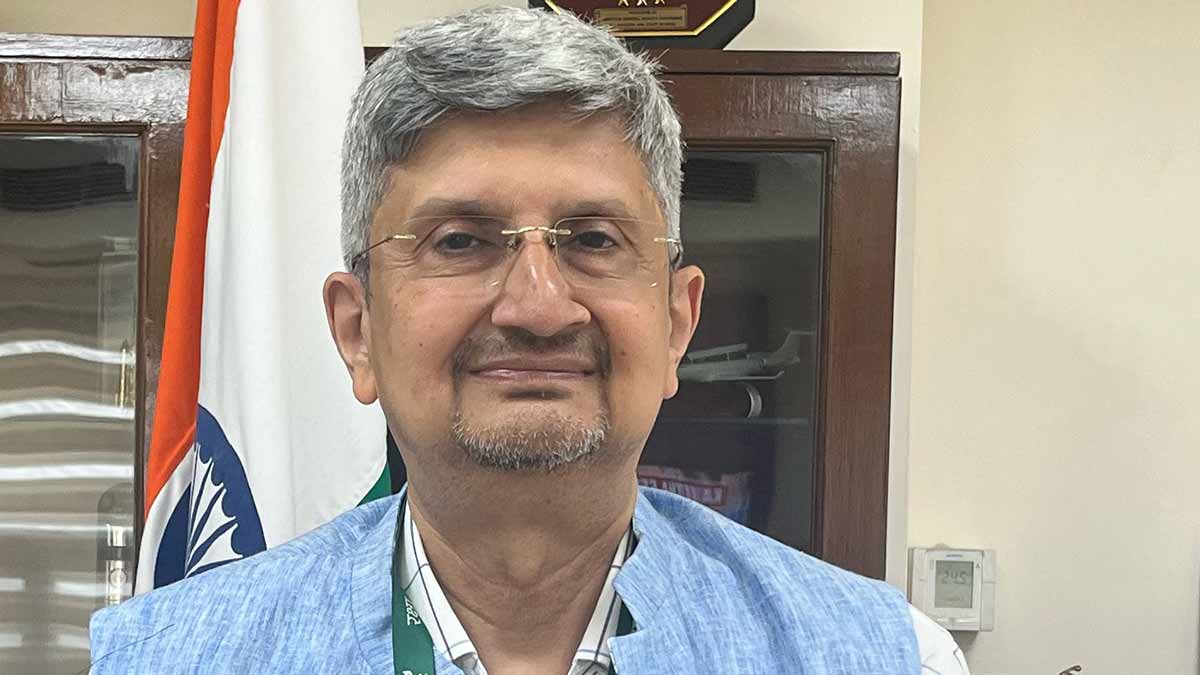
Cautioning India against depending on foreign countries for material development technology, Defence Research and Development Organisation (DRDO) chief Samir V. Kamat said the foreign nations offer technology only once they have used it in their systems.
Speaking at a defence seminar hosted at Subroto Park in Delhi, the DRDO chief said that only when the foreign countries move to the next generation of technologies will they offer various components of technology needed for making systems for another country.
"So if you have any ambition of becoming 'Atmanirbhar' and a technology leader, this is one area, not the only area, but one area that the country needs to focus on," he said.
He highlighted the various challenges the material development sector faces, including the fact that its cycle takes 10-15 years, while the system development cycle is "continuously shrinking".
"The biggest challenge we have today is that the material development cycle is 10 to 15 years. If you see, the system development cycle is continuously shrinking. Today, new systems arrive every five years and in areas like drones, things change every couple of years or every year," he said.
"So, unless the material development cycle keeps pace with the system development cycle, getting any new material in is becoming a greater and greater challenge."
He pointed out that the materials community has attempted to shorten the materials development cycle, using integrated computational materials engineering and AI/ML (artificial intelligence/machine learning) tools.
"I am very hopeful that in the next five to ten years, the materials community will also be able to shrink the material cycle," he said. The next challenge, after producing materials, is converting them into the product form you need. That is where manufacturing comes in, Kamat underlined.
The DRDO chief also urged stakeholders to work in the area of critical raw materials used in making materials.
"See, today we have magnet technology, but we don't have the rare earth metals," he emphasised. China controls 90 per cent of the rare earth metals. And for the heavy rare earths needed in neodymium, iron, boron magnets, China has 99 per cent dominance, the DRDO chief added.
"So we have to look at tungsten. Today, we don't have any tungsten in the country to make tungsten heavy alloy. We have the technology to make tungsten heavy alloy, but our dependence on tungsten is still very high. It's not that these resources are unavailable in the country. We have tungsten and rare earth resources in the country. But we have not paid enough attention to the extraction technologies. We have not paid enough attention to exploring our country to see where these resources are," he said.
Kamat expressed confidence that with the increased focus of the government on Atmanirbharta, all these issues will be addressed.
