



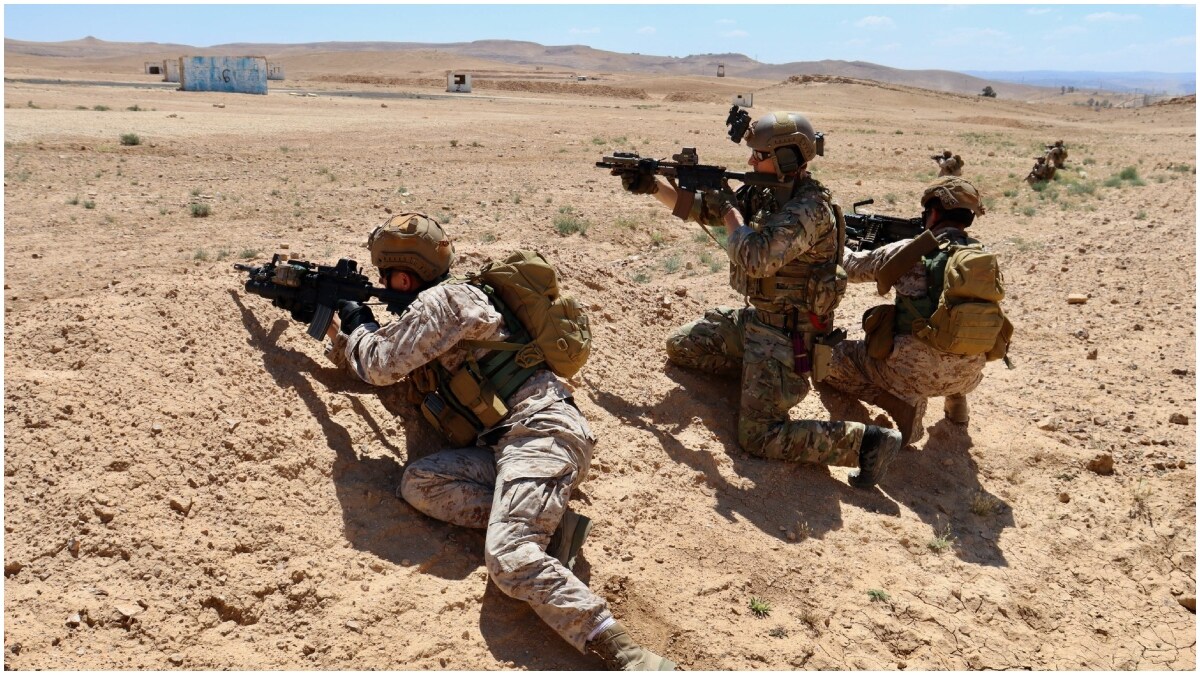
The OG 'Behind Enemy Lines' film gives fans goosebumps as the chopper carrying the Marine Force Recon task force shows up just in time to rescue pilot Chris Burnett (Owen Wilson) from the Serbs. They let loose hell on the enemy to extract their pilot after he was shot down in hostile territory.
Being shot down during combat missions is the worst fear of fighter pilots across the globe. In Iran, US pilots are living this nightmare after Tehran's defenders managed to bring down two aircraft. According to available reports, the fighter planes involved were a two-seat US F-15E Strike Eagle and an A-10 Warthog. Two pilots have been rescued, while a third crew member remains missing, with search operations still underway.
ALSO READ | Will downing of US warplanes by Iran halt talks? Trump says ‘we’re in a war’
Many in the United States will be hopeful of their military pulling off a 'Behind Enemy Lines'-like rescue operation successfully to bring their missing man home. However, it is not going to be the Marine Force Recon task force who is going to sperehead the mission.
The "Swiss Army Knives" of the Air Force
Who is responsible for extracting pilots gunned down while flying over enemy skies? The manoeuvre is called Combat Search and Rescue (CSAR), and only the best of the best are selected to join this elite league of fighters. Tracking and rescuing isolated friendly troopers in a war zone is nothing like aiding survivors after an accident or natural disaster. Enemy troops will be looking for potential Prisoners of War (POWs), and you could come under fire at any moment. Worst, you will already be fighting for every inch as you try to get closer to the objective.
Every second counts when you are on the wrong side of the border, and these soldiers need to be prepared to accomplish the most complex objectives swiftly and silently. They also require basic medevac training, as survivors could be hurt and not in an ideal physical state to be moved. The BBC, in a report, called the CSAR unit "the Swiss Army knives of the Air Force." The official pararescue motto is "These Things We Do, That Others May Live," the British media added.
How are CSAR missions carried out?
Every branch of defence maintains its own CSAR units, but it is the US Air Force that is likely to lead the search, given that it is one of its pilots who needs help. The US Air Force often puts its CSAR units on standby near conflict zones, as the risk of losing jets always persists. Often referred to as pararescue jumpers among Special Forces, these teams are led by Combat Rescue Officers. They will be excellent swimmers, demolition experts and intelligent athletes thanks to their rigorous training phase.
ALSO READ | Did Iran foil US efforts to rescue pilot of 'downed' fighter jet? What we know so far
CSAR units are often dropped by helicopters, with refuelling aircraft in support. The Air Force will patrol the area as the mission begins, and the team will mostly have the option to call in an airstrike. In some cases, they will use parachutes to touch down, as lowering a helicopter may compromise the mission.
In case the survivor has not made contact, the team will touch down near his or her last known location and fan out, clearing the area calculatedly. They are trained to work under any scenario and to make use of friendly assets on the ground, if any exist.
