



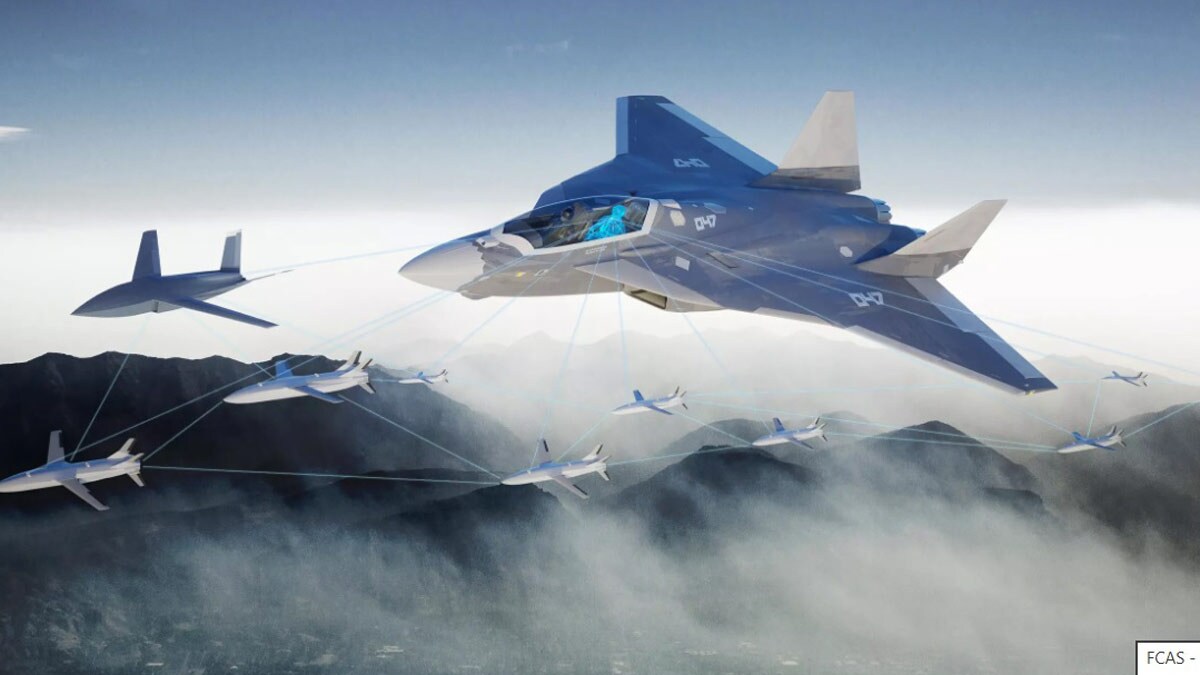
Amid the uncertainty surrounding Europe's Future Combat Air System (FCAS), involving France, Germany, and Spain and featuring an NGF (Next Generation Fighter) sixth-generation fighter, remote carrier drones, and a Combat Cloud for networked operations, Airbus has come out saying it is willing to support a two-fighter solution if governments request it.
Once billed as the key to ensuring Europe's future independence in defence and security, FCAS, a “system of systems” which brings together Dassault Aviation, Airbus, and Indra Sistemas, has been facing a roadblock over a dispute between Airbus, which represents Germany and Spain, and France's Dassault Aviation over leadership of the core warplane component of a planned system of fighters and drones.
Recently, German Chancellor Friedrich Merz claimed that Germany and France don't really have the same requirements for a fighter jet, and this is leading to disagreements on specifications. Merz had reportedly said Germany is considering whether the country would require a manned fighter aircraft in the future.
A Reuters report, citing sources, had said Germany is planning on procuring more F-35 fighter jets as the FCAS programme could be headed for a possible collapse.
ALSO READ: Will HAL be making Rafale fighter jets in India? Here's what the company says
The conflict surrounding FCAS—meant to replace Rafale jets in France's fleet and Eurofighter Typhoons in Germany and Spain— centers on France's requirement for the Next Generation Fighter to be nuclear-capable, accommodating French nuclear weapons. However, Eurofighter platforms of Spain and Germany lack nuclear armament compatibility, creating design and integration complexities.
Plans to replace the Eurofighter and Rafale fleets have been hampered by disputes over how much control Dassault should have over the core fighter element, prompting speculation that the programme might ultimately be divided into two separate parts.
"We believe that the deadlock of a single pillar should not jeopardise the entire future of this high-tech European capability, which will bolster our collective defence," Reuters quoted Faury as saying, adding, "If mandated by our customers, we would support a two-fighter solution and are committed to playing a leading role."
There have been reports that said a two-fighter jet solution, one developed by France and another by Spain and Germany, could “make FCAS more resilient because the requirements of the [three] armed forces are different." As a two-fighter jet solution appears to be emerging as a viable path forward amid ongoing disputes, the offer by Airbus could possibly offer a solution to the nuclear vs. conventional debate without derailing the shared Combat Cloud and drone ecosystem.
