



The Defence Research and Development Organisation (DRDO) is focusing on next-generation electronic warfare technologies, spectrum dominance, and indigenous fighter aircraft programmes, with a strong emphasis on self-reliance and future warfare domains, the organisation’s Director General (Electronics and Communication Systems), B.K. Das said on Tuesday.
Speaking to news agency PTI on the sidelines of the Electronic Warfare Conference-India (EWCI), organised by the India Chapter of the Association of Old Crows (AOC) in Bengaluru, Das said India must dominate the skies with platforms, weapons, and sensors developed in the country.
"India has to reign the skies. The fighter aircraft must be of our own, powered by indigenous technologies and equipped with indigenous weapons," he said, noting that the Light Combat Aircraft (LCA) Tejas Mk-1 and Mk-1A were ready and describing the current phase as "only the beginning."
Fighter jets and timelines
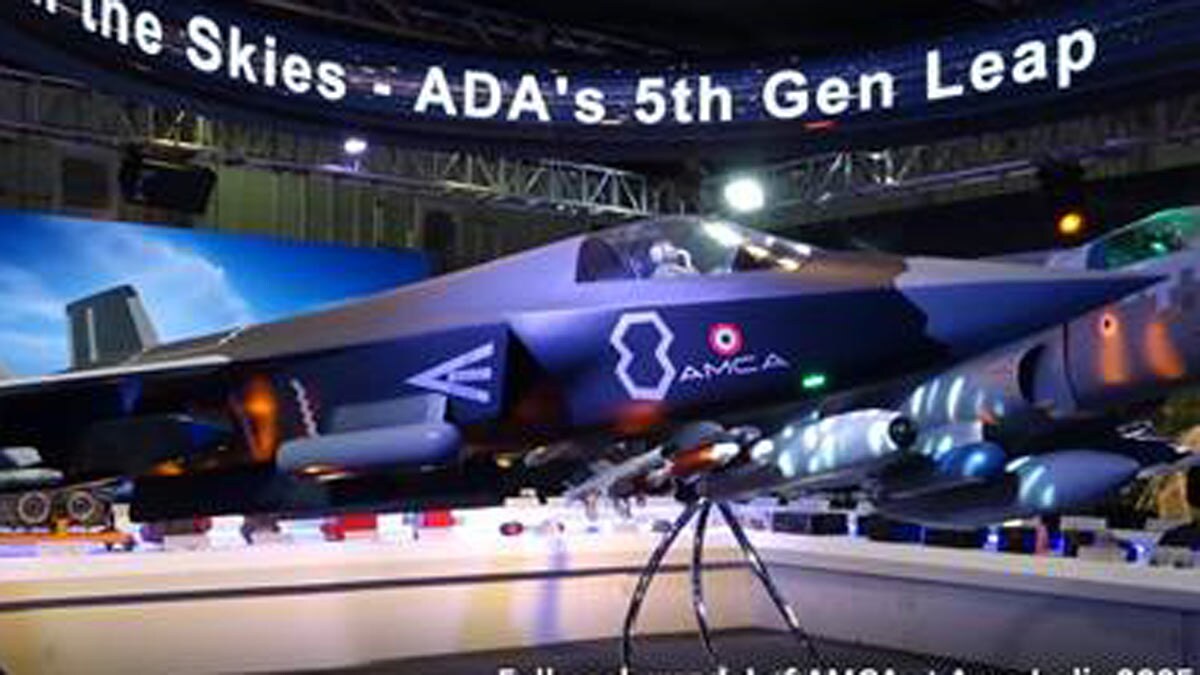
He said work was progressing on the Mk-2 variant and the Advanced Medium Combat Aircraft (AMCA), underlining the importance of stealth in modern aerial combat. "If you want to dominate the sky, stealth (aircraft) is the way forward," he said, adding that the AMCA project had been sanctioned and was being pursued jointly by the Aeronautical Development Agency (ADA), Hindustan Aeronautics Ltd (HAL) and DRDO.
Outlining timelines, Das said the LCA Mk-1 was ready, Mk-1A deliveries would proceed as per schedule, the Mk-2 would roll out in three to four years, followed by the AMCA, enabling India to field fully indigenous fighter aircraft.
He further highlighted progress in indigenous sensors and weapon systems, saying the Uttam Active Electronically Scanned Array (AESA) radar had proven its capabilities.
ALSO READ: Why is LCA Tejas not part of Republic Day Parade this year? Here's what defence secretary says
He added that the radar, along with jammers, weapon systems and missiles, was ready for integration with fighter platforms.
"We are developing our radar. The Uttam AESA radar has proven to be among the best, and in many aspects better than the best across the world," he said, reported news agency PTI.
A self-reliant future
On future projects, he stated that the DRDO was working on advanced technologies that would redefine warfare in the coming decades.
"The futuristic focus areas include spectrum dominance with cognitive learning, along with new technologies such as photonics and quantum technologies," he said, adding that these would provide flexibility, agility and decisive power in electronic warfare.
Photonics is the science and technology of light that focuses on the generation, manipulation, detection and use of photons, integrating optics and electronics to enable breakthroughs in telecommunications, medicine, computing and other advanced technologies.
