



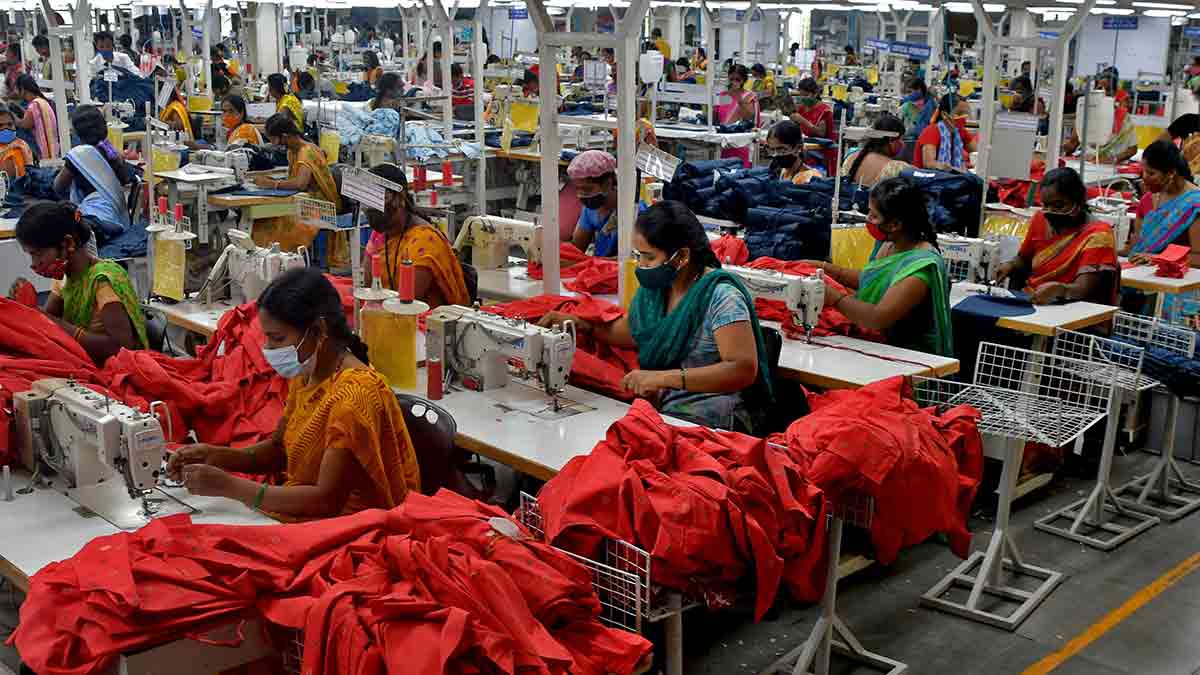
The Indian textile sector had a tough fiscal year in FY2025-2026. It saw steep US tariffs, and then the end of the period witnessed Middle East supply chain disruptions. Yet, India's garment makers, fabric producers, handicraft artisans, and exporters collectively shrugged off the pressure and grew.
Total textile exports, including handicrafts, rose 2.1 per cent to ₹3,16,334 crore in FY 2025-2026, up from ₹3,09,859 crore the previous year, according to recently released data by the Ministry of Textiles.
Ready-Made Garments (RMG) remain the engine of Indian textile exports, growing 2.9 per cent to ₹1,39,349 crore, retaining their position as the single largest contributor to the sector's overall export basket.
Synthetic fabrics, polyester blends and technical textiles posted the strongest growth among the larger categories at 3.6 per cent, reaching ₹42,687 crore. Cotton textiles held steady with 0.4 per cent growth at ₹1,02,399 crore.
However, the hero was Handicrafts, which recorded the highest growth rate of any major category at 6.1 per cent, touching ₹15,855 crore. From Jaipur's block-printed quilts to Lucknow's chikankari, India's artisanal products found eager buyers across the world.
India registered export growth across more than 120 countries in FY 2025-2026, with the fastest-growing markets including the UAE, UK, Germany, Spain, Japan, Egypt, Nigeria, Senegal and Sudan.
This comes at a time during the recent signing of the India–New Zealand FTA, which added more market depth to the sector. Indian textile exports are expected to dramatically improve in the light of recent landmark Free Trade Agreements. The India–UK Comprehensive Economic and Trade Agreement, signed in July 2025, eliminated tariffs on up to 99 per cent of Indian exports to Britain, including textiles that previously faced duties of up to 12 per cent. The implementation is targeted for as early as May 2026.
The India–EU FTA, concluded in early 2026, opened the world's largest single trading bloc to Indian apparel with near-zero duties.
The India–Oman CEPA, signed in December 2025, and RoSCTL and RoDTEP schemes continue to provide more policy support to the sector.
