



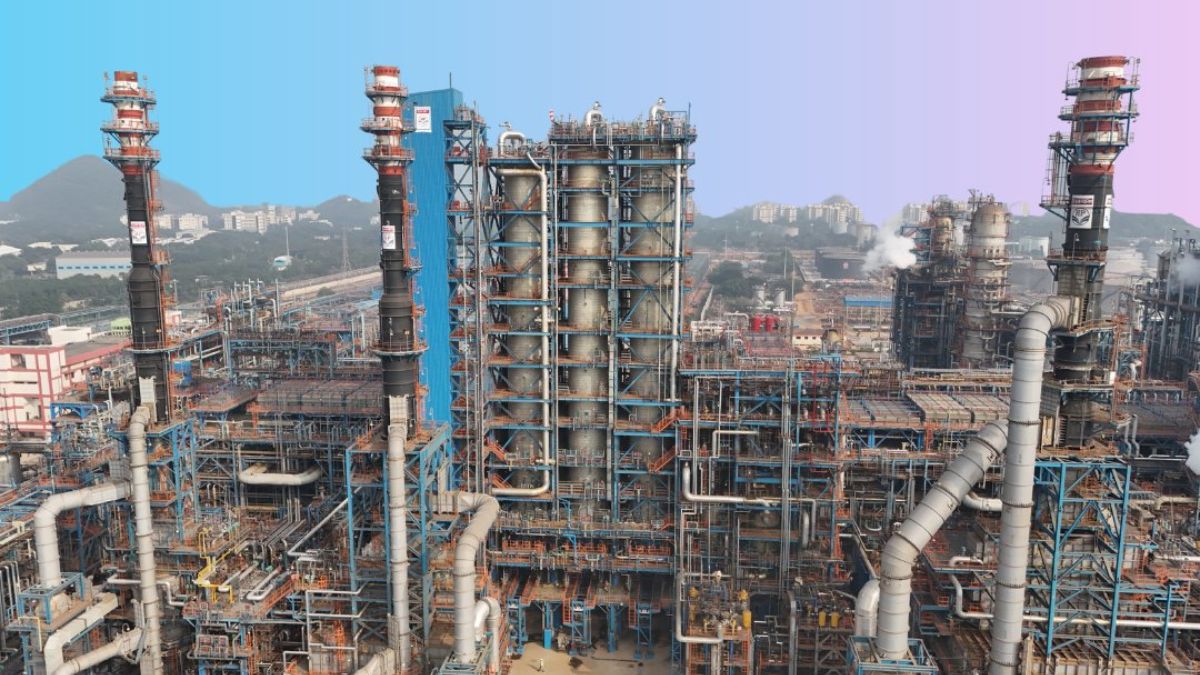
Hindustan Petroleum Corporation Limited (HPCL) has commissioned a cutting-edge Residue Upgradation Facility (RUF) at its Visakh Refinery in Andhra Pradesh. The Ministry of Petroleum and Natural Gas lauded it as a major boost to India’s energy security and self-reliance.
According to multiple posts by the Ministry of Petroleum and Natural Gas and HPCL on social media, the new RUF is built on LC-Max residue hydrocracking technology and has a capacity of 3.55 million metric tonnes per annum (MMTPA).
It is designed to convert about 93 per cent of the “bottom of the barrel” heavy residues into high-value fuels and distillates, sharply reducing low-value leftover material.
This means the Visakh refinery can process heavier and cheaper “opportunity” crudes more efficiently, improving product quality and overall operational efficiency.
The ministry described the facility as housing the world’s first and largest LC-Max unit, positioning it among the most advanced residue-processing projects globally.
Statements from Engineers India Ltd and Larsen & Toubro, which helped execute the project, also describe it as a world-first LC-Max installation at this scale, with three LC-Max reactors of around 2,200 tonnes each, counted among the heaviest engineered blocks built and assembled in India.
Government backing
Union petroleum minister Hardeep Singh Puri has called the project a milestone in India’s energy security journey and a decisive step towards Aatmanirbhar Bharat.
The government noted that by squeezing more high-value products out of every barrel of crude, the RUF will help meet rising domestic fuel demand while reducing dependence on imported refined products.
