



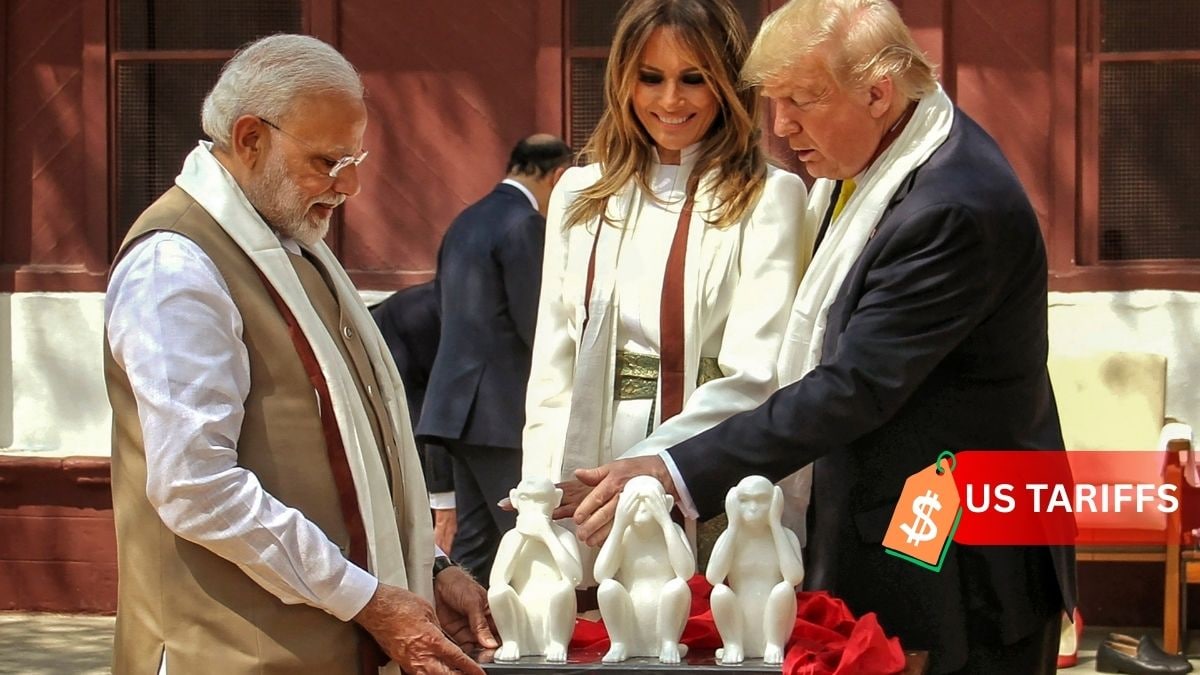
The trade relationship between India and the United States, once a key axis in global commerce, faced intense headwinds in 2025.
Despite the latest ‘Trump’ challenges, trade volumes remained substantial, underscoring resilience amid political tensions and economic measures such as steep tariffs and, now, the latest visa policy changes.
India’s merchandise exports to the US in August 2025 hit $6.86 billion, up 7.15 per cent compared to August 2024.
Over the April to August 2025 period, exports totalled $40.39 billion, up 18.06 per cent year-on-year.
Indian exports primarily include electronic goods, engineering goods, textiles, gems and jewellery, leather products, and marine products. Electronic goods exports alone rose nearly 26 per cent from August 2024 to August 2025.
The import side from the US, however, saw a steady decline in recent months, including an 18.22 per cent drop in US exports to India in August 2025 compared to the previous year, bringing last month’s import value to $3.60 billion.
Despite this, cumulative US exports to India still grew 8.54 per cent from April to August 2025, totalling $21.61 billion.
Trump tariffs and sanctions
The most striking factor shaping this trade data was the US administration’s imposition of tariffs on Indian goods.
Beginning with a 25 per cent tariff in August 2025, Trump followed it up by slapping an additional 25 per cent tariff (bringing the duty to a total of 50% on many Indian imports) targeted primarily at sectors like textiles, gems and jewellery, leather, marine products, and chemicals.
ALSO READ | Can India afford to wage a trade war with United States?
These ‘double standard’ tariffs aimed to penalise India for its ongoing purchase of discounted Russian crude oil amid geopolitical conflicts.
However, several products, particularly pharmaceuticals, semiconductors, electronics, and critical energy minerals, were exempt from these tariffs due to their importance in supply chains.
Industry analysts predict a sharp drop in exports in these sectors, affecting hundreds of thousands of jobs. But so far, it has not happened.
Visa fees and IT sector woes
Trump’s latest hike in H-1B visa fees to $100,000 per application is a dramatic step in bilateral relations that certain Indian IT companies warn will severely impact profitability and staffing flexibility.
ALSO READ | Who will be the most affected by the H-1B visa fee hike?
Given that over half of Indian IT revenues come from the US—dominated by companies like TCS, Infosys, and Wipro—this visa fee hike could reshape hiring and operational models, potentially shifting more work offshore and curtailing US-based expansions. Their stocks saw massive losses in trading in the Indian stock markets today.
Despite all this, our exports showed remarkable durability, helped in part by government initiatives like GST rationalisation, targeted export promotions, and import substitution strategies under ‘Atmanirbhar Bharat’.
The narrowing of India’s overall trade deficit signalled a cautious balancing act, with imports falling 10.1 per cent year-on-year in August 2025.
India’s diplomacy remains focused on dialogue and seeking relief from punitive measures, as talks are reportedly ongoing to ease some tariffs. The stakes are high because the US remains India’s largest export market, and enduring trade tensions threaten both economic growth and strategic cooperation.
For the everyday Indian, this turbulent trade environment means potential price changes for imported goods like electronics and some textiles, as higher US tariffs and supply disruptions filter through global chains. Employment in export-focused sectors faces uncertainty, though government support aims to cushion impacts.
For consumers, ongoing trade challenges may influence products’ availability and prices, while for businesses, adapting to shifting US policies remains critical to sustaining growth.
