



The effect of US tariffs came to India Inc before it hit the country. The latest casualty, Tata Motors.
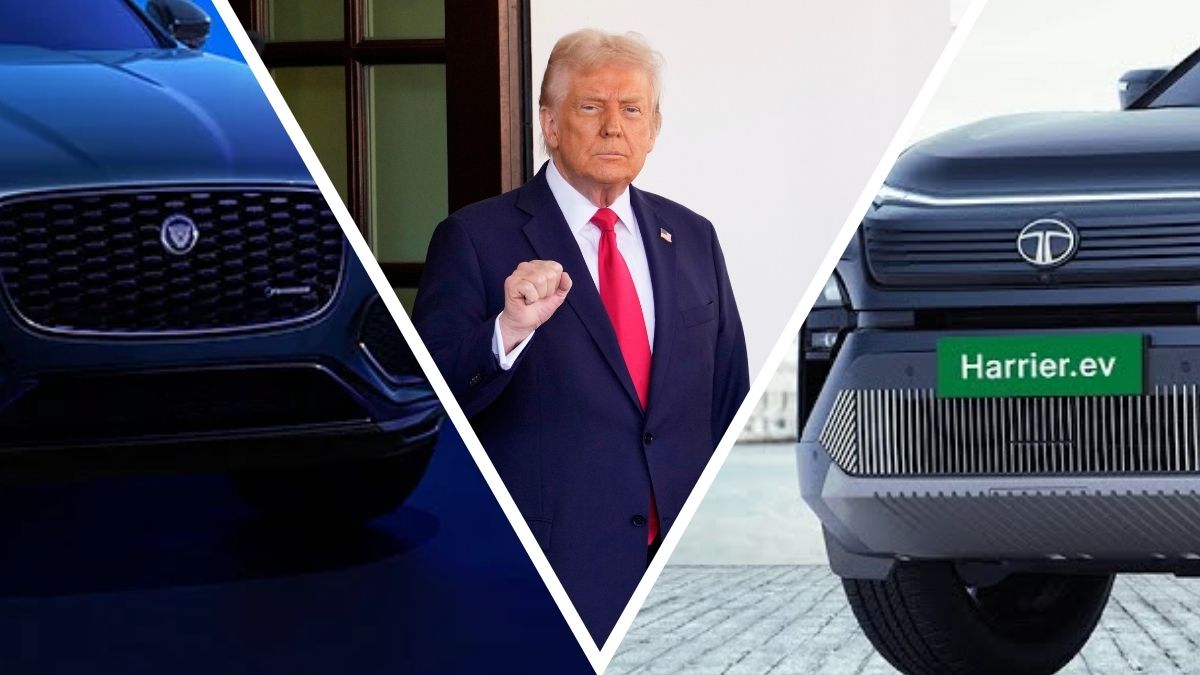
One of India’s biggest automakers, Tata Motors, saw its consolidated net profit slump by over 62 per cent to Rs 4,003 crore in its fiscal first quarter. The three-month period saw demand slowdown in domestic markets, but the dip in Jaguar Land Rover (JLR) profits on account of winding down its legacy line and the impact of Trump tariffs added fuel to the fire.
Total ops revenue for Q1 FY2026 was Rs 1,04,407 crore, down marginally from Rs 1,07,102 crore a year ago. The auto giant saw its volumes shrink across all its arms, but the major bite of the profits was taken out of JLR.
Incoming CEO of JLR, and the current Tata Motors Group CFO, P.B. Balaji, seemed to be relieved that they did not post losses. “Despite stiff macro headwinds, the business delivered a profitable quarter, supported by strong fundamentals.”
RELATED | Will new CEO Balaji turn saviour and guide Jaguar Land Rover out of its ‘Kali Yuga’?
JLR’s topline was massively impacted by the US tariffs on cars produced in the UK and the EU. The planned legacy Jaguar phaseout added to more woes.
Outgoing JLR CEO Adrian Mardell said that the latest UK-US and the US-EU trade deals would “lessen the significant US tariff impact in subsequent quarters”.
Back home, in the passenger vehicle segment, Tata Motors’ market share in the period shrank to 12.3 per cent from 12.9 per cent it was last quarter, as per VAHAN data.
In Q1, the India business of Tata Motors Passenger Vehicles saw its CNG portion expand to 27 per cent. Petrol powertrains still made up half of the registrations (50 per cent).
EVs stood at 13 per cent, while Diesel was 10 per cent. However, passenger vehicle revenue slumped by 8.2 per cent year-on-year to Rs 10,900 crore in the first fiscal quarter. Tata Motors attributed the drop to a moderation in sales across the industry due to lacklustre demand.
However, it noted that the volume crunch was felt more in the passenger vehicles below ₹10 lakh. With the new Harrier EV launch in July and the Tiago and Altroz hatchback updates in June, Tata Motors expects higher profitability going forward.
The automaker also stated a few initiatives such as the “institutionalisation of dealer stock policy and focus on driving retails” and “supportive retail incentive schemes” with upcoming festive period campaign.
“Q1 was a subdued quarter for the passenger vehicle industry, with volume pressures persisting across most segments. Demand softness weighed on overall performance, although the Electric Vehicle category remained a bright spot, supported by new launches and growing customer interest,” reasoned Tata Motors Passenger Vehicles MD Shailesh Chandra.
“Looking ahead, while the overall industry growth is expected to remain muted, we are confident that our recent and forthcoming series of launches—across ICE and EVs—will enable us to outperform the market and strengthen our position across key segments,” he added.
