



Handloom has long been a significant part of Indian society, embodying authenticity and a rich cultural heritage. Fashion and cinema have always served as powerful mediums of storytelling, deeply interconnected in their influence. In India, cinema has played a pivotal role in popularising the saree as a symbol of elegance and cultural identity.
Historically, the draping style of the saree was quite different from what we see today. In earlier cinema, it was primarily used as everyday attire for women in terms of costume. However, over time, the draping styles have evolved significantly, transforming the saree into a symbol of femininity, beauty, and grace.
In the present era, the saree has gained recognition even at the global level. Popular celebrities increasingly embrace it as a representation of traditional elegance. In this journey of global recognition, Indian handloom has played a crucial role. It represents centuries of traditional craftsmanship and intricate techniques, with every fabric telling a unique story. The diversity of colours, patterns, and weaving styles reflects the richness of the country and showcases how indigenous knowledge has been preserved across generations.
India’s handloom tradition is marked by remarkable diversity. From the Banarasi Butidaar of Varanasi to the Chanderi of Madhya Pradesh and the Venkatagiri of Andhra Pradesh—each weave represents the living traditions and craftsmanship of India’s weaving communities. Banarasi sarees remain a staple in north India, while Phulkari dupattas signify the vibrancy of Punjab. Each of these textiles carries deep cultural, traditional, and social significance.
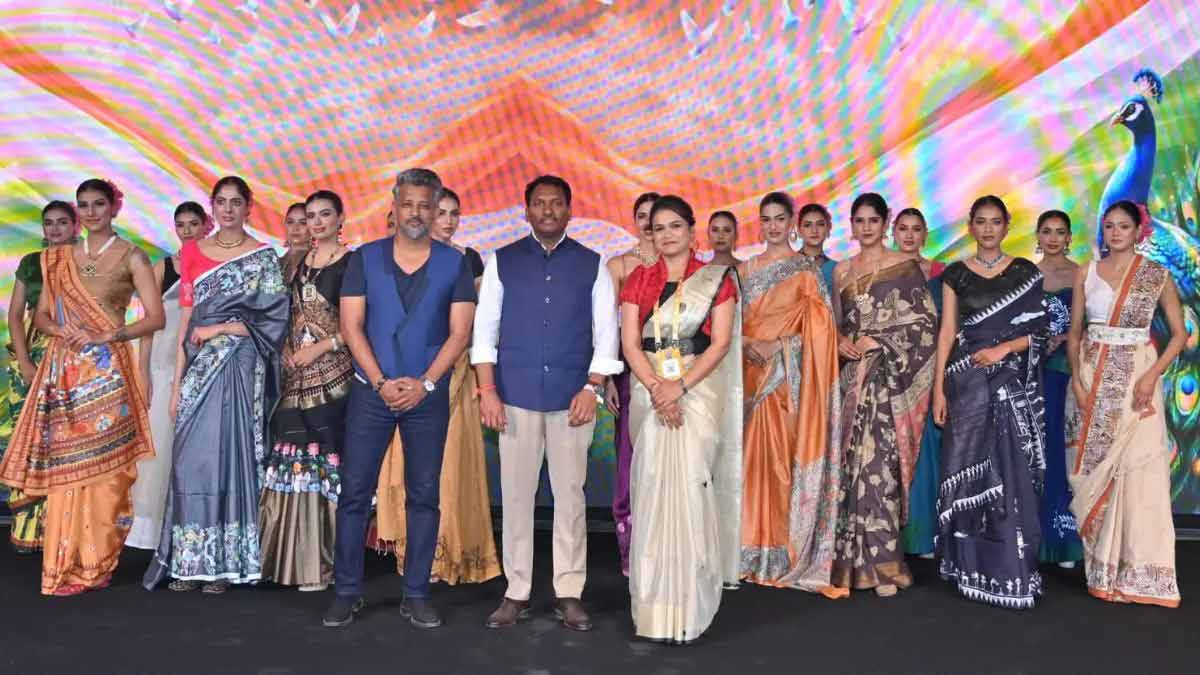
International Film Festival Delhi 2026 beautifully showcased this visual storytelling through cinema and Indian handloom. The opening sequence, ‘Handloom to Silver Screen’, revisited iconic saree drapes inspired by memorable cinematic moments from the 1940s to the 2020s, highlighting how Indian films have played a pivotal role in popularising the saree as a symbol of elegance and cultural identity.
Speaking on the occasion, Chief Minister Rekha Gupta said, “Handloom and cinema are two of India’s most powerful storytelling traditions—one woven through threads, the other through frames of light. Together, they preserve our collective memory and identity. The saree, in particular, has remained an enduring symbol across generations, gracefully capturing the spirit of India in both everyday life and cinematic expression.”
This powerful intersection of handloom and cinema has not only preserved tradition but also redefined its place in the modern world.
Indian cinema has elevated the saree to a global fashion statement, transforming it from a traditional garment into a modern, versatile attire. It has consistently acted as a promoter of cultural heritage and traditions, offering a platform to showcase India’s deeply rooted identity—even through clothing.
However, the handloom industry has also faced setbacks due to the rise of machine-based production, which often diminishes the authenticity of fabrics and designs. Yet, despite these challenges, the true essence of handloom remains deeply rooted in its originality and craftsmanship.
Indian handloom and sarees are not merely about colourful threads; they represent centuries of tradition, technique, and skill—elements that machines cannot truly replicate.
More than just a fabric, they are deeply rooted in India’s cultural heritage, diversity, and timeless art of storytelling.”
