



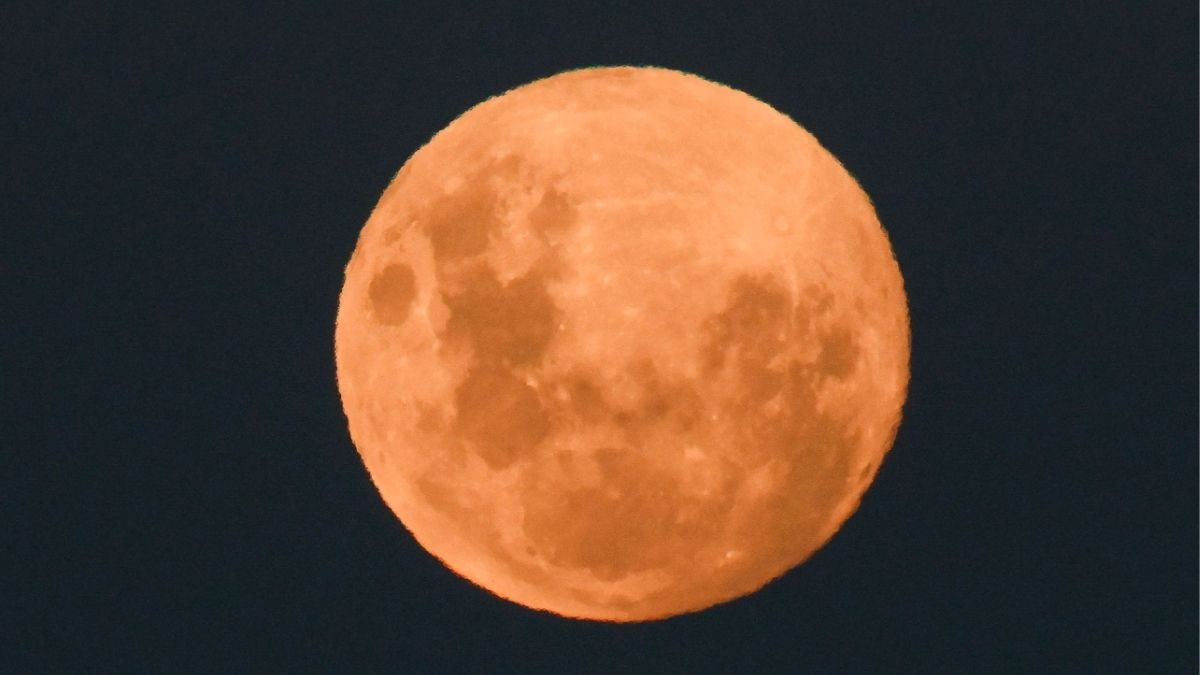
Today, in India, the eerie blood moon will appear a little before dusk, thanks to a total lunar eclipse, or chandra grahan. “It’s as if all of the world’s sunrises and sunsets are projected onto the moon,” read a statement by US space agency, NASA.
According to the latest schedule, the lunar eclipse will be visible from India from 3.20 pm to 6.48 pm on March 3, 2026. At its totality phase, the Moon is set to appear red somewhere between 4.34 pm and 5.33 pm.
The West might call this spooky hue, but the chromatic science of sunlight filtering through Earth’s atmosphere holds much more cultural significance in India for those who follow the Hindu faith.
The lunar eclipse also triggers what is called the sutak kaal (sutakakaalam in the South), something of spiritual importance. During the grahan time, temples are closed, and auspicious activities are postponed till the eclipse ends. The sutak kaal, as per belief and common consensus, is said to fall between 9.39 am and 6.48 pm on March 3 for the general public, the time specifically applied to children, the elderly, and the sick from 3.20 pm to 6.
In Kerala, given that the revered Attukal Pongala festival falls on the day, the offerings this time of the year would be done early. The belief in some quarters is that travel should be avoided during this window.
In many parts of India, devotees cover idols of deities before the eclipse begins, and do not leave food uncovered. These practices, rooted in faith-based customs, are still followed by many.
Many Hindu clerics and devotees also say that the grahan time is that of prayer, and reciting mantras is believed to provide protection from negative influences. Commonly chanted mantras range from Om Namah Shivaya, Om Namo Bhagavate Vasudevaya, Sarvara Mangal Maangalyayei Sharanyayei Triyambike Gauri Narayani Namostute, Om Jayanti Mangala Kaali Bhadra Kaali Kapalini Durga Kshama Shivadhatri Swaha Swadha Namostut to Hanuman Chalisa and other traditional hymns and verses from various parts of the country.
The lunar eclipse happens when the Moon crosses into Earth’s shadow, with totality occurring when the planetary bodies align perfectly, and the Moon is fully blocked from the Sun’s view.
The little amount of light that hits the Moon gets refracted through our atmosphere, scattering the violet side of the light spectrum. What is left is the red side, hence giving the natural satellite its colour. At least, that is how it appears to humans. Dogs and many other animals that have different ocular prowess when it comes to the visible spectrum might see things much differently.
Can you observe the lunar eclipse?
You can, if you choose to, observe a lunar eclipse without any special equipment, says NASA. “All you need is a line of sight to the Moon! For a more dramatic observing experience, seek a dark environment away from bright lights. Binoculars or a telescope can also enhance your view,” they added.
This time, central Asia and South America will only get a partial eclipse. Those in Africa and Europe may not even see it. People in North and Central America and far western South America could observe it in the early morning, in totality. But the front seat is for those in India and the rest of eastern Asia and Australia.
