



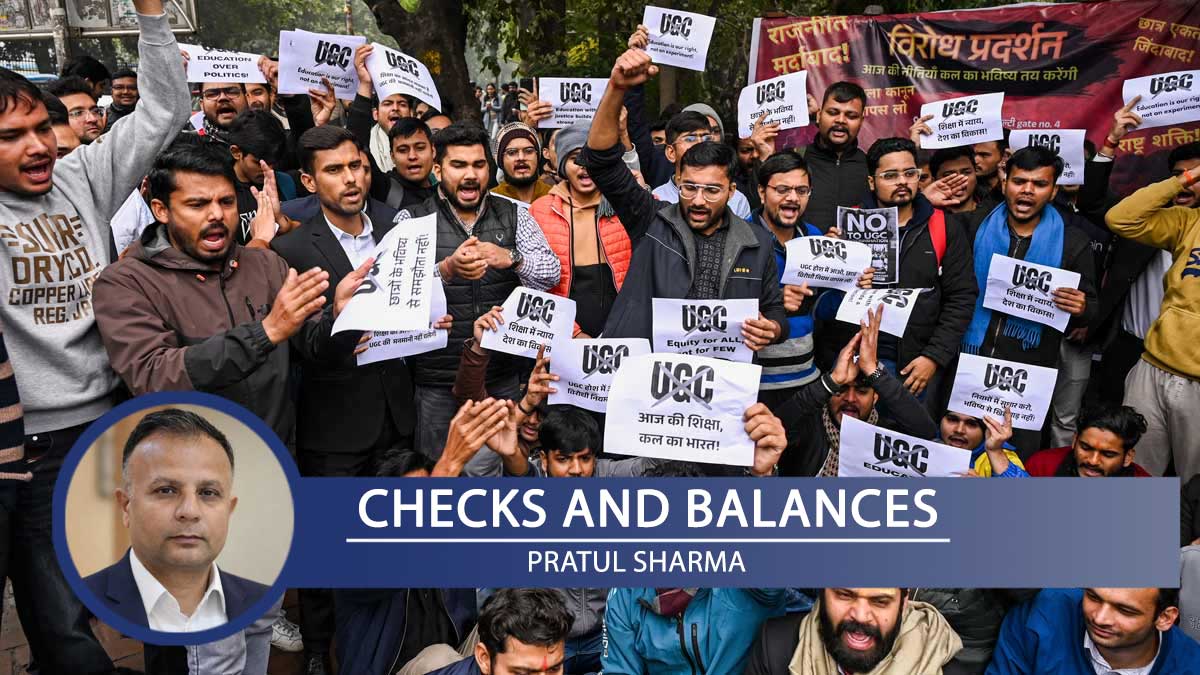
The University Grants Commission’s proposed equity regulations to prevent caste discrimination in higher educational institutions led to protests from the general category students. The protesters argued the measures could lead to “reverse discrimination” and encourage false complaints. The Supreme Court was quick to stay the rules, noting the potential for misuse, preventing escalation in the protests.
Eight years ago, in April 2018, India witnessed a widespread agitation. At that time, the Dalits took to the streets after the Supreme Court ruled that arrests under the SC/ST (Prevention of Atrocities) Act would require prior sanction and permitted anticipatory bail. For Scheduled Caste and Scheduled Tribe communities, the judgment appeared to weaken the legal safeguard against discrimination. Parliament later overturned the ruling through an amendment, and the apex court upheld the change.
Together, these episodes reflect a pattern in public life: protections for one group often trigger resistance from another, keeping caste firmly embedded in political consciousness.
The impending caste census sharpens this moment. It will be the first comprehensive enumeration since 1931, and political parties across the spectrum have supported the exercise, recognising caste as a powerful instrument for mobilisation, particularly ahead of elections.
Supporters of caste census argue that India’s affirmative action framework relies on data that is nearly a century old and must be updated to ensure benefits reach those still left behind within reserved categories. Critics warn that such a count could further entrench social identities and complicate social cohesion. Census being a digital exercise, responses and analysis are likely to emerge faster, aided by data analytics and artificial intelligence.
During the 2011 socio-economic survey caste count, which was never made public, some 4.6 million caste names were recorded. Though the government is yet to make its formula public on how deeply details are captured about castes, the caste census is likely to record at least the same number of groups, if not more.
Caste identities have further solidified in recent decades. They are also being expressed through the reinterpretation of historical figures. For instance, Emperor Ashoka is increasingly projected as an OBC icon, while several state governments commemorate the birth anniversaries of hyperlocal leaders revered by specific communities. Such assertions have expanded visibility and confidence among these groups, even if historians question the accuracy of some representations.
Yet this growing confidence has not necessarily translated into ideological commitment. In this competitive politics, coalitions remain fluid, with smaller caste-based parties recalibrating partnerships ahead of every election to retain relevance.
The political consolidation of smaller caste groups into pressure blocs has already reshaped electoral outcomes, as we saw recently in Bihar. The Rashtriya Janata Dal, long associated with the assertive OBC Yadav base, lost ground when other OBC communities, through their political representatives, shifted towards the BJP-JD(U) alliance.
The BJP, despite its umbrella Hindutva assertion, has been more successful than other parties in cobbling coalitions with smaller caste-based parties. Its flexibility to attune its electoral politics to bring in diverse groups and their leaders has helped it stay ahead of the competition. The recent Padma Awards to tribal leader Shibu Soren, posthumously, and Punjab’s Dera Sachkhand Ballan chief Sant Niranjan Das, who represents the numerically powerful Dalit Ravidasia community, point to this outreach. Prime Minister Narendra Modi’s visit to the Dera in Jalandhar following the Union Budget signals the BJP’s targeted outreach to specific Dalit subgroups.
As we move ahead, the question is no longer whether caste should shape politics, as it already does. The question will remain whether successive governments can convert this heightened assertion into more equitable development, or whether it will merely lead to more political parties based on smaller caste groups.
