



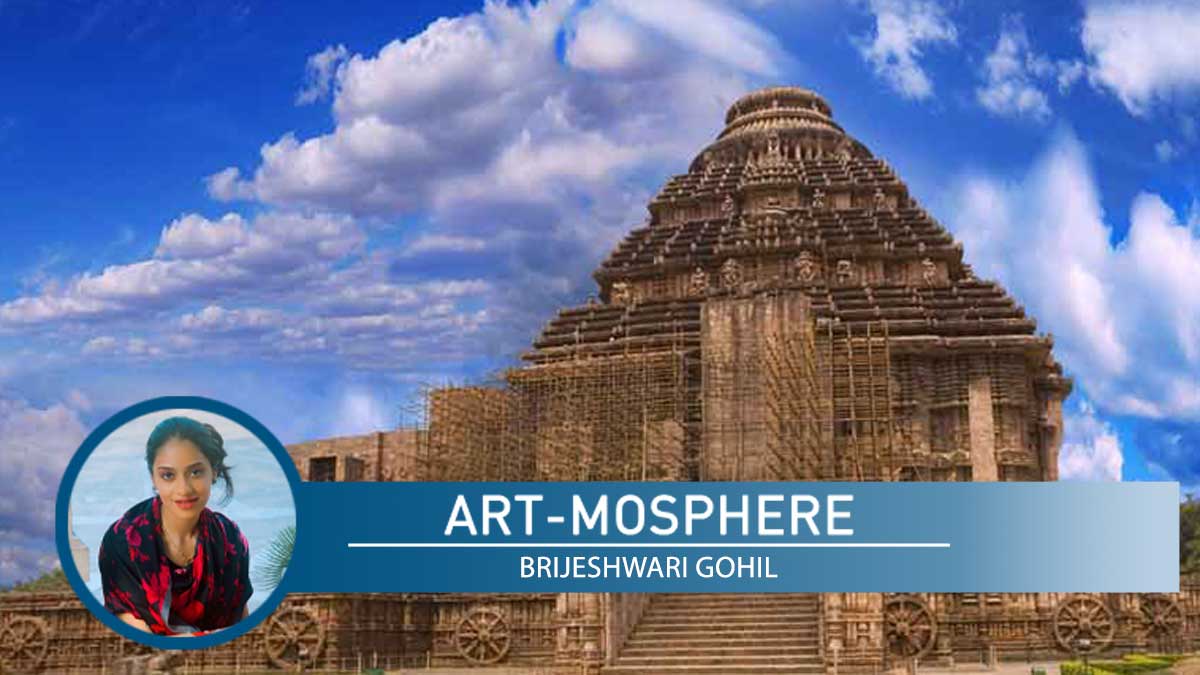
Every year, World Heritage Day arrives on April 18, with a familiar rhythm: listings, laurels, and carefully framed images of monuments bathed in golden light. For India, a country whose civilisational depth resists easy summary, the occasion carries particular weight. With over forty sites inscribed by UNESCO, India stands as one of the world’s most significant custodians of shared heritage.
But beyond recognition lies a more practical question: how does one manage, conserve, and sustain a legacy as vast and as alive as India’s?
The challenge begins with scale. India’s heritage is not confined to monumental architecture. It spans archaeological sites, historic cities, stepwells, temples in active worship, cultural landscapes, craft traditions, and ecological systems. It is as much embodied in the Ganga River as it is in the intricacies of Rani ki Vav, or the living rhythms of Varanasi.
This diversity is India’s strength but it also renders heritage governance uniquely complex. Conservation here cannot rely on a single model. It must respond to sites that are at once historical artefacts and living environments.
Last month, I had the privilege of moderating a conversation at the Indraprastha Cultural Festival with two leading voices in heritage conservation. What emerged was a shared recognition that India’s greatest cultural wealth lies not only in its monuments, but in its multiplicity.
Festivals such as these act as living archives. They bring together a cornucopia of tangible and intangible heritage—music, craft, oral traditions, ecological knowledge—much of which remains outside formal systems of protection. They remind us that heritage is not static; it is performed, practised, and continuously renewed.
If formal institutions define heritage, such gatherings expand it.
At the heart of India’s conservation framework lies the Archaeological Survey of India (ASI), the principal body responsible for the protection of thousands of monuments. Its legacy is formidable. Yet its mandate has expanded far beyond what any single institution can realistically sustain.
The ASI is expected to oversee everything from excavation and structural conservation to site management, tourism interface, and, in some cases, even the maintenance of active religious spaces. It operates across vastly different contexts—remote archaeological sites, dense urban precincts, and heavily visited landmarks.
The question is not one of competence, but of capacity.
Can a single, centralised body adequately manage the breadth of India’s heritage, its monuments, museums, temples, parks, and cultural landscapes while also responding to contemporary pressures of urbanisation and tourism?
The answer increasingly points toward the need for structural evolution.
What India requires is not a retreat from existing institutions, but their reinforcement through diversification.
A more distributed model where specialised sub-bodies, regional authorities, and domain experts share responsibility could allow for more nuanced and responsive conservation. Archaeological sites, for instance, demand a different approach from living temples or historic urban precincts. Museums require distinct expertise in curation and archiving; cultural landscapes call for ecological as well as historical understanding.
Decentralisation, if carefully designed, need not dilute standards. It can, instead, enable depth.
Equally critical is the question of documentation. India’s heritage is vast, but its archival systems remain uneven. Comprehensive, accessible, and digitised records spanning not just monuments but practices, materials, and oral histories are essential for informed conservation. Without documentation, preservation becomes reactive; with it, stewardship can become strategic.
Modern conservation operates within a triad: preservation, protection, and promotion. In India, these priorities often pull in different directions.
Preservation demands restraint, minimal intervention, respect for material authenticity. Protection requires regulation, clear boundaries, and enforcement mechanisms. Promotion, meanwhile, invites visibility—tourism, public engagement, economic integration.
The difficulty lies in balance.
Overemphasis on promotion risks commodifying heritage; excessive regulation can alienate local communities; rigid preservation may overlook the realities of living sites. What is needed is an integrated approach, one that aligns conservation with community participation and sustainable development.
Encouragingly, there are emerging examples of such thinking, particularly in adaptive reuse projects and community-led conservation initiatives. But these remain exceptions rather than the norm.
Implicit in any discussion of heritage is the question of ownership. In India, this is rarely singular.
Heritage belongs to the state, but also to local communities; to historians, but equally to practitioners; to the nation, and to the world. Effective conservation, therefore, cannot be purely administrative; it must be collaborative.
This requires expanding the circle of stakeholders. Conservation architects, urban planners, historians, artisans, and local residents must all play a role. Institutions like the ASI can anchor this ecosystem, but they cannot and should not operate in isolation.
World Heritage Day offers an opportunity not only to celebrate, but to reassess.
India’s challenge is not a lack of heritage, nor even a lack of recognition. It is the question of how to manage abundance and how to move from a model of centralised custodianship to one of distributed stewardship, supported by robust documentation and informed by local realities.
The future of conservation in India will depend on its ability to evolve administratively, intellectually, and culturally. To recognise that heritage is not a static inheritance, but a dynamic system requiring constant negotiation.
The task is not simply to preserve the past, but to make it legible and livable in the present.
In that sense, World Heritage Day is less a celebration of what has been safeguarded than a reminder of what remains to be done.
