



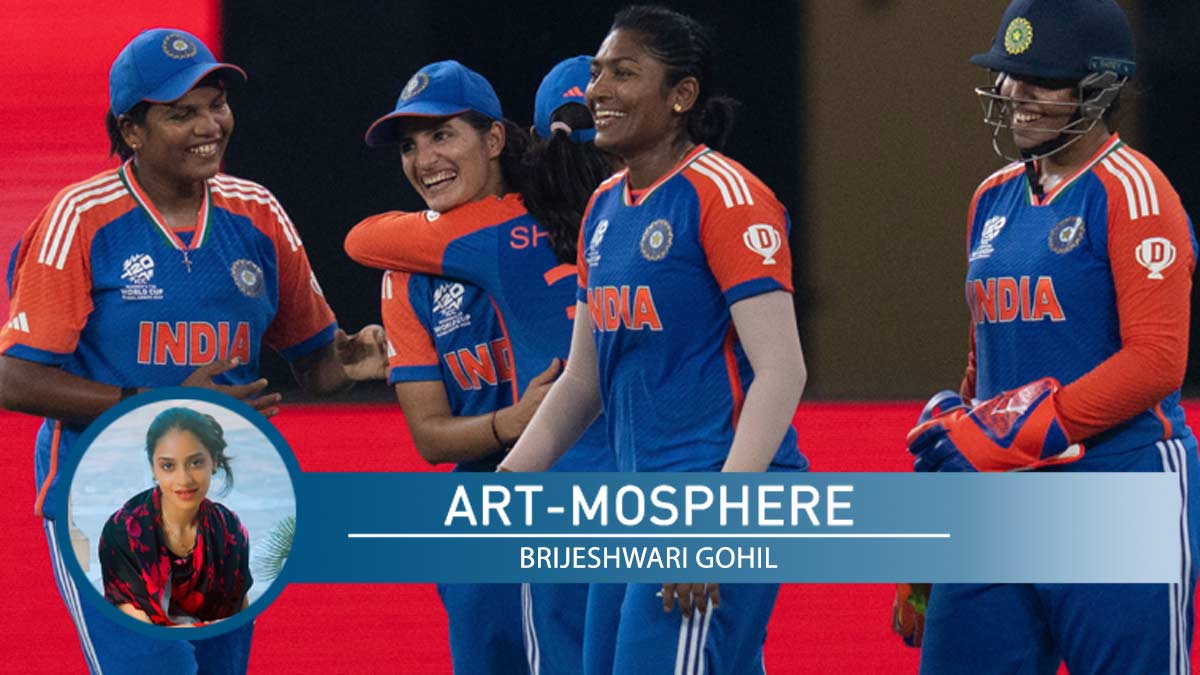
Cricket was once described as a gentleman’s game, an idea shaped by colonial pavilions, starched whites, and a carefully guarded sense of belonging. Over time, that image fractured. The sport grew louder, more democratic, more unruly, spilling into streets, screens, and everyday conversation. Yet even as cricket became India’s emotional lingua franca, its centre of gravity remained unmistakably masculine. What is unfolding now feels less like a disruption and more like an expansion, of space, of attention, of imagination.
Across the world, women’s cricket is no longer arriving quietly. The numbers tell a story that is difficult to ignore. The most recent Women’s World Cup recorded its highest-ever global viewership, with hundreds of millions tuning in across digital and broadcast platforms. Stadiums in England and Australia have seen sell-out crowds for women’s internationals, while leagues such as the Women’s Big Bash League have reported year-on-year viewership growth of over 40 percent. This is not interest driven by novelty or obligation. It is an appetite, built on quality, competition, and spectacle.
In India, where cricket is less a sport than a cultural language, this shift carries particular resonance. The Indian women’s team’s recent World Cup triumph was not just a historic win; it was a national moment. Over 180 million viewers tuned in to watch the final online, with overall tournament viewership surpassing 400 million, numbers once thought exclusive to men’s cricket. The conversations that followed were telling. The language had changed. Victories were no longer framed as heart-warming surprises or moral wins, but as the result of preparation, depth, and tactical clarity. Expectation, rather than encouragement, became the dominant tone.
There is also a new confidence on display. Indian women cricketers now play like athletes who expect scrutiny and visibility. Their celebrations are expansive, their interviews composed, their ambition unapologetic. In a sporting culture long structured around singular male heroes, this collective female presence feels quietly radical. It does not ask to be accommodated; it assumes space.
I felt this shift most vividly while watching a Women’s Premier League match between the Gujarat Giants and the Delhi Capitals. The atmosphere was instantly familiar, the chants, the rising tension before a decisive over, but there was an ease that felt new. Families filled the stands. Young girls leaned forward, deeply invested. Around me, conversations revolved around form, strategy, and momentum. No one was explaining why this mattered. They were there because it did.
That distinction is crucial. When sport moves from advocacy to anticipation, it crosses a cultural threshold. Women’s cricket, in moments like these, no longer requires justification. It simply belongs.
The Women’s Premier League sits squarely at the centre of this recalibration. Since its launch in 2023, the WPL has grown at a remarkable pace. Viewership has more than doubled across seasons, crossing 300 million across television and digital platforms. Media rights for the league were secured for nearly ₹1,000 crore, while sponsorship revenues continue to climb, with brands from beauty, lifestyle, and fintech entering a space once dominated by traditional sports advertisers. The WPL has quietly become one of the highest-paying women’s cricket leagues in the world.
But its significance extends beyond balance sheets. Franchise cricket reshaped how audiences engage with the sport, through loyalty, spectacle, and narrative. By placing women at the heart of this format, the WPL does more than offer visibility; it reconfigures cricket’s emotional economy. Here, women cricketers are not expected to be exemplary symbols. They are allowed complexity. They are debated, criticised, adored, and occasionally polarising. They win dramatically. They fail publicly. This ordinariness is powerful.
Popular culture, too, has begun to reflect this shift. A recent campaign for the men’s T20 World Cup placed women cricketers at the emotional centre of its narrative, not as symbols of support, but as authoritative voices within cricket’s larger story. The gesture was subtle, almost casual, and that is precisely why it mattered. When admiration is woven in rather than announced, it signals a deeper recalibration of gaze.
Globally, this moment aligns with broader changes in women’s sport. Increased pay, professional contracts, and record audiences are reshaping who sport is made for and how it is consumed. Women athletes are no longer positioned solely as inspirational figures; they are cultural protagonists. Their visibility spills beyond the field, into advertising, fashion, and media, without being reduced to novelty.
And yet, the transformation is not frictionless. Women’s cricket continues to operate under disproportionate scrutiny. Conversations around “marketability,” appearance, and comparison with the men’s game persist. There remains a tendency to measure success through male benchmarks, revenue, speed, power, rather than allowing women’s cricket to define its own rhythms and aesthetics. The challenge is not merely growth, but imagination.
Which brings us to the larger question this moment provokes: are we witnessing the emergence of a new cricket culture?
Culture does not announce itself. It settles in. It becomes visible through repetition and habit, in sold-out stands that no longer feel performative, in living rooms where women’s matches command full attention, in children who argue over women cricketers without pausing to explain why. Women’s cricket is no longer being introduced. It is being assumed.
Cricket has always acted as a social mirror. For much of its history, that mirror reflected a partial image, carefully framed, deeply gendered. What is unfolding now feels less like a rupture and more like an expansion of the frame. Women are no longer entering cricket culture as guests or novelties; they are shaping its tempo, its memory, its future.
The Women’s Premier League does not represent an endpoint. It represents a beginning, messy, contested, exhilarating. Structural inequities remain, and visibility alone does not guarantee equity. But culture is rarely transformed through declarations. It changes through return. Through seasons that repeat. Through names that stay.
And if culture is ultimately defined by what we come back to, year after year, then women’s cricket has already crossed its most difficult boundary.
Not into acceptance.
But into permanence.
