



The year 2025, marks the 79th year of India’s Independence. The country’s fight for independence spanned nearly two centuries, the beginnings tracing back to the mid 18th century. While the formal British Raj began in 1858 after the revolt of 1857, the foundations of colonial rule were laid earlier by the British East India Company, especially after the Battle of Plassey in 1757. The freedom movement culminated in India’s independence on August 15, 1947.
India, during the colonial period, was not a single political unit. Alongside British-ruled provinces, there were over 565 princely states, which were nominally sovereign but under British suzerainty. The roles of these princely kingdoms in the freedom struggle were mixed, sometimes varying between time periods. While today the perception of royalty in India has been reduced to mindless television shows and movies, these were historical dynasties with rulers of great knowledge, depth and exceptional skills of administration.
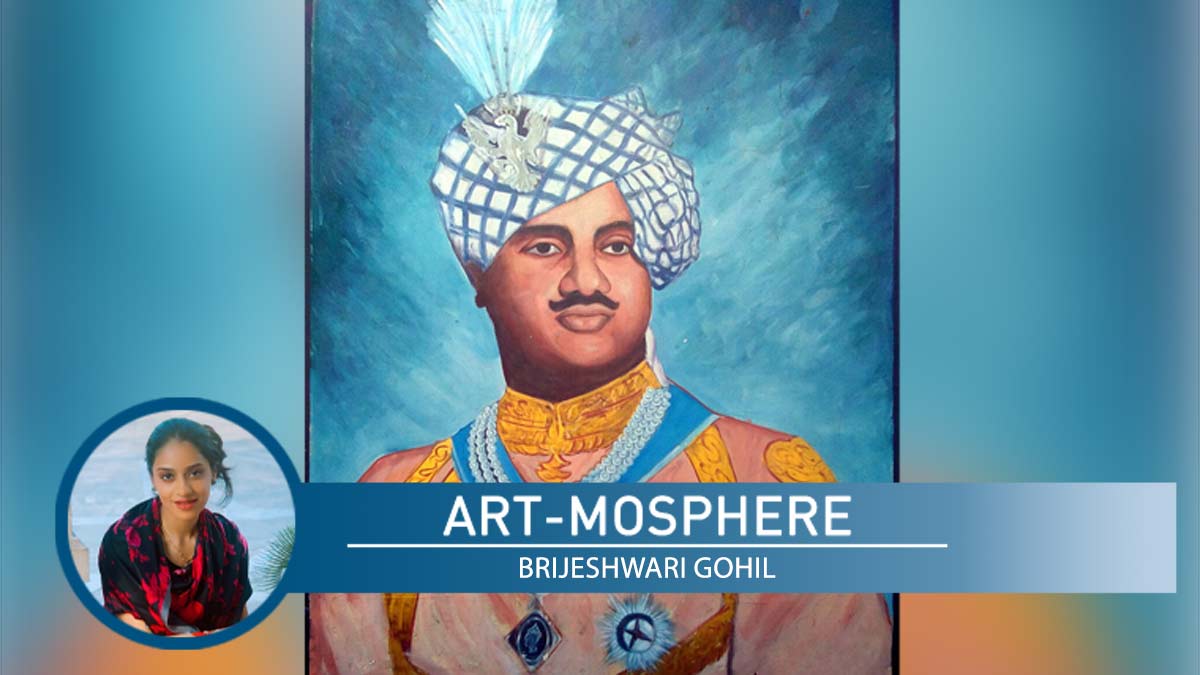
For me, this week’s article is a very special one. A tribute to my great grandfather, a ruler loved, respected and worshipped by his people. A man of righteous principles, morals and great foresight. The first ruler to hand over his kingdom to a democratic India. Maharaja Krishnakumar Sinhji Gohil of Bhavnagar.
Maharaja Krishna Kumar Sinhji Gohil of Bhavnagar was born into a world of royal protocol, deference, and unquestioned power. He ascended the throne at the tender age of seven in 1919, a child monarch in a princely India still under the thumb of the British Raj. But what set him apart was not the throne he inherited. It was the one he voluntarily gave up.
Despite being orphaned at a young age, Maharaja Krishna Kumar Sinhji set sail to pursue his education at England’s historic Harrow. To be thrown into the deep, in a foreign country, grasping a new language and culture could not have been easy. But he spent his years getting prepared to rule his people. To be able to be a good leader. A visionary of the people, honing the skills of good governance and foresight.
Between the years of 1931 and 1947, the able Maharaja built on the legacy of the throne entrusted to him. Be it town planning or financial development, educational reforms or building of new healthcare institutes. Awarded the prestigious Knight Commander of the Order of the Star of India (K.C.S.I.) in 1938, the kingdom of Bhavnagar grew with his determination. As did the dairy revolution in Brazil!
But as India inched towards independence in 1947, the question of princely states loomed large. Many rulers clung to the illusion of sovereignty, reluctant to merge their kingdoms into the nascent Indian Union. My great-grandfather chose differently. Bhavnagar became the first princely state to accede to India, not under pressure, but by conscious choice.
This decision did not end his public service, it simply changed its form. In 1948, he was appointed the first Indian Governor of Madras (now Chennai). From a king with absolute power to a constitutional head with ceremonial responsibilities, he made that transition with dignity and humility. He respected the democratic structures that India was building from scratch, never overstepping, never interfering. His role was to uphold the Constitution, not overshadow it. While many political leaders preach this today few are close to following it.
As a child growing up hearing stories about him, I often wondered what it must have been like to give up that kind of power. The palace. The title. The salute. The entire exchequer. But, the more I understood what he stood for, the more I realised, he didn’t lose anything. He gained something far greater: a place in history as a unifier, not a divider. Respect.
Today, the role of the governor in the states of India is far more controversial than he might have imagined. What was once a post of constitutional neutrality has become, at times, a lightning rod of political tension. Governors today are often accused of acting as agents of the Centre, meddling in state affairs, or delaying key legislation for partisan reasons. The dignity of the office he helped define now hangs in delicate balance. The post those days belonged to someone of the highest moral authority.
If he were alive today, I think he would be troubled, because of the lost opportunity. The Governor’s office, at its best, is a symbol of balance between the Centre and the states. It is supposed to ensure that democratic processes function within constitutional bounds. That is exactly how he carried himself in office, with restraint, respect, and an unwavering commitment to India’s federal fabric.
My great-grandfather was principled. He gave up a crown for a Constitution, and a kingdom for a country. And in doing so, he taught me, and I hope others, that legacy is not what you hold on to. It is what you choose to give up for something greater.
While India’s independence was a long and complex process, shaped by the efforts of revolutionaries, reformers, political leaders, and ordinary citizens. I do believe my great grandfather played an integral and important role. One that is often forgotten. He believed in India, not just as a geography, but as an idea: of democracy, equality, and unity. He saw his future, and ours, not in retaining power, but in contributing to a nation that could stand on its own, free and self-governed.
We live in times where our democratic institutions are tested daily. Perhaps it is time we revisit the legacy of those who once held immense power and willingly surrendered it, for the sake of India. A united, resilient, beautifully diverse nation.
Today I celebrate his idea of an independent India and the importance of freedom we so often forget to cherish.
