



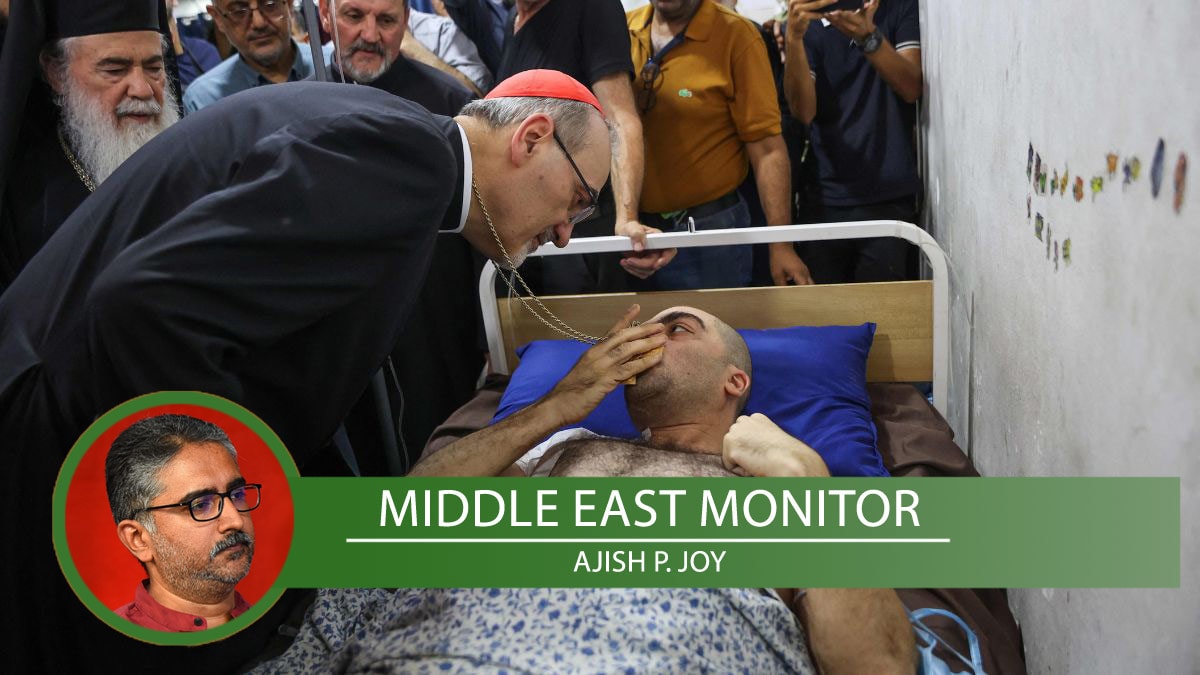
The Catholic Latin Patriarch of Jerusalem, Cardinal Pierbattista Pizzaballa condemned Israel’s actions in Gaza as “unacceptable and morally unjustifiable” following a pastoral visit to the besieged territory. Speaking in Jerusalem after returning from his first trip to Gaza this year, the cardinal said he had witnessed extreme hunger, widespread destruction, and the devastating impact of a recent strike on a church compound sheltering hundreds of civilians.
Travelling alongside Greek Orthodox Patriarch Theophilos III, Pizzaballa visited the Holy Family Church in Gaza City, which was struck by Israeli forces on July 17. The attack killed three people and injured nine others, including the Argentinian parish priest Gabriel Romanelli, a close friend of the late Pope Francis. The strike drew international condemnation, including from the Vatican, and prompted rare criticism from President Donald Trump.
“We came to Gaza not as politicians or diplomats but as pastors,” Pizzaballa told journalists. “Christ is not absent from Gaza. He is there, crucified in the wounded, buried under rubble, and present in every act of mercy, every candle in the darkness, every hand extended to the suffering.”
Both patriarchs described scenes of intense deprivation and trauma during their four-day visit. At the Christian-run al-Ahli Hospital, they met doctors treating severely malnourished patients and survivors of airstrikes. One father, keeping vigil beside his blind, injured son—the only survivor among his six children—left a deep emotional impact on Pizzaballa.
The patriarch described hunger as “everywhere”, with people queuing for hours under the sun for food. “It is a humiliation that is hard to bear when you see it with your own eyes,” he said. Locals told him they had not eaten meat, vegetables or fruit since February, relying on bread and rice. “Humanitarian aid is not only necessary, it is a matter of life and death,” he added. “Every hour without food, water, medicine and shelter causes deep harm.”
In response to the church bombing, Israel authorised the transfer of 500 tonnes of aid. However, logistical issues meant none of it had entered Gaza by the time of the patriarchs’ visit. Despite announcements from Italy’s foreign ministry that the aid had crossed with the delegation, Pizzaballa said, “Not a gram has entered.” The delay led to disappointment and confusion, with desperate families flocking to the church compound expecting relief.
The Israeli military acknowledged that its forces had accidentally struck the church, claiming it was due to “an unintentional deviation of munitions.” The Israel Defense Forces (IDF) said it had completed a probe and introduced new guidelines for operations near religious buildings and sensitive sites. However, church leaders and some Catholic officials questioned the explanation. The IDF did not confirm the deaths reported by church officials and refused to elaborate on what adjustments had been made.
Pizzaballa refrained from accusing Israel of deliberately targeting the church, saying he lacked the military expertise to do so, but added that it was not the first such incident. “There were also attacks on the Holy Family and St Porphyrius in the early weeks of the war. And every time, it was called a mistake,” he said.
The Christian population in Gaza, now estimated at around 560, remains under threat. The church compounds in Gaza City where they have taken refuge are located in areas under Israeli evacuation orders. Asked if they would comply, Pizzaballa said, “They know very well we are determined to remain.”
He warned against attempts to displace Palestinians, a policy reportedly supported by large sections of the Israeli cabinet. “We must say with clarity that the policy of the Israeli government in Gaza is unacceptable and morally unjustifiable. There can be no future built on captivity, displacement or revenge.”
The patriarchs also visited the West Bank town of Taybeh, north of Ramallah, where residents described attacks by extremist Israeli settlers. The most serious incident involved a fire near the ruins of the Byzantine Church of St George. While Israeli police claimed the blaze did not damage the church and that arson was unconfirmed, eyewitnesses said settlers started the fire and accused security forces of ignoring complaints.
Villagers in Taybeh, a historic Christian community, say settlers have taken over their lands, harassed residents and brought cattle to graze on olive groves. Daoud Khoury, a former mayor, told the BBC that the worsening situation and economic hardship since the Gaza war could drive more Christians to emigrate.
The attack in Taybeh was also condemned by US Ambassador Mike Huckabee, an evangelical pastor and strong supporter of Israeli settlements. In an unusual move, he visited the village and called the fire an “act of terror,” demanding “harsh consequences” for those responsible. “Desecrating a church, mosque or synagogue is a crime against humanity and God,” he wrote on social media.
At the Jerusalem press conference, both Pizzaballa and Theophilos III reiterated their call for an immediate ceasefire in Gaza and the release of all hostages held by Hamas. They stressed that the Christian community was committed to staying in the Holy Land, regardless of the risks.
“We are not against Israel,” said Pizzaballa, who is known for his efforts to promote interfaith dialogue. “But we must speak with frankness and clarity: this war, this siege, this starvation—it is not justified. We will not abandon Gaza, and when peace comes, it is our moral duty to be part of reconciliation.”
