



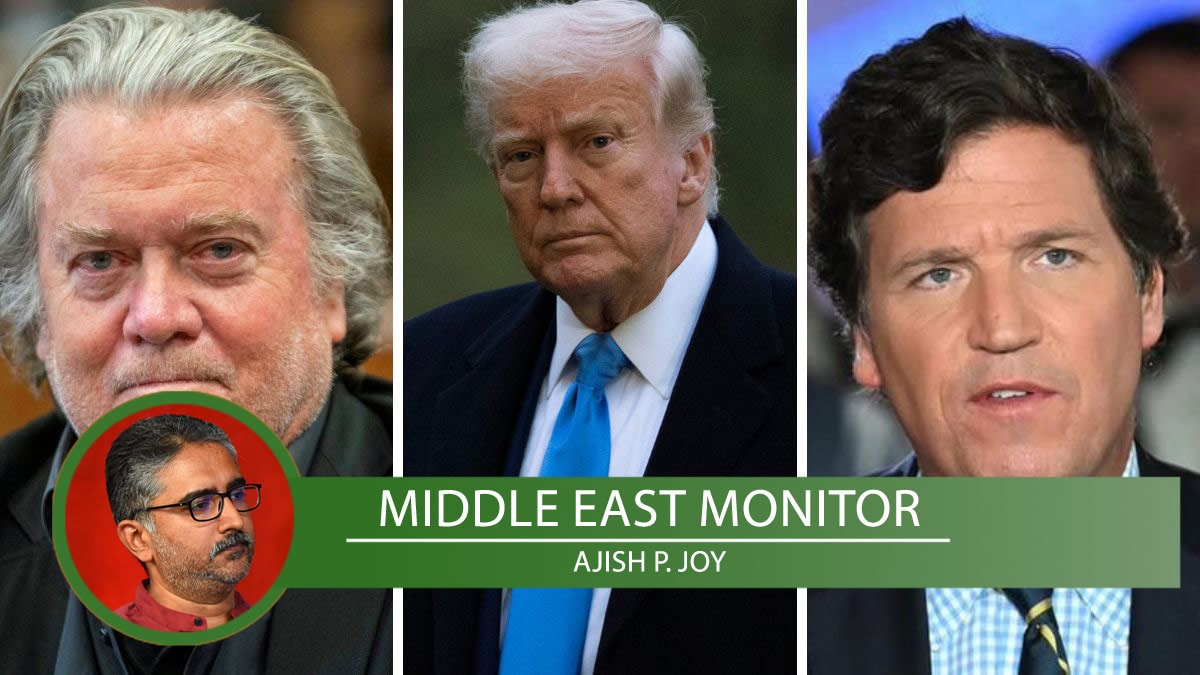
President Donald Trump’s wavering stance on possible US military support for Israel in its escalating conflict with Iran has triggered a rare rupture within the heart of the MAGA movement. Once unified by Trump’s promises of "America First" and an aversion to foreign entanglements, the conservative base is now visibly fractured, caught between isolationist instincts and hardline national security hawks.
As speculation swirls over whether Trump will authorise direct US military involvement against Iran’s nuclear facilities, he has sought to reassure supporters that his core appeal remains intact. "My supporters are more in love with me today than they even were at election time," he told reporters at the White House yesterday. "I may have some people that are a little bit unhappy now, but I have others who are very happy." Yet that confidence belies a broader ideological struggle that now defines the movement Trump built.
The crisis began when Israel launched a surprise wave of attacks targeting Iranian nuclear sites, scientists and military leadership. As pressure mounted for the US to assist, Trump cut short his participation in the G7 summit in Canada, returned to the US, and convened his national security team in the Situation Room where he was presented with options including refuelling Israeli jets and deploying US aircraft for joint operations. Trump has kept his decision vague, telling reporters, “I may do it, I may not do it. Nobody knows what I’m going to do.”
This ambiguity has stirred dissent across Trump’s conservative base. Commentators like Tucker Carlson and activists such as Charlie Kirk and Candace Owens have publicly criticised any drift toward military intervention. Carlson, once a key supporter, accused Trump of betraying his anti-war pledges. Owens described the move as “a declaration of war on neocons” and a betrayal of the movement’s founding ideals.
Steve Bannon, a key architect of Trump’s 2016 campaign, reminded audiences that MAGA emerged in opposition to the legacy of the Iraq War. "One of the core tenets is no forever wars," Bannon said in Washington. Yet he admitted the loyalty of Trump’s base may ultimately old. "We don’t like it. Maybe we hate it. But we’ll get on board."
For others, the split is real and consequential. Representative Marjorie Taylor Greene declared that anyone pushing for full US involvement in the Israel-Iran war "is not America First/MAGA". Jack Posobiec warned that a direct strike on Iran “would disastrously split the Trump coalition", and Kirk echoed the fear that the movement’s momentum could be broken.
Yet Trump is not without support. Figures like Senator Lindsey Graham and Fox News host Mark Levin are urging decisive action against Iran, arguing that Israeli and American interests are inseparable in preventing a nuclear-armed Tehran. Levin dismissed MAGA isolationists as naive. "The Israelis are going to put an end to this forever war, and so will Donald Trump," he said.
Trump’s attempt to reassure his base met complications when Tucker Carlson accused Senator Ted Cruz of pushing for regime change without understanding Iran’s demographics. Their on-air exchange became a viral flashpoint for the broader divide. "You don’t know anything about Iran," Carlson charged, highlighting concerns that ideological conviction is being replaced by political convenience.
Even within Congress, the conflict has created unexpected alliances. Republican Representative Thomas Massie and Democratic Representative Ro Khanna co-sponsored a resolution requiring congressional approval before any offensive action against Iran. Their bipartisan effort underscores a growing wariness of presidential overreach and an effort to reclaim congressional authority over war powers.
According to a former Pentagon official quoted by The Washington Post, the crisis has brought the MAGA movement to an “inflection point”. Many Trump supporters, the official noted, are privately frustrated by what they perceive as blind loyalty to Israel but fear being branded antisemitic if they speak out. “Iran is the defining issue on the political right right now,” the official added. “It’s not trade or the culture wars. It’s foreign policy, and specifically Iran.”
Senator Rand Paul urged restraint, noting that Trump had previously shown an instinct for diplomacy. "The president has shown restraint in the past,” Paul said. “And I’m hoping he will not get involved in the war."
On the other side, establishment Republicans like Mitch McConnell see the conflict as a test of Trump’s willingness to resist what McConnell described as the "bad week for isolationists". Senators Graham and Tom Cotton echoed this sentiment, calling for full support to Israel, including joint air operations and strategic bombings of Iranian targets.
Trump, once celebrated for challenging the Republican foreign policy consensus, now finds himself at a crossroads. Whether he chooses to escalate militarily or pull back will define not only his legacy but the future of the movement he created.
As Steve Bannon put it, "This is a real test. We will argue until the last moment against more war. But Trump is Trump. If he goes in, we’ll follow, even if we’re holding our noses. That’s how deep this movement runs."
